Start with the vanity line before you choose the frame shape
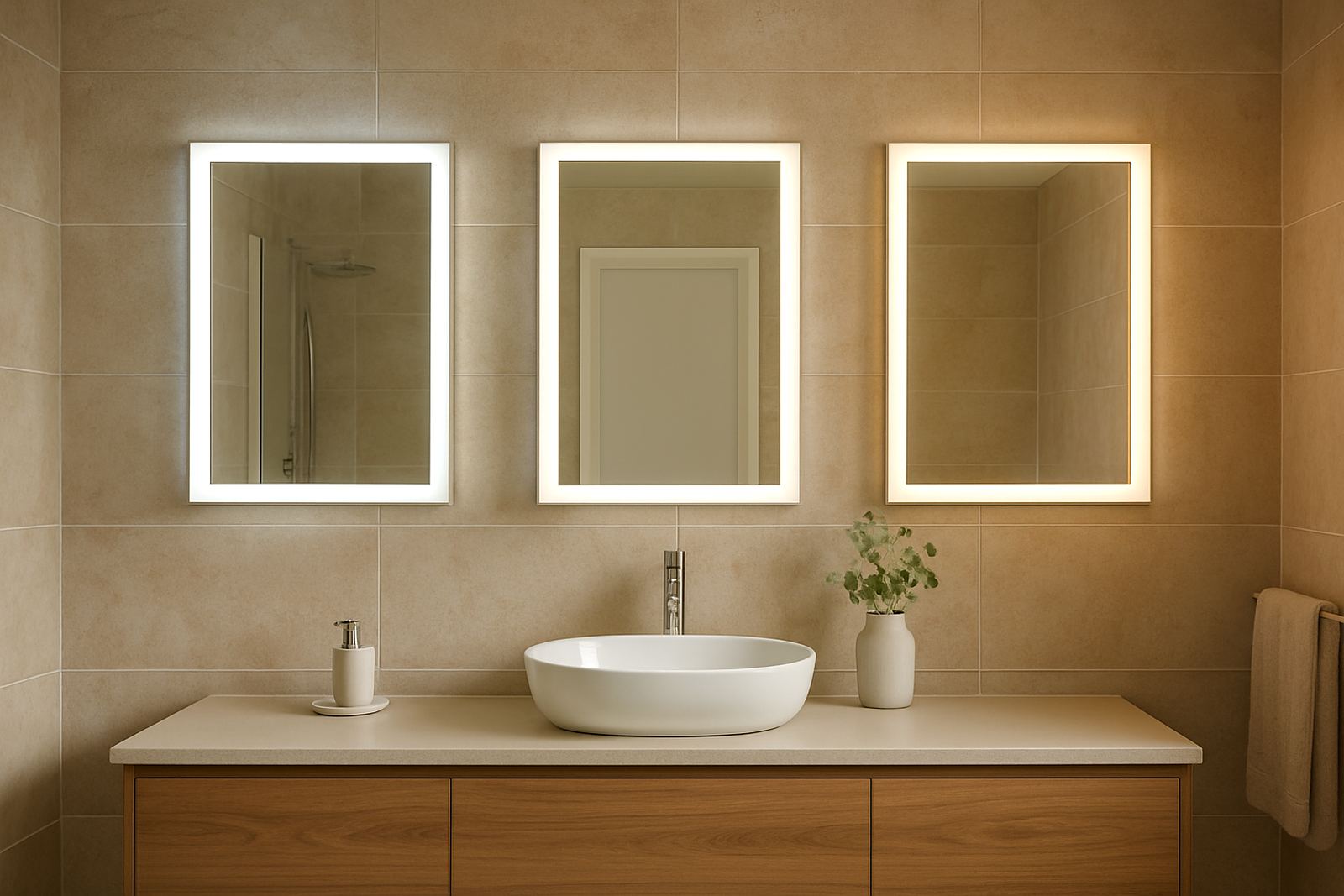
Look at the vanity first, then decide what shape will sit naturally above it. A long rectangular vanity usually suits a rectangle or a square mirror, while a curved basin or a softer cabinet line can work well with an oval or round mirror. When the mirror echoes the vanity shape, the room feels ordered and easier to finish.
Measure the vanity width and leave a comfortable border on both sides. As a guide, the mirror should usually sit a little narrower than the cabinet below it, unless you want a full width feature. If the vanity is wall mounted in a compact guest bathroom, a simple rectangle often gives the cleanest result.
Choose a shape that suits the room style and not just the trend
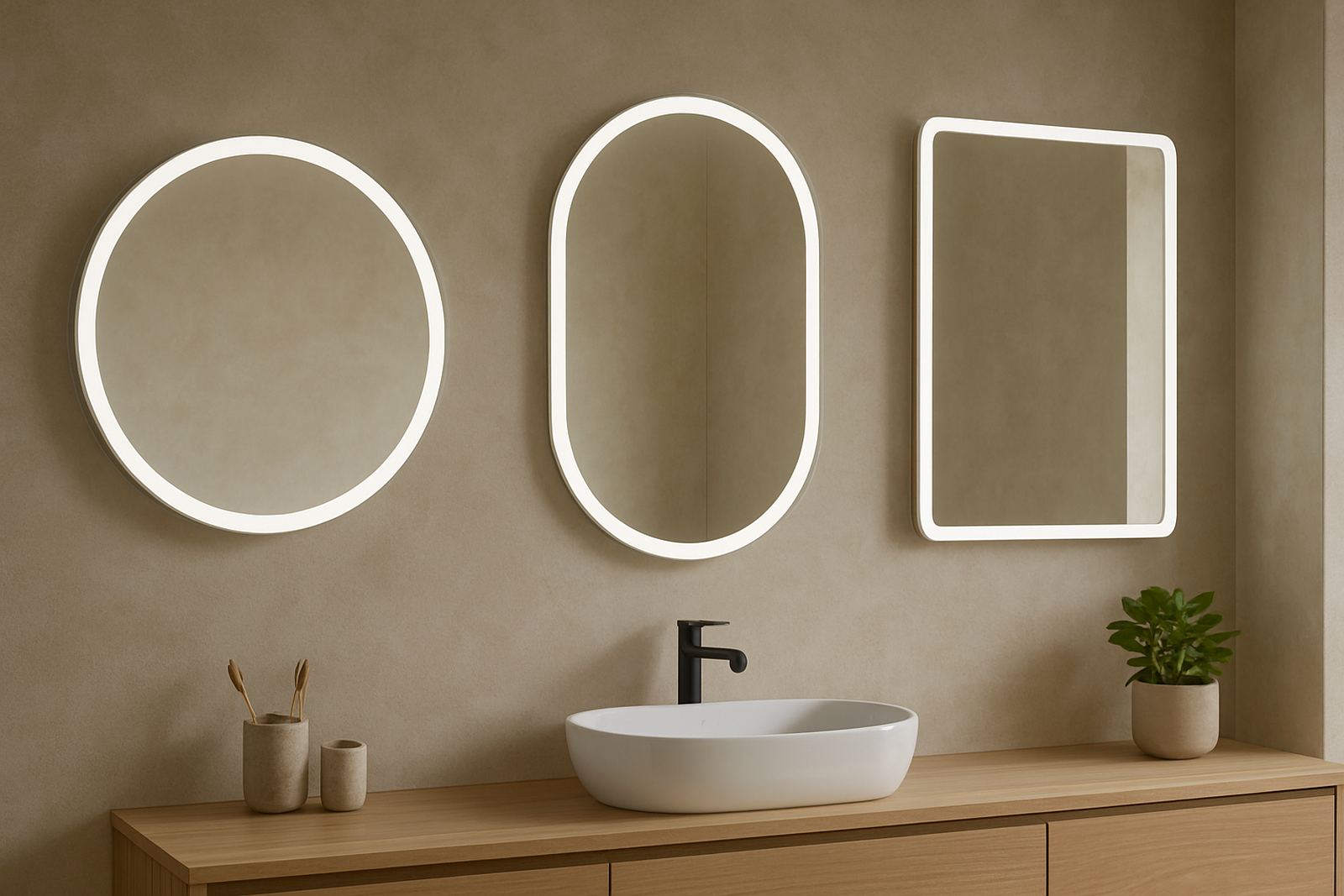
Mirror shape changes the feel of the bathroom. Round mirrors soften a room with hard tile lines and sharp cabinetry. Rectangles feel practical and suit most family bathrooms. Ovals add a gentler finish in spaces where you want a lighter look, and square mirrors can suit modern interiors with strong symmetry.
In homes across Pinetown, Westville and Umhlanga, we often see the best result when the mirror follows the style of the room rather than trying to stand out too much. A more formal bathroom can take a neat rectangle with hidden LED lighting, while a relaxed coastal space may suit a softer shape that breaks up all the straight edges.
Check the wall space and the height before you settle on size
Shape matters, but wall area matters just as much. A round mirror needs more surrounding space to breathe, while a tall rectangle can work in a narrow gap between cupboards or beside tiled returns. If the wall is already busy with shaving cabinets, windows or a bulkhead, the mirror shape must fit the available opening cleanly.
Before ordering, check for light switches, power points, plumbing access and tile joints. On retrofit jobs we also look at whether the wall can take the fixing points without drama. If your bathroom is narrow use a shape that keeps the eye moving upward, not across a cramped wall.
- Measure the full wall width, not only the vanity width
- Check the distance from basin top to ceiling or bulkhead
- Allow for opening windows, towel rails and wall lights
- Make sure the mirror will not clash with tile cuts or grout lines
Use lighting needs to guide the shape, especially for grooming
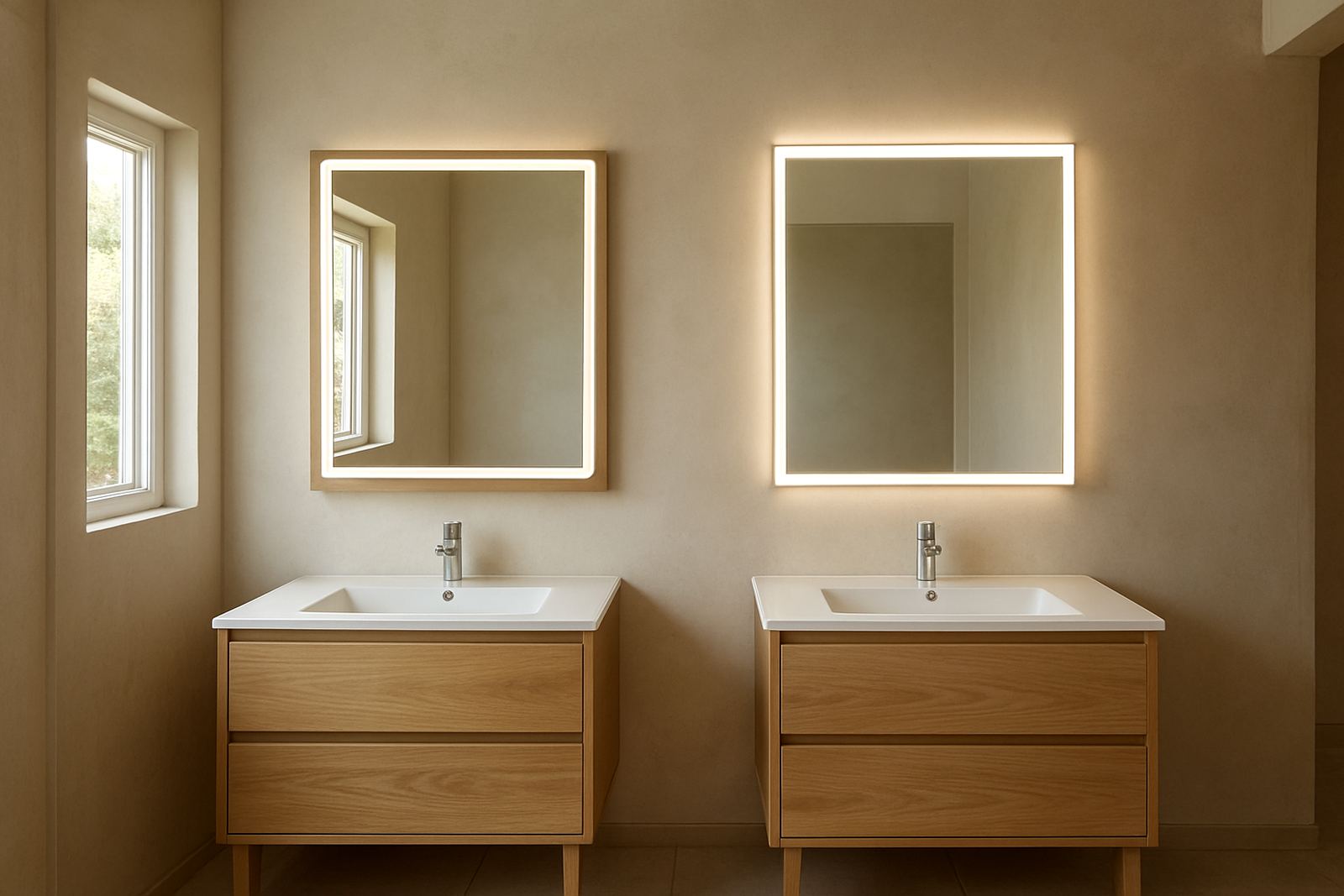
People often choose shape for looks, then later find the mirror does not suit the way they use it. If the mirror is mainly for shaving, makeup or daily grooming, the viewing area should be practical and well lit. A taller rectangle can give more face coverage for couples sharing a vanity, while a round mirror may need careful sizing so the face still sits comfortably in the lit area.
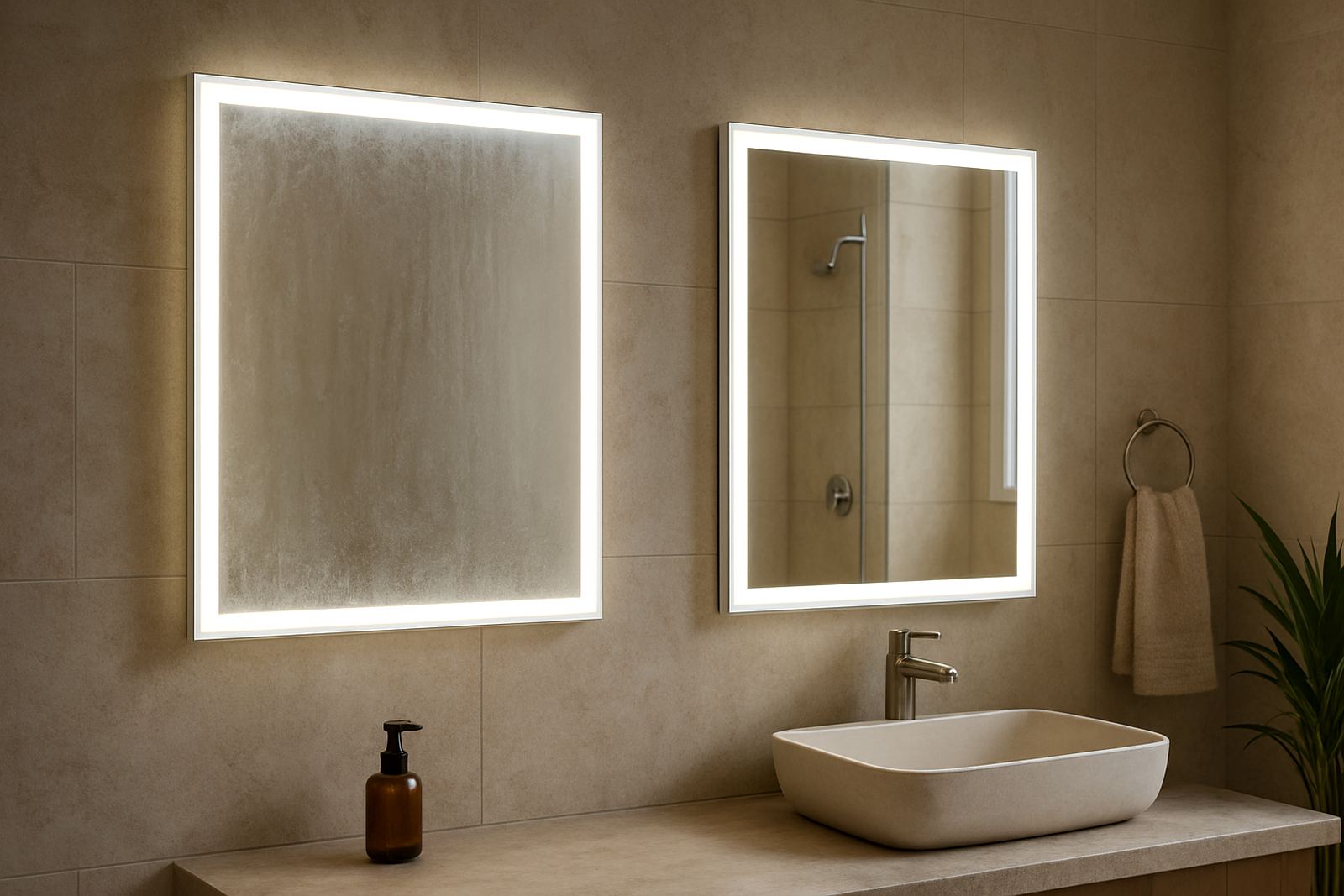
LED-lit mirrors help reduce shadows, but the shape still affects how much usable reflection you get. In bathrooms with patchy natural light or load-shedding backup lighting, a shape that gives a clear central field is usually the safer choice. We also check how the light spreads at the edges so the mirror looks good and works properly.
Match the mirror shape to the installation plan and electrical points
Some shapes are easier to install than others, especially when electrical connection and demister servicing are part of the job. A simple rectangle is often easier to centre over existing plumbing and power points. Round and oval mirrors need a bit more care with position, because off-centre fixing can be obvious once the mirror is on the wall.
For new bathroom fit-outs or mirror replacements, it helps to think about cable routes, wall strength and access for aftercare. In coastal areas such as Durban North, Ballito and Umhlanga, we also pay attention to humidity and corrosion resistance because bathroom conditions can be hard on fittings over time.
- Confirm where the power point or connection will sit
- Check that the wall surface is flat and properly prepared
- Allow enough room for any demister pad or lighting driver
- Ask whether future LED component repairs will be accessible
A quick shape checklist for homeowners and designers
Before you place an order, walk through this short check. It saves time on site and helps avoid a mirror that looks right on paper but wrong in the bathroom. Interior designers often use this same process when coordinating vanity upgrades across multiple units or rooms.
Use the checklist below to narrow the choice quickly. If two shapes seem possible, compare them against the vanity width, the room height and how much wall is visible around the mirror. A small decision at this stage can make the whole room feel more finished, and less cramped.
- Does the mirror follow the vanity shape or intentionally contrast it?
- Is there enough wall space for the chosen shape to sit comfortably?
- Will the mirror give enough reflection for daily grooming?
- Do the lighting and electrical points suit the layout?
- Will the shape suit the room style for the long term?
When to ask for custom guidance before you order
If your bathroom has unusual proportions, corner basins, double vanities or a tiled recess, custom design help is worth it. The same applies when you are replacing an old mirror and want to keep the existing electrical connection in place. A careful site measurement can prevent costly adjustments later.
LED Frames Mirror assists homeowners, builders and designers with site measurements, mirror installation, bulk project supply and aftercare support across South Africa. From Pinetown to nationwide bathroom fit-outs, the aim is to match the shape to the room so the result looks right and works every day.
If you need guidance on shape, size or fixing, send a message through our contact form and we can talk through the room before the work starts.