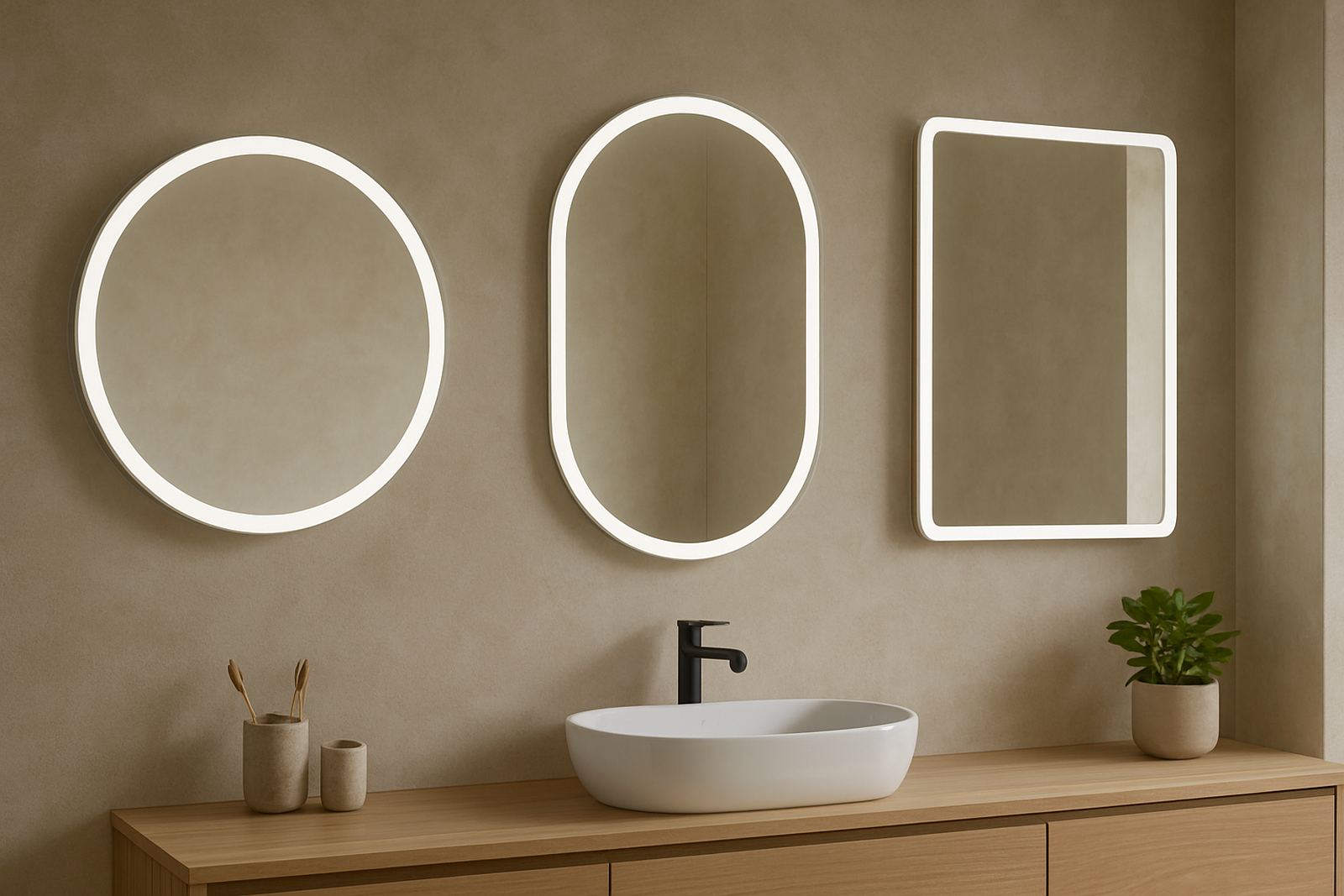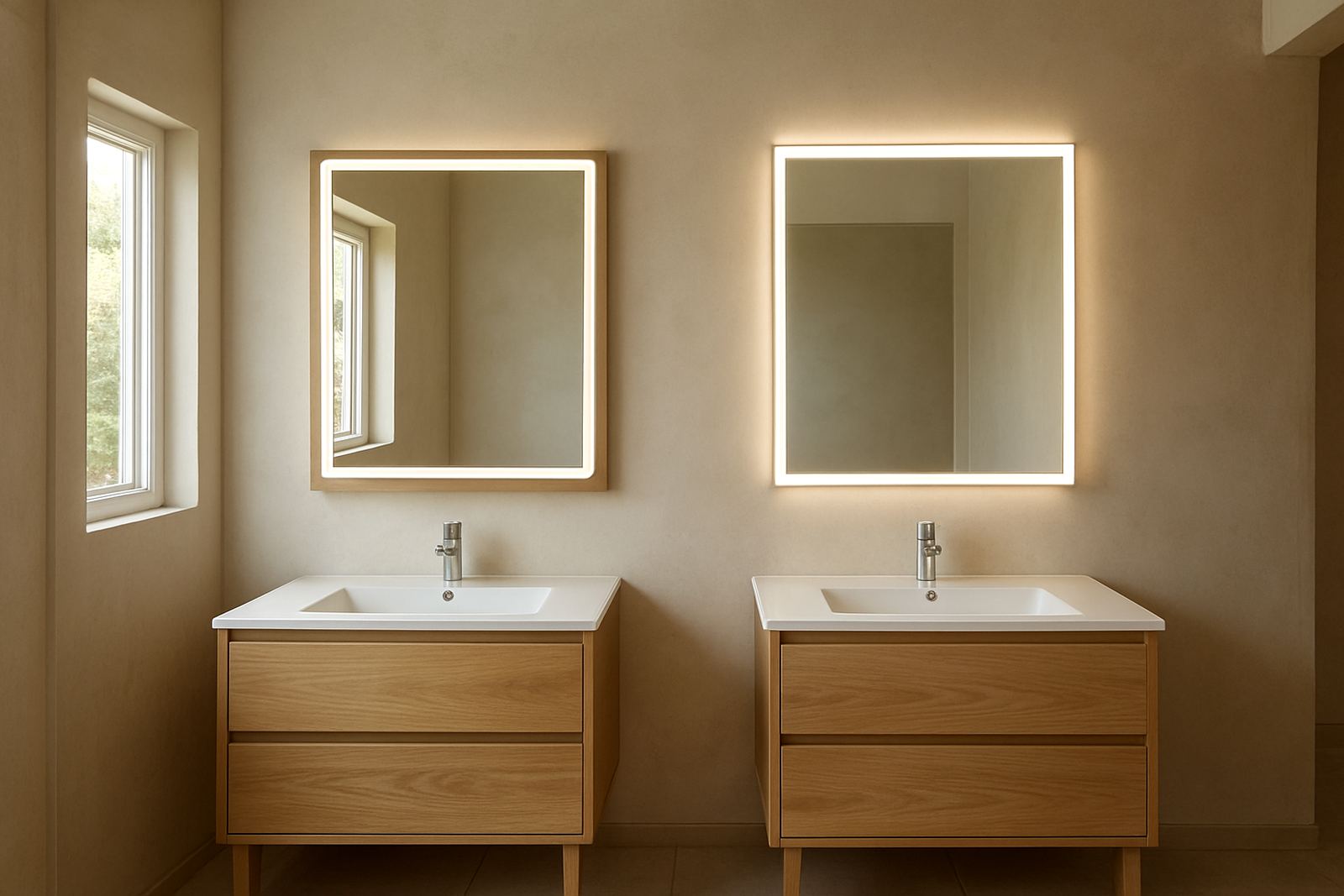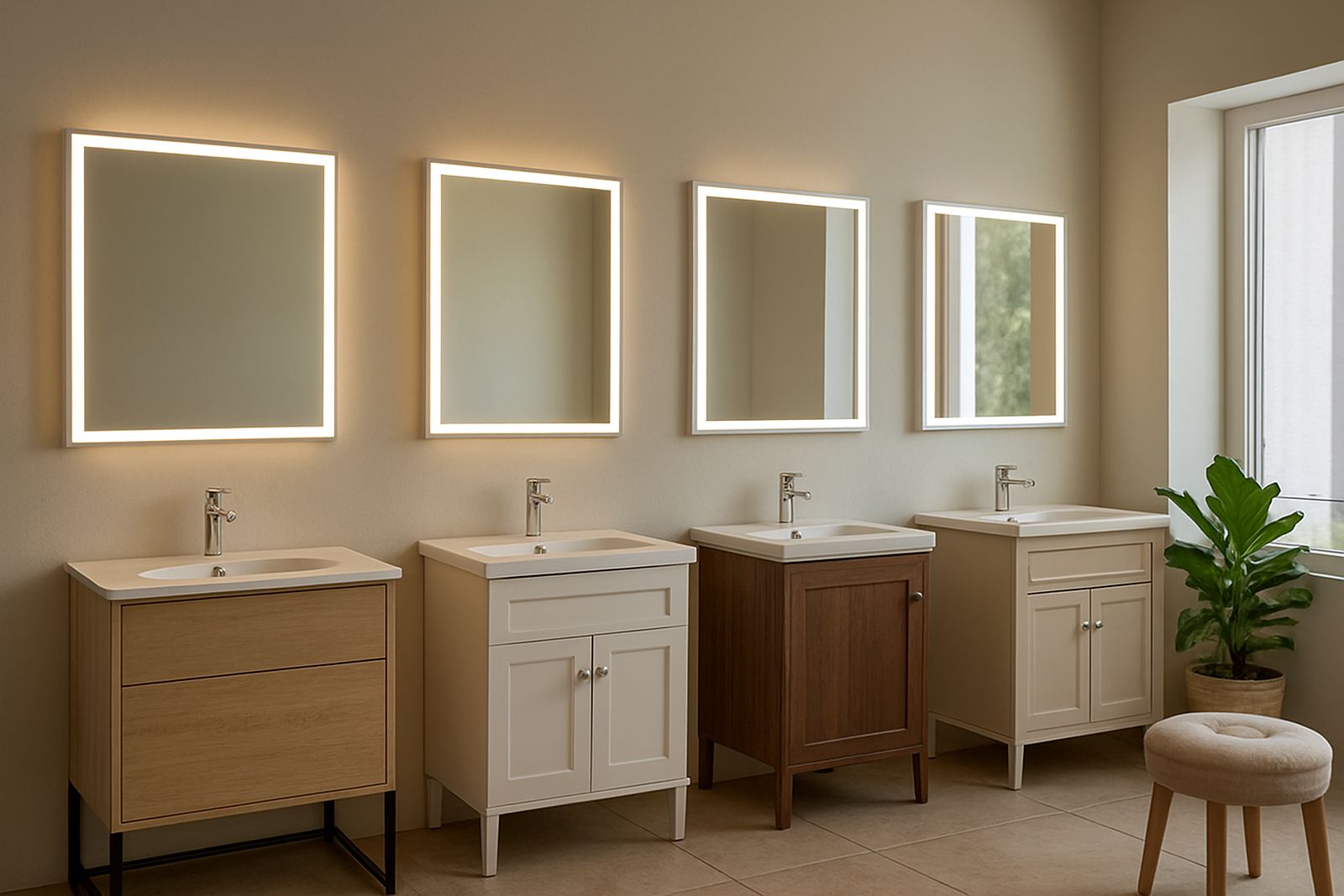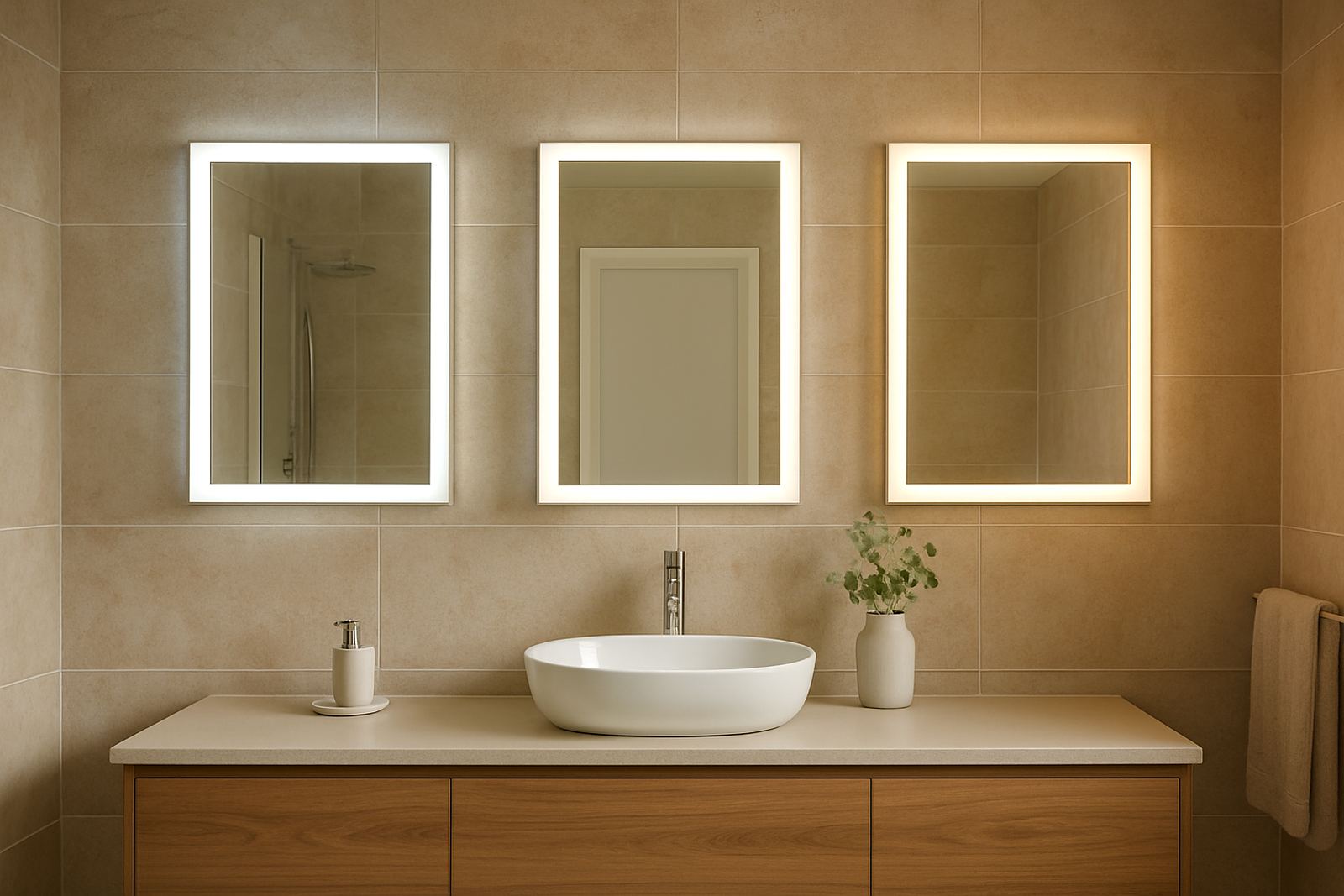
Start with the room, not the lamp
The best colour temperature depends on what the mirror is doing in the room. A guest bathroom in Umhlanga may only need soft, flattering light for hand washing and quick checks, while a family vanity in Hillcrest often needs cleaner light for shaving, make-up and skin care. Look at the wall colour, tile tone, natural light and how many people use the space each day.
In darker bathrooms, too warm a glow can make the room feel dimmer, and too cool a tone can feel harsh against pale tile or polished surfaces. If the bathroom has little daylight, think about how the mirror will look early in the morning and after sunset, when the load-shedding schedules can already make the room feel different to use.
Warm light for softer everyday use
Warm white lighting is usually the gentlest option. It gives a cosy look and suits bathrooms with wood finishes, cream tiles or a relaxed guest suite. Many homeowners prefer it for powder rooms because it is flattering and easy on the eye, especially at night.
Choose warm light when the mirror is mainly for light grooming and you want a calm feel rather than clinical brightness. It works well in homes where the vanity is part of a bedroom suite or where the bathroom opens into a quiet family space.
- Best for guest bathrooms and relaxed ensuite spaces
- Works well with beige, sand or timber finishes
- Good choice if you want a softer reflection
- Less suited to detail work like precise make-up application
Neutral white for balanced daily grooming
Neutral white is the safest all-round choice for many South African bathrooms. It sits between warm and cool, so colours look more natural and the face is easier to read in the mirror. For family homes in Pinetown, Durban North and Westville, this is often the most practical option because it suits morning routines, evening cleaning and general use.
If you want one mirror light setting that does most things well, neutral white is usually the answer. It gives enough clarity for shaving and make-up without making the room feel stark. For shared bathrooms, it helps different users see the space in a true light, which matters when matching clothing or checking colour before heading out.
Cool light when clarity matters most
Cool white gives a crisp, bright feel. It is useful where detail matters, such as precise make-up, close shaving or grooming in a vanity area that needs a more clinical finish. In modern bathrooms with grey tile, white surfaces or chrome fittings, cool light can look sharp and neat.
That said, cool light can feel severe in small bathrooms or coastal homes with lots of reflective surfaces. In Ballito or along the coast, the extra brightness may be welcome, but if the room is already very white it can become too icy. Use cool light carefully and test it against the actual wall and tile colour before committing.
- Good for detail work and clear facial visibility
- Works with modern, light coloured bathrooms
- Can feel harsh in compact or echoey rooms
- Best when there is enough surface warmth from the décor
How to choose in five practical steps
When clients ask for help, we suggest a simple process. First, decide what the mirror is used for most often. Second, check whether the room gets strong daylight or very little. Third, look at the existing finishes and whether they are warm or cool in tone. Fourth, think about who uses the bathroom and at what time of day. Fifth, compare samples or mock-ups in the room before final installation.
Here is a quick checklist you can use before placing a bathroom order:
- Will the mirror be used mainly for grooming or general use?
- Does the room need soft ambience or strong clarity?
- Are the tiles, cabinetry and fittings warm or cool in colour?
- Will the mirror be used during power cuts and load-shedding?
- Is the bathroom small, medium or open-plan?
If you are unsure, choose neutral first. It is usually the easiest to live with and avoids needing to change the light later.
Installation details that affect the final look
The colour temperature is only part of the story. Dimming, switch placement, mirror size and wall position all change how the light feels. A larger vanity in a home in Durban North may need a different balance to a compact bathroom in Pinetown. If the mirror sits close to the basin or between two tiled walls, the light will bounce back differently and may look brighter than expected.
For humid coastal bathrooms, it also helps to think about long term upkeep. Good sealing, correct wiring and proper mounting make a difference to how the mirror performs over time. If the bathroom is being fitted out from scratch, it is worth planning the electrical connection and the mirror position together, not separately. That saves time and avoids awkward rework later on, which can be a nuisance for homeowners and interior teams alike.
Final checks before you place the order
Before confirming a mirror, ask for the colour temperature in Kelvin and make sure it suits the room. Warm light is usually around 2700K to 3000K, neutral sits around 4000K and cool light often starts near 5000K. Those numbers help compare options properly, especially when different bathrooms in the same home need different moods.
If the project is for a renovation, replacement or bulk supply, keep a note of the room size, finish colours and whether demister servicing or LED component repairs may be needed later. A good mirror should suit daily use now and still be practical after a few years. Small details matter, and the right colour temperature can make the whole bathroom feel more sorted.