Start With The Vanity Width And Centre Line
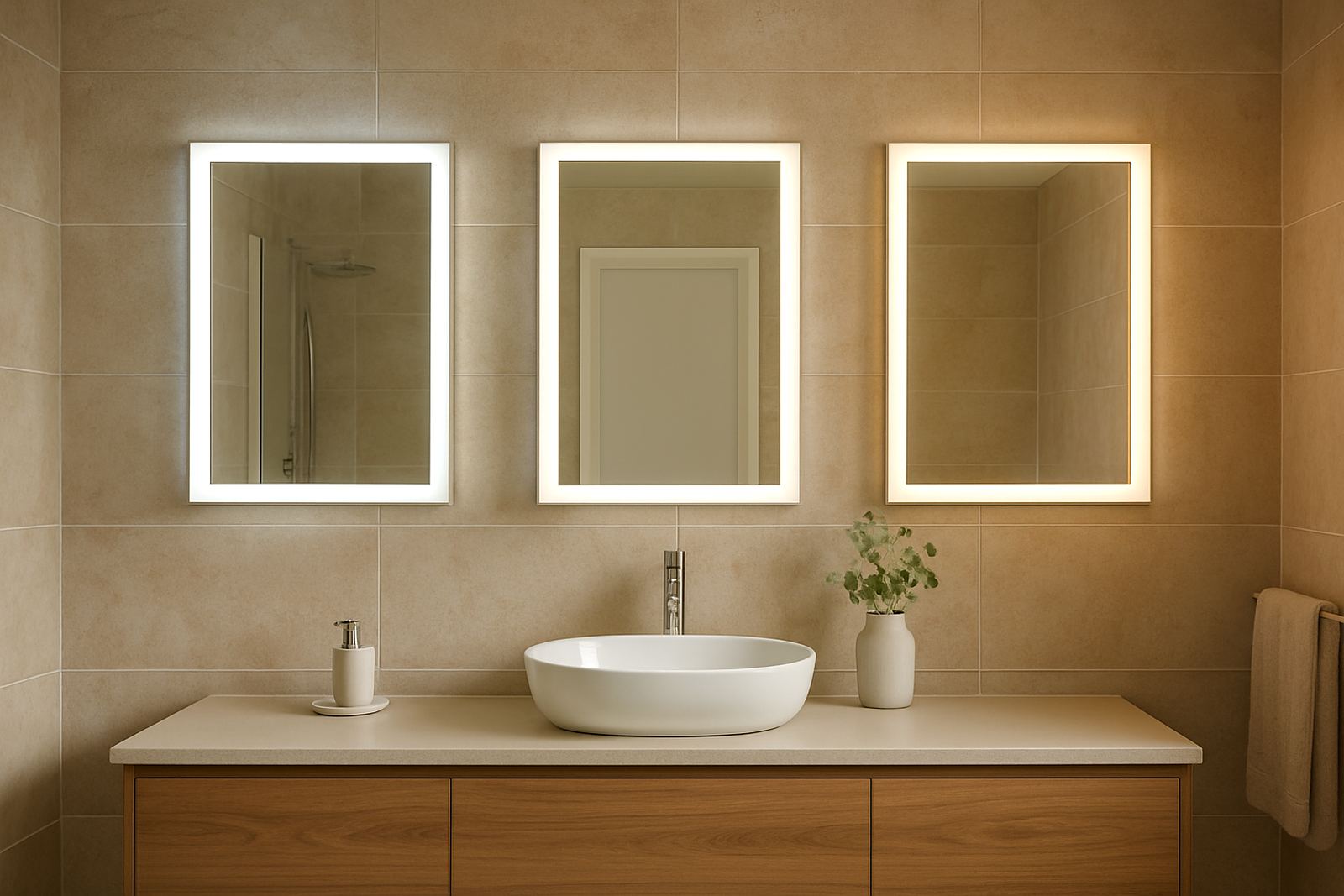
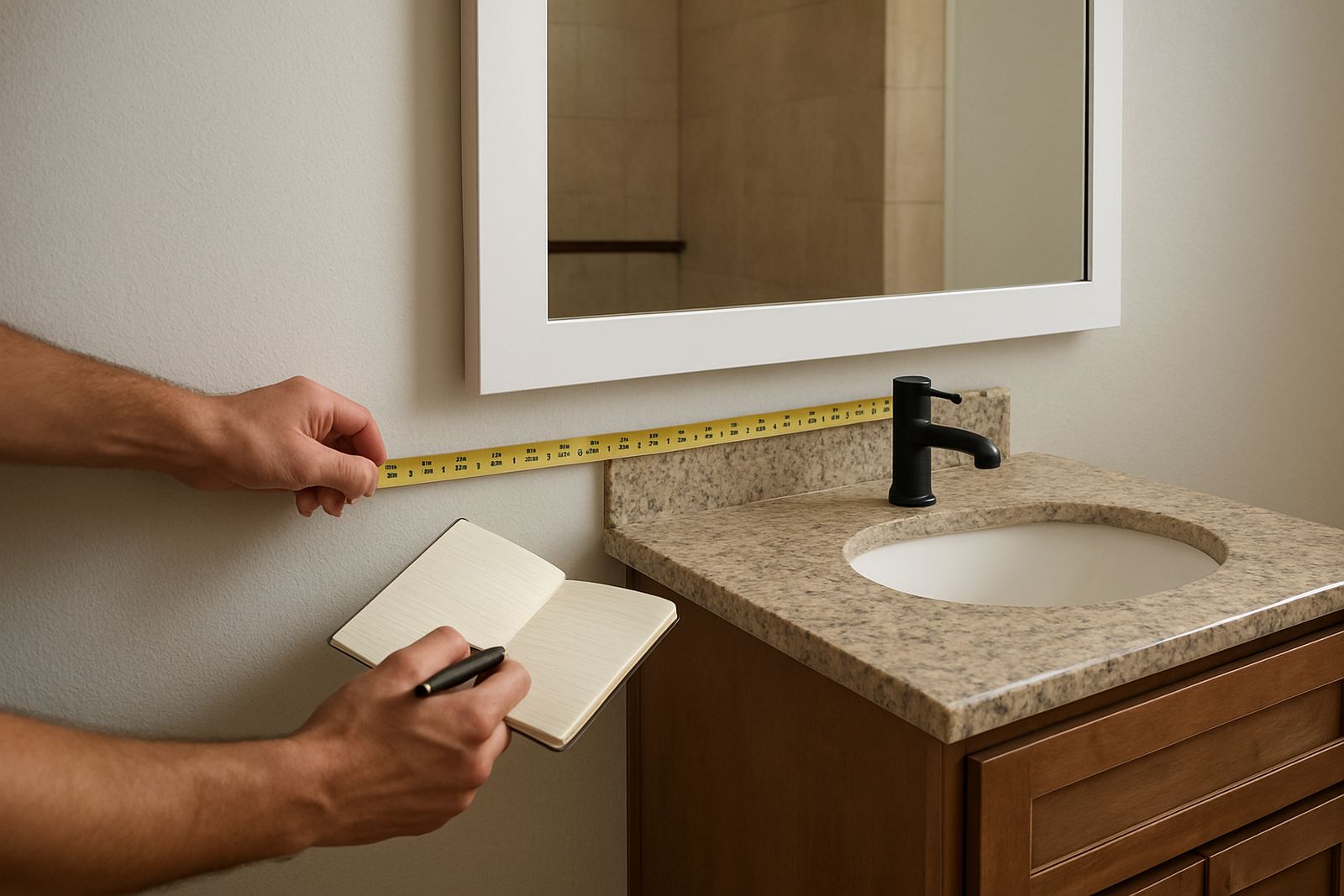
Begin at the vanity itself, not the room. Measure the full width of the basin cabinet or countertop from left to right in millimetres, then note the centre point. If the vanity is 900 mm wide, the mirror usually looks best when it sits centred above that run, with equal space on both sides. In tighter bathrooms, a mirror that is close to the vanity width gives a neat, built-in feel.
Do not measure only the basin bowl. A basin can be off-centre or sit smaller than the cabinet below it. Use the cabinet edge or the finished top as your main reference. If the vanity has drawers, a side return, or a tapered countertop, measure the widest finished section you want the mirror to sit above.
- Measure the vanity width in mm
- Mark the centre line with masking tape
- Note if the basin is centred or offset
- Check for side panels, returns or wall tiles that change the available width
Check The Wall Height And Mirror Position
Next, measure the wall space from the top of the vanity to the ceiling, or to any bulkhead, shelf or tile feature above it. This tells you how much height you have for the mirror and whether you need a portrait, square or landscape format. In many Durban homes, bathrooms have a window sill, cornice or extractor position that affects the usable height, so measure carefully from the finished floor and from the vanity top.
As a simple guide, leave enough space so the mirror does not sit too close to the ceiling and does not touch any wall feature above it. A little breathing room makes the room feel more organised and helps with cleaning. If you are fitting a mirror in a guest bathroom or main en-suite, think about who uses it most. A taller mirror is handy for grooming, while a wider mirror can suit a shared vanity better.
- Measure from vanity top to ceiling or bulkhead
- Check for windows, tiles, beams and shelves
- Allow space for cleaning around the mirror edge
- Decide if portrait, square or landscape works best
Allow For Taps, Splash Space And Fixtures
Your mirror must clear the tap set, soap shelf, wall light points and any toothbrush holder or shaving socket close to the basin. Measure from the vanity top up to the highest point of the tap spout and then add enough clearance so the mirror does not visually crowd the fitting. If the basin is set high or the tap is wall mounted, this becomes even more important.
For bathrooms with patterned tiles or feature walls, check how the mirror will sit against the design. Sometimes a smaller mirror placed carefully looks better than one that sits awkwardly over grout lines or cuts across a tile border. In coastal homes around Umhlanga or Ballito, where humidity can be high, it is also wise to keep the mirror clear of constant splash zones so the finish stays cleaner for longer.
- Measure the highest tap point from the vanity top
- Check for wall lights, niches and shaving points
- Note any splash zone directly behind the basin
- Look at tile lines so the mirror sits neatly
Measure For Power Supply And Electrical Access
LED mirrors need proper electrical planning, so check where the power point or connection point sits before you place an order. Measure the distance from the nearest socket or junction point to the proposed mirror position. This helps with cable reach and keeps the installation tidy. If the power point is too far away, the electrician may need to move it, especially in renovated homes or older properties in Westville and Hillcrest.
Also think about load-shedding. A good LED mirror still needs the correct supply setup, and it should not be squeezed around extension leads or loose wiring. If you are upgrading the bathroom, it is better to plan the electrical point while the wall is open or the tiles are still being worked on. That saves time and avoids patchy finishes later on.
- Locate the nearest power point or junction box
- Measure the cable route to the mirror position
- Check if an electrician needs to reposition anything
- Plan early if the bathroom is still under fit-out
Use Clearances For Doors, Cupboards And Movement
A mirror can be the right size on paper and still feel wrong once the bathroom door opens or a cupboard door swings out. Measure the clearance on each side of the vanity and in front of it. If the mirror is too wide, it can interfere with nearby towel rails, medicine cabinets or shower screens. In compact Pinetown and Durban North bathrooms, this is often the difference between a comfortable layout and one that feels cramped.
Stand where you usually use the basin and check your sight line too. You want the mirror centred in a practical position, not only an attractive one. If two people use the vanity at the same time, allow enough space for both to stand comfortably. Small misjudgements here can make a neat bathroom feel busy, so take the time to test it with actual movement.
- Open nearby doors and cupboards fully
- Check distance to towel rails and shower glass
- Stand at the basin and test the viewing position
- Allow room for two users where needed
Make A Quick Checklist Before You Order
Once you have measured the vanity and wall, write everything down in millimetres. A photo of the bathroom is helpful too, especially if the mirror is going into a renovation or a new fit-out. For custom work, clear notes help us guide you on the right size, wiring position and finish. This is also useful for bulk project supply in apartments, guest houses and developer units across Durban and beyond.
If you are unsure, measure twice and compare your notes against the available wall space. You can send the measurements with a short description of the room, and our team can help with the next step. The more detail you give, the easier it is to match the mirror to the vanity without last minute changes.
- Vanity width and height
- Wall space above the vanity
- Tap height and splash zone
- Power point position
- Nearby doors, rails and cupboards
- Photo of the wall and basin area