Start with how the mirror will be used each morning
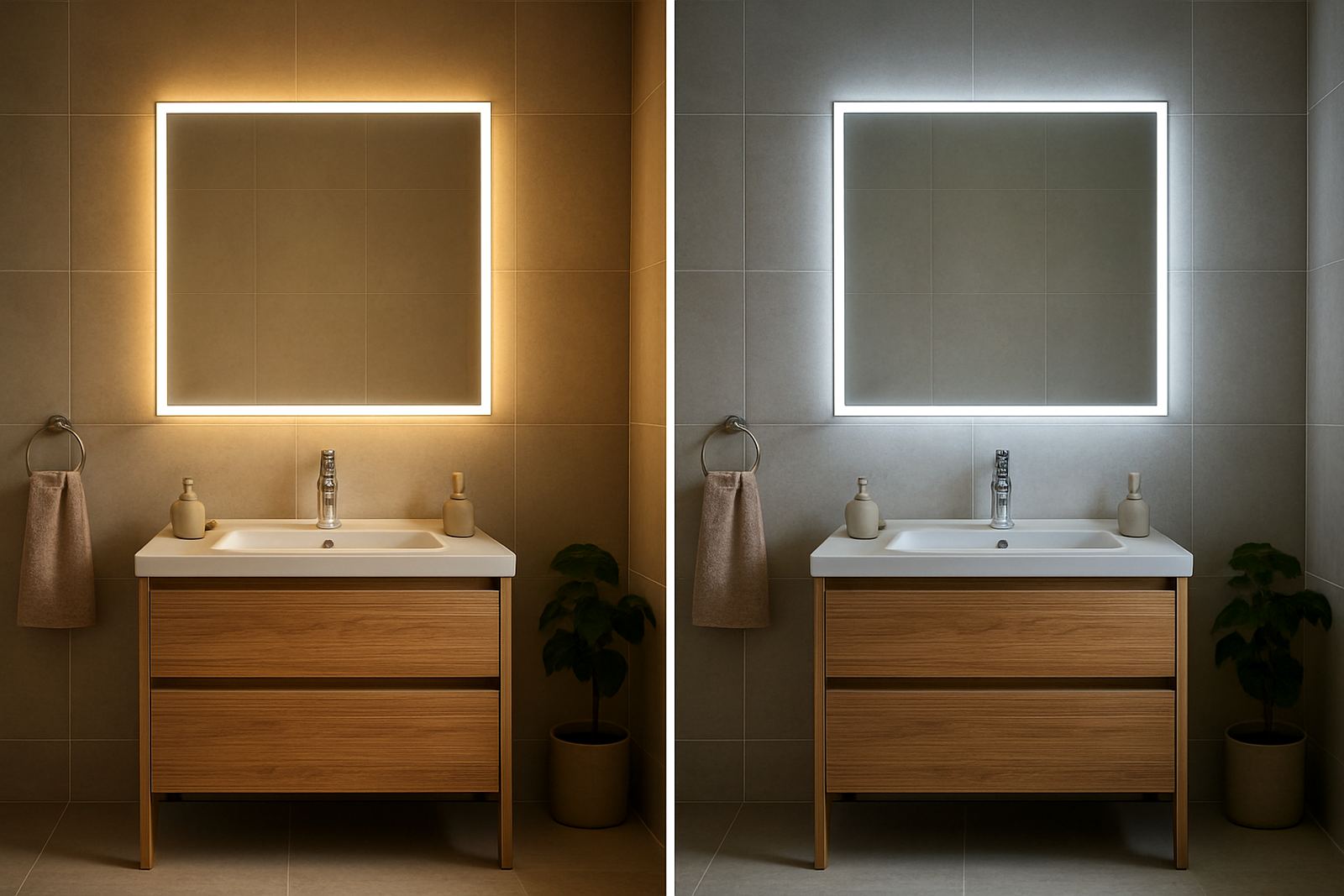
The first question is simple: what do you do at the mirror? If it is mainly for shaving, make-up, skincare or checking fine details before work, colour temperature matters more than most people realise. Warm light gives a softer, more relaxed look, while cool light gives a whiter and sharper view. Neither is automatically better, it depends on the task.
In a family bathroom, one person may want gentle light for early mornings while another wants brighter light for detailed grooming. That is why many homeowners in Pinetown and Westville now ask for mirrors that suit everyday use instead of just looking good on the wall. A mirror can be lovely, but if the light makes your face look too yellow or too pale, it becomes frustrating fast.
- Warm light is usually better for winding down at night.
- Cool light is often better for precision tasks in the morning.
- Neutral light sits in the middle and works well in shared bathrooms.
What warm light does in a bathroom
Warm light usually has a softer glow and a more golden appearance. It feels calm, which suits bathrooms used late in the evening or after a long day. In homes with darker tiles, timber vanities or brushed metal fittings, warm light can make the room feel inviting rather than harsh.
That said, very warm lighting can hide detail. If the light is too yellow, you may struggle to see the true tone of your skin or notice uneven shaving. In smaller bathrooms with limited daylight, warm light can also make the room feel dimmer than it really is. For that reason, warm light works best where comfort matters more than exact colour matching.
It is a good fit for guest bathrooms, powder rooms and main bathrooms that are used mostly in the evening. In coastal homes from Umhlanga to Ballito, warm light can also soften the look of bright tiled spaces that catch a lot of glare from the sun. Used well, it gives the room a calm finish without feeling gloomy.
Where cool light earns its place
Cool light gives a clearer, more clinical white appearance. It is often preferred for grooming because it shows detail more sharply. If you need to see the line of a beard, check foundation blending or spot small marks on the skin, cool light can help. It also works well in bathrooms that have little natural light during the day.
In practical terms, cool light suits busy homes and fit-outs where the bathroom is used by several people before school or work. It is especially useful in rooms with pale finishes, glossy tiles or narrow windows, becuase it can keep the space feeling bright even on a cloudy Durban morning. Some clients ask for cool light in mirrored cabinets or vanity mirrors because they want the room to feel more alert and clean.
- Better for shaving and close grooming.
- Useful in bathrooms with limited daylight.
- Helps when you need a truer view of skin tone and colour.
Neutral white is often the safest middle ground
Neutral white, often called day white, sits between warm and cool tones. For many South African homes it is the easiest option because it does not push the room too yellow or too blue. If you share a bathroom with family members, or if the mirror is used for both grooming and general lighting, neutral white is often the most practical choice.
This is also where fit-out planning matters. The room finish, tile colour and window placement all affect how the light feels. A neutral mirror light in a dark bathroom can still feel bright, while the same fitting in a sunlit room may appear softer than expected. That is why site measurements and a quick look at the room conditions matter before ordering. In Hillcrest, for example, cooler mornings and less direct coastal light can make neutral white a very sensible middle road.
For many homeowners, neutral white gives the best balance of comfort and visibility. It is also the easiest colour to live with if you are not sure which routine will dominate the space long term.
Think about finishes, skin tone and the room itself
The mirror light should work with the bathroom, not fight it. High-gloss tiles reflect more light and can make cool light feel stronger. Matte finishes absorb more light and often suit warm or neutral tones better. The colour of the vanity and walls also changes how the mirror appears, so two homes can use the same light temperature and get very different results.
Skin tone is another practical point. Some people prefer warmer light becuase it feels flattering and soft. Others want cooler light because it gives a truer view for makeup or shaving. There is no single rule. The right answer is the one that lets the room function properly while still feeling comfortable at the end of a long day.
- Glossy tiles can make cool light feel brighter.
- Darker walls often suit warmer or neutral tones.
- Bathrooms with small windows usually need a brighter setting.
Load-shedding, coastal humidity and long-term use
In South Africa, lighting choice is not only about appearance. Load-shedding means many homeowners want mirror lighting that is efficient and dependable when the power is available. LED mirror lighting is useful because it uses less electricity than older lighting types, and it reaches full brightness quickly. That makes it practical for daily routines.
Coastal humidity in places like Durban North, Umhlanga and Ballito also needs consideration. Bathroom mirrors should be suited to moisture and regular cleaning, and the light colour should still look consistent after years of use. A well-chosen mirror light will not only suit the room on day one, it should keep doing the job through summer humidity, winter mornings and repeated use by the whole family.
For full bathroom fit-outs and mirror replacements nationwide, it helps to choose a colour temperature that matches how the room is actually used. A beautiful mirror is one thing, but a mirror that stays useful every morning is what makes the difference.
A simple way to choose before you order
If you are still unsure, use this quick guide. Warm light is best when you want comfort and a softer mood. Cool light is best when detail and clarity matter most. Neutral white is best when several people use the bathroom and you want the safest all-round option.
A good local example is a family home in Pinetown with a shared main bathroom. The parents may want a mirror that helps with grooming before work, while the children need bright light for school mornings. In that kind of room, neutral white usually works best, with careful placement so the light spreads evenly across the face. For a guest bathroom in the same home, warm light may feel better because it gives visitors a gentler welcome.
If you are planning a vanity upgrade or replacing an older mirror, ask how the lighting will feel at different times of day. That small question can save a lot of regret later on.