What a touch sensor actually does
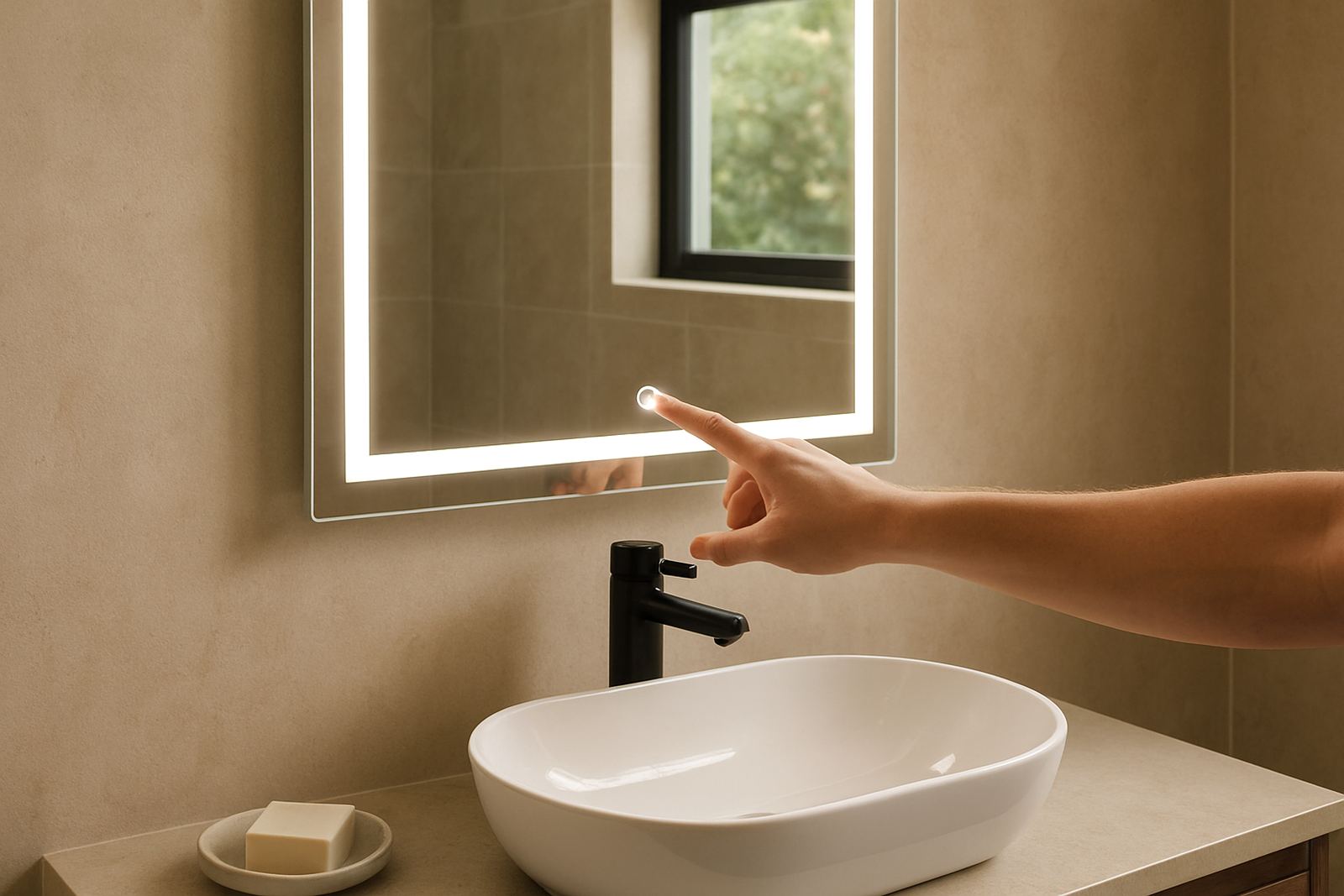
A touch sensor is the control point built into the mirror or frame that lets you switch the LED light on and off with a light tap. On many modern mirrors, the same control can also dim the light, change the colour temperature, or activate a demister pad if the unit includes one. For most homeowners, it replaces a separate wall switch or cord switch and gives the mirror a cleaner finish.
The sensor usually responds to a fingertip, so you do not need to press hard. That is useful in a bathroom where your hands may be wet or soapy, although it still works best when the glass is kept clean. In practice, the touch point should be positioned where it is easy to reach after washing hands or shaving, not hidden behind a tap or cabinet edge. A well placed sensor makes the mirror feel natural to use every day.
The main touch functions you can expect
Different mirror models offer different controls, so it helps to check what is included before installation. A basic unit may only offer on and off, while a more advanced mirror can include soft dimming, memory settings and separate controls for the light and demister. In Durban and Pinetown homes, that matters because families often want one mirror for early morning use and another setting for evening routines.
- On and off control for quick use
- Dimming for softer light at night
- Colour temperature adjustment on some mirrors
- Demister activation for steam-heavy bathrooms
- Memory function that recalls the last setting
Not every bathroom needs every feature. If your space is small or shared, a simple sensor can be enough. If you have a main en-suite with a vanity area, the extra functions can save time and make daily routines easier.
Why touch controls suit South African bathrooms
Touch sensors suit modern bathrooms because they reduce clutter and make cleaning easier. There is no bulky pull cord or separate switch plate at the mirror itself. That matters in tight bathrooms, guest bathrooms and vanity areas where every centimetre counts. For apartment fit-outs in Umhlanga or Ballito, a slim mirror with touch control often gives a neater finish than a setup with multiple fittings around the basin.
They also work well when a bathroom is used by more than one person. A quick tap is easier for children and guests to understand, and the controls are usually intuitive after one use. During load-shedding planning, many clients also ask whether the mirror will come back on in the same mode once power is restored. That depends on the model and the installation setup, so it is worth confirming during selection.
What to check before installation
Before a mirror is fitted, the electrical point, wall finish and available space should all be checked. Touch sensors still need a proper power supply, and the mirror may need to connect to a switched spur or dedicated point depending on the design. If the wall is tiled or freshly painted, measurements matter because even a few millimetres can affect alignment. In Pinetown and Westville, we often find that the mirror size looks correct on paper but the tap height or cabinet position changes the final fit.
- Confirm the power point position before the mirror is ordered
- Measure the visible wall space, not just the basin width
- Check whether the mirror includes a demister or only lighting
- Ask if the touch control works with gloves or damp fingers
- Make sure the installer understands the wall finish and tile layout
If the mirror is going into a new bathroom fit-out, it is easier to plan the control position early. That avoids awkward cable routes and lets the electrician and installer work from the same drawing or site measurement.
Caring for a touch sensor mirror
Touch controls need only basic care, but regular cleaning makes a difference. Wipe the sensor area with a soft cloth and a mild glass cleaner, then dry it properly. Harsh chemicals, coarse sponges and over-wetting around the edge of the mirror can shorten the life of the control area. Coastal humidity in Durban can also leave a fine film on the glass, so a quick weekly clean helps keep the sensor responsive.
If the mirror starts reacting slowly, the issue is often dirt, moisture or a loose electrical connection rather than a faulty panel. In some cases, the demister or light driver may need checking. It is better to have that assessed early than to keep pressing the sensor harder, because touch controls are meant to respond with very little pressure. A little care goes a long way, and it keeps the mirror looking neat too.
A practical example from a Pinetown bathroom
Imagine a family bathroom in Pinetown with a vanity upgrade, tiled walls and a mirror above a double basin. The homeowners want a cleaner look, better light for shaving and makeup, and a demister for steamy mornings. A touch sensor mirror fits that brief because one control can manage the light without adding another switch beside the basin. It also keeps the wall neat where cleaners, towels and soap already compete for space.
For a project like that, the important points are the mirror size, the lighting strength and the position of the sensor. If the mirror is too wide, it can interfere with wall cabinets or fittings. If the sensor sits too low, it may be splashed often. A practical layout solves those issues before installation, so the finished result works day after day and not just on the first morning.
For homeowners, designers and contractors across Durban, Hillcrest, Umhlanga, Ballito and beyond, the best touch sensor mirror is the one that fits the room and the way the bathroom is used. Good advice up front saves time later.