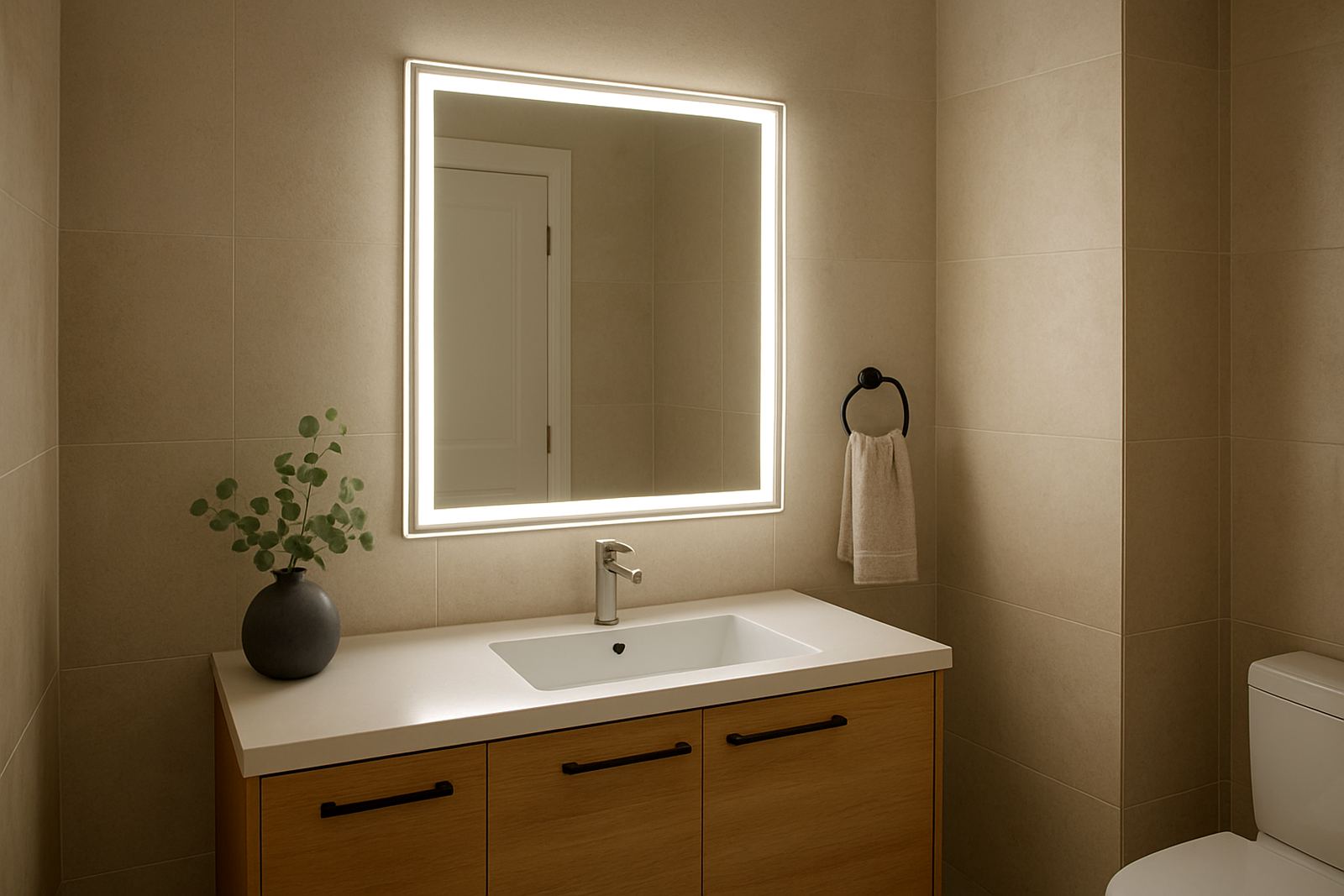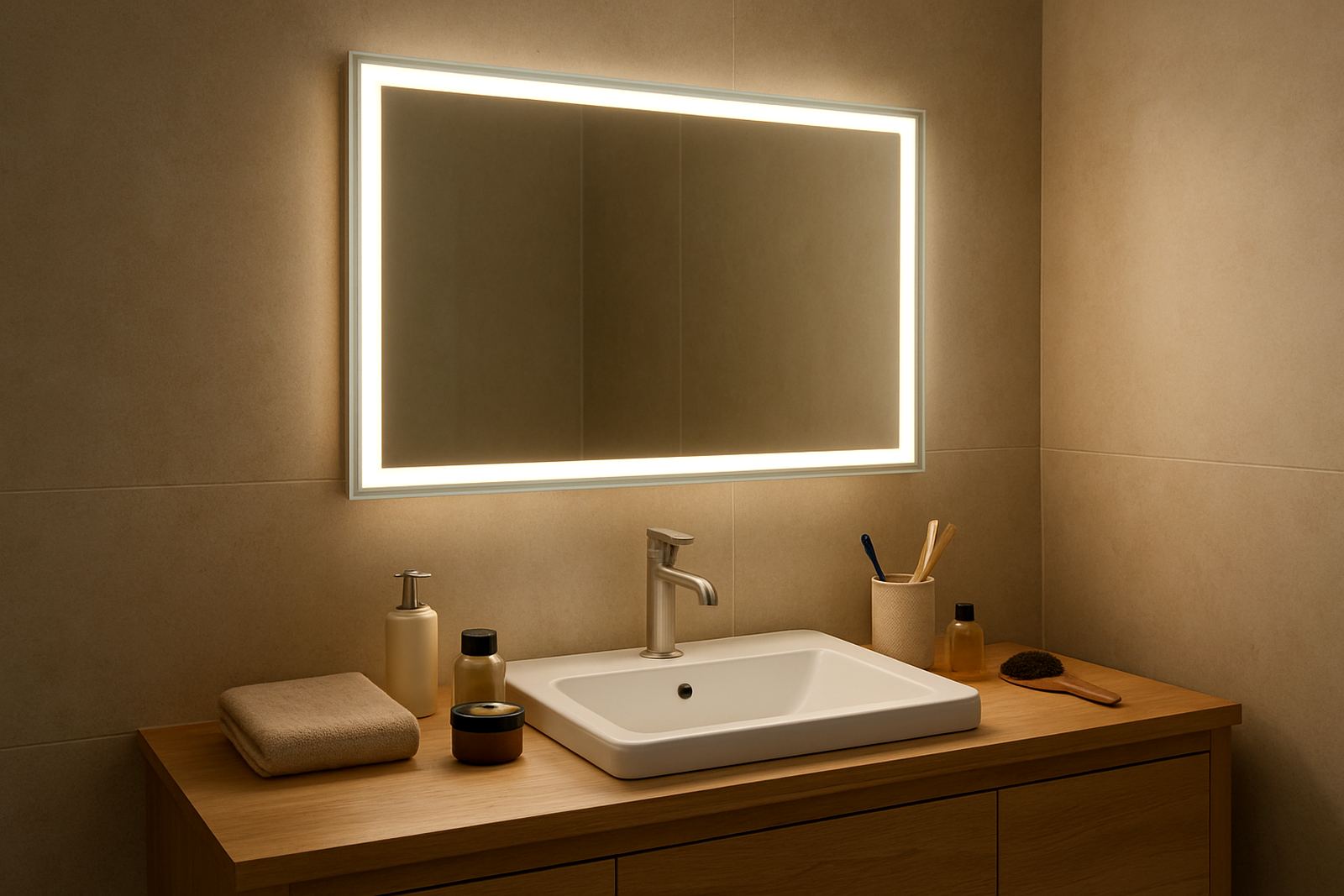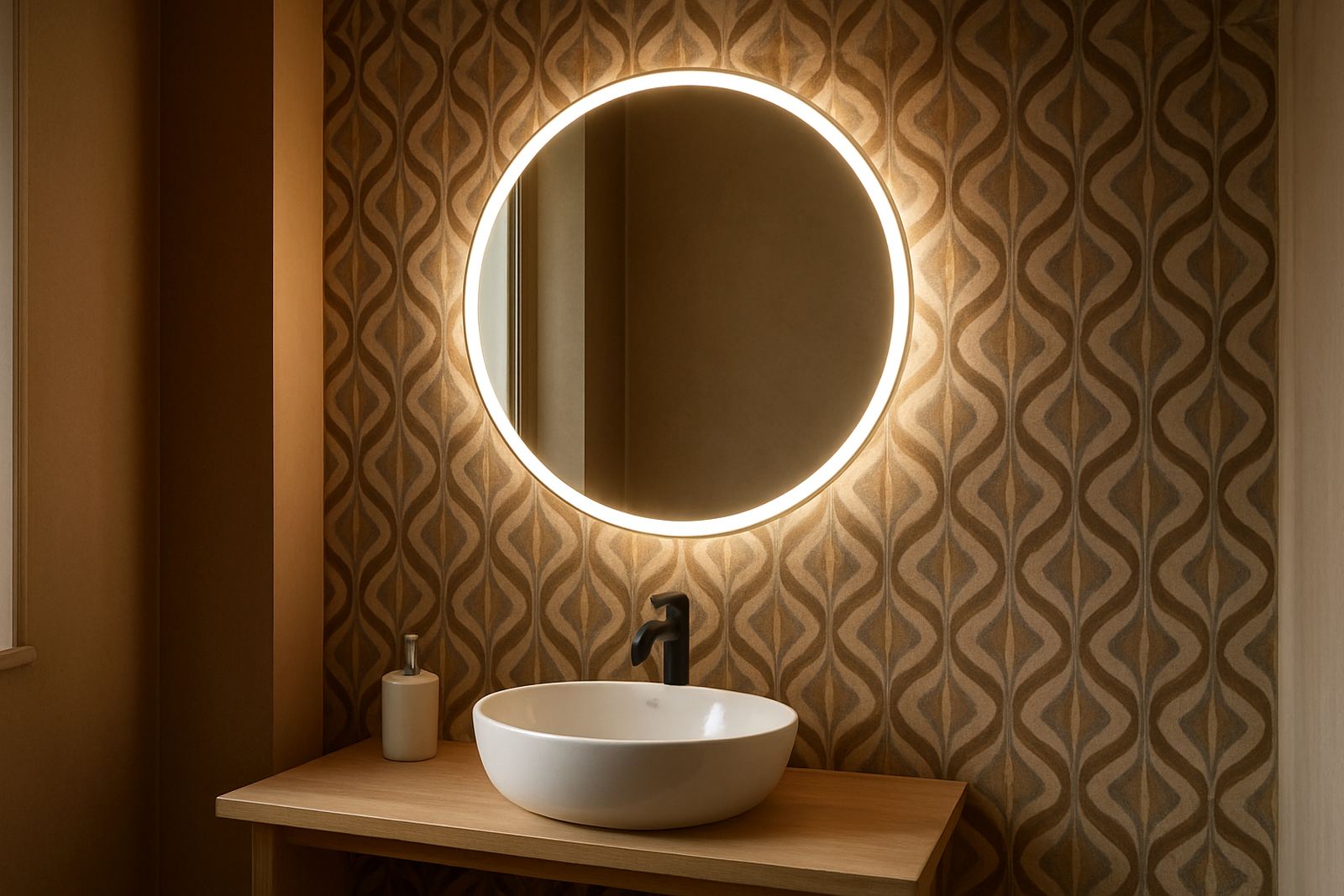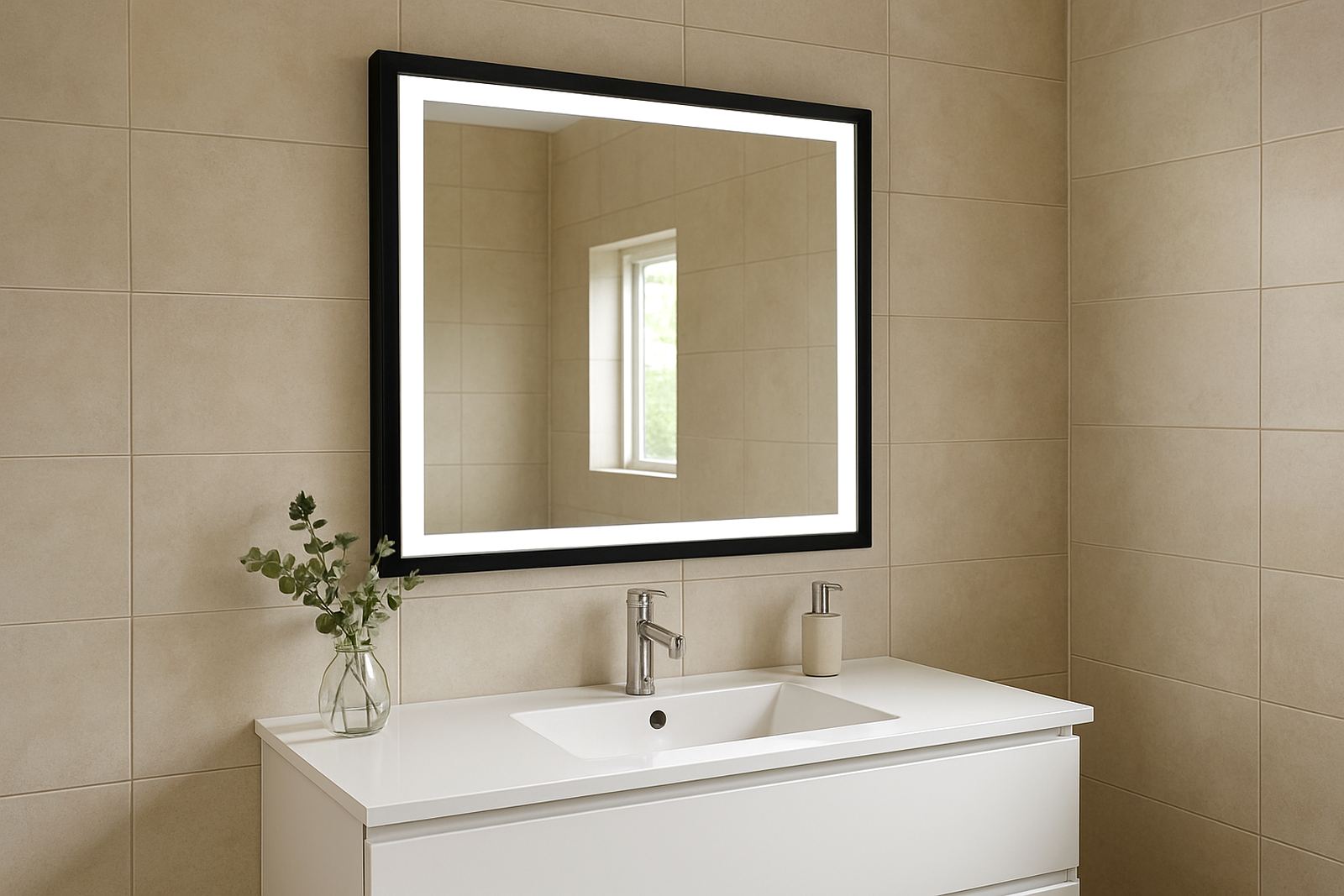
Why black frames stand out in a white or neutral bathroom
Most bathrooms in Durban and across KZN lean toward white tiles, pale stone, or soft greys because they stay bright and are easier to keep looking clean. A black frame cuts through that softness and gives the room a clear edge. It defines the mirror as a feature rather than letting it disappear into the wall.
That contrast matters in smaller bathrooms too. In a compact guest loo or a narrow main bathroom, a dark border gives the eye something to read immediately. It can make the basin wall feel more organised and intentional, especially where the vanity and fittings are plain. If the room has a lot of chrome or brushed finishes, the black frame also helps tie the whole layout together.
For homeowners who want a current look without chasing every trend, this is a practical choice. The frame brings shape and structure, but it does not need a lot of extra decoration around it. One well-placed mirror can do the work of several smaller decorative pieces.
Where black framed mirrors work best in South African homes
Black frame mirrors suit a wide range of homes, from new builds in Umhlanga to older family homes in Pinetown and Westville. They are especially useful in bathrooms where the vanity has a light colour and the wall finish is simple. The frame adds enough visual weight to keep the mirror from looking too thin or lost.
They also work well in these spaces:
- Main bathrooms with floating vanities and light stone tops
- Guest bathrooms that need a sharper, more finished look
- Townhouse bathrooms where space is limited and details matter
- Double vanities that need matching mirror lines across the wall
- Renovated older homes where you want contrast without changing the entire room
In coastal areas such as Durban North, Ballito and Umhlanga, the finish choice matters because bathrooms deal with moisture every day. A properly made black framed mirror should suit humid conditions and regular cleaning, so the frame stays neat and the edges remain tidy over time.
Getting the proportions right above a vanity
The biggest mistake people make with framed mirrors is choosing the wrong size for the basin wall. If the mirror is too small, it looks clipped and underpowered. Too large, and it can crowd taps, lights or wall tiles. The best result comes from matching the mirror to the vanity width and allowing enough space on either side for balance.
A useful rule is to keep the mirror a little narrower than the vanity top, unless you are going for a full wall feature. For example, a 900 mm vanity often pairs well with a mirror around 700 mm to 800 mm wide, while a 1200 mm double basin unit may need one larger mirror or two coordinated mirrors. Height also matters. Taller mirrors can make a room feel brighter, but they must still sit comfortably above the basin splash zone.
During site measurements, the wall layout should be checked carefully. Ceiling height, light points, tile edges and even the position of shaving sockets all affect the final look. A small adjustment of 20 mm can make the difference between a mirror that feels built in and one that looks forced.
Lighting, demisters and daily use in coastal humidity
A black frame mirror should do more than look good. In real bathrooms, it needs to work during early mornings, after hot showers and through the humidity that comes with coastal living. Good integrated lighting helps, especially in rooms with limited natural light or where the window faces away from the basin wall.
LED lighting around or within the mirror gives even light for shaving, make-up and general grooming. It reduces harsh shadows, which is important when the bathroom only has a single ceiling fitting. In winter or during load-shedding, many homeowners also appreciate the lower power draw of LED units because they are easier on the household bill and more practical when the power is unstable.
Useful features to consider include:
- Warm or neutral light for a softer bathroom feel
- Anti-fog or demister functions for steamy mornings
- Touch or wall-switch control depending on the room layout
- Accessible wiring for easy electrical connection and servicing
- Simple surface cleaning so water spots do not show too easily
Where coastal moisture is common, the fitter should also check the wall condition and electrical point before installation. That avoids loose fittings, water damage and unnecessary call-backs later on.
How black frames support a modern but practical finish
Black framing works well because it is visually strong without being fussy. It can suit matte black taps, dark towel rails, black shower trims and even timber vanities. The trick is to keep the room balanced. If every fitting is dark, the bathroom can feel heavy. If the frame is the only dark item, it can look like an afterthought.
Interior designers often use black framed mirrors to give structure to a bathroom plan. Homeowners can use the same idea at a simpler level by repeating the colour once or twice in the room. A black light fitting, a tap, or a vanity handle line is often enough. That keeps the look ordered rather than overdone.
For fit-outs in Durban and surrounding areas, the practical side is just as important as the visual side. A frame should be durable, the mirror surface should be clear and the finish should still look good after regular cleaning. In family homes and rentals alike, that helps protect the value of the bathroom without turning maintenance into a chore.
A local example from a Pinetown bathroom upgrade
In a recent Pinetown bathroom upgrade, the brief was simple: keep the room light, but stop it from feeling plain. The vanity was a pale finish with a stone-look top, and the room had decent wall space but limited natural light. A black framed LED mirror was selected to anchor the basin wall and add contrast without changing the tile colour.
The result was immediate. The mirror gave the room definition, the integrated lighting improved morning use, and the demister kept the glass clear after showers. Because the bathroom had a standard wall layout, the installation could be planned neatly around the existing electrical point and basin position. It looked finished, but it also worked properly for daily use.
That kind of result is why black framed mirrors continue to suit South African homes. They can sharpen a bathroom without making it feel cold, and they give you a practical feature that still feels considered.
If you are planning a bathroom refresh, it helps to look at the mirror early in the process rather than at the end. Once the vanity, tiles and lighting are fixed, the mirror can either pull the room together or leave it slightly off. A well-sized black frame usually solves that with very little fuss.