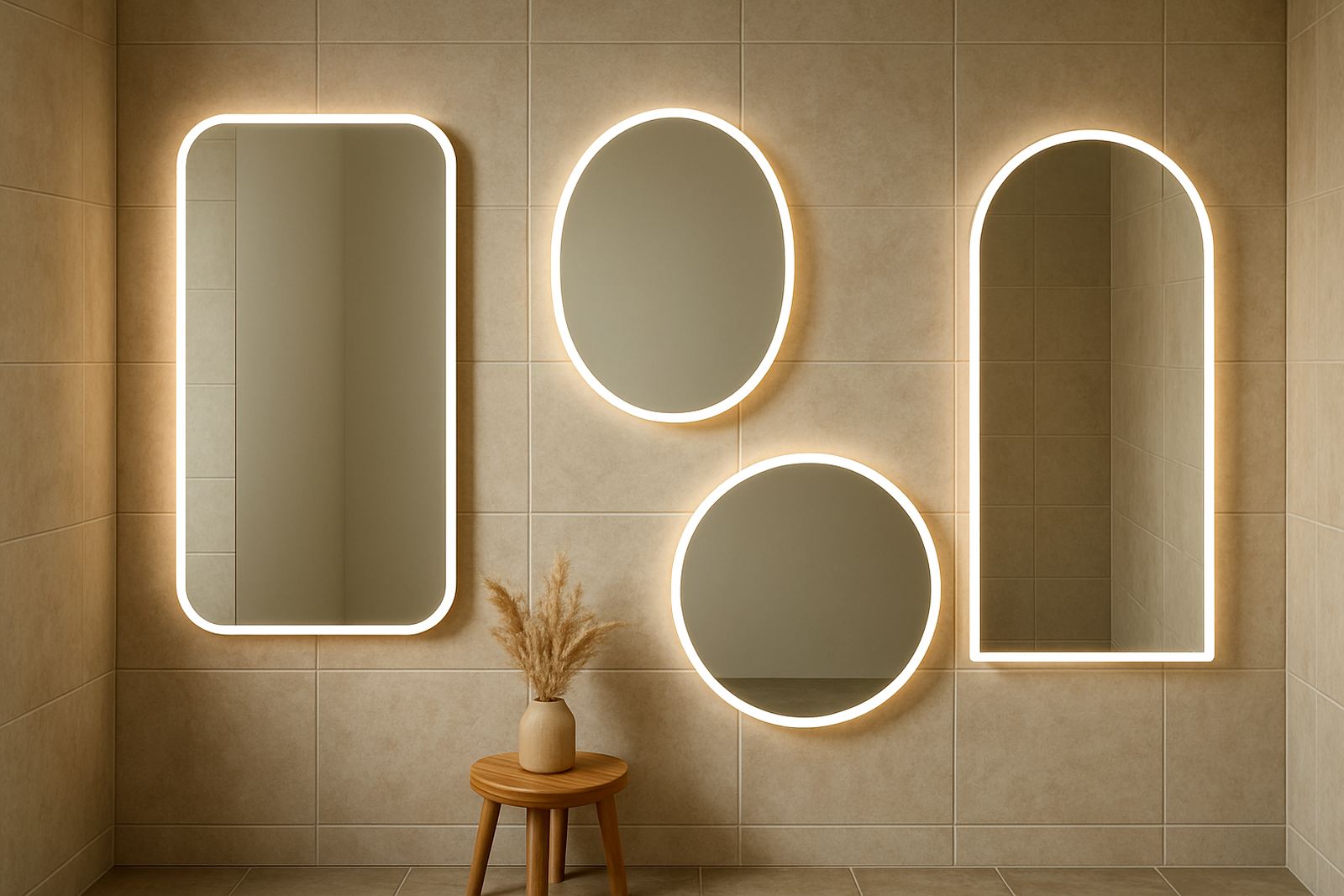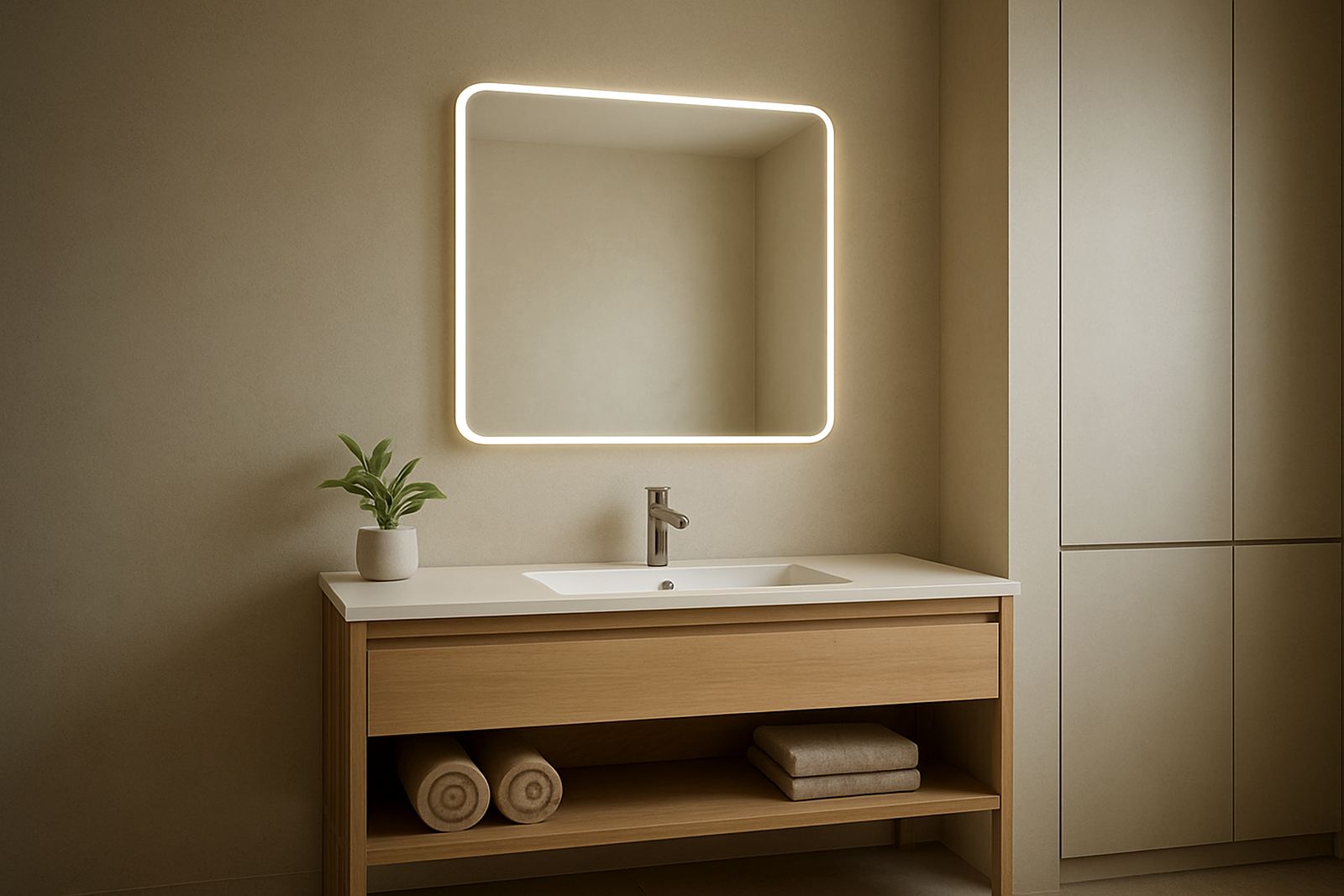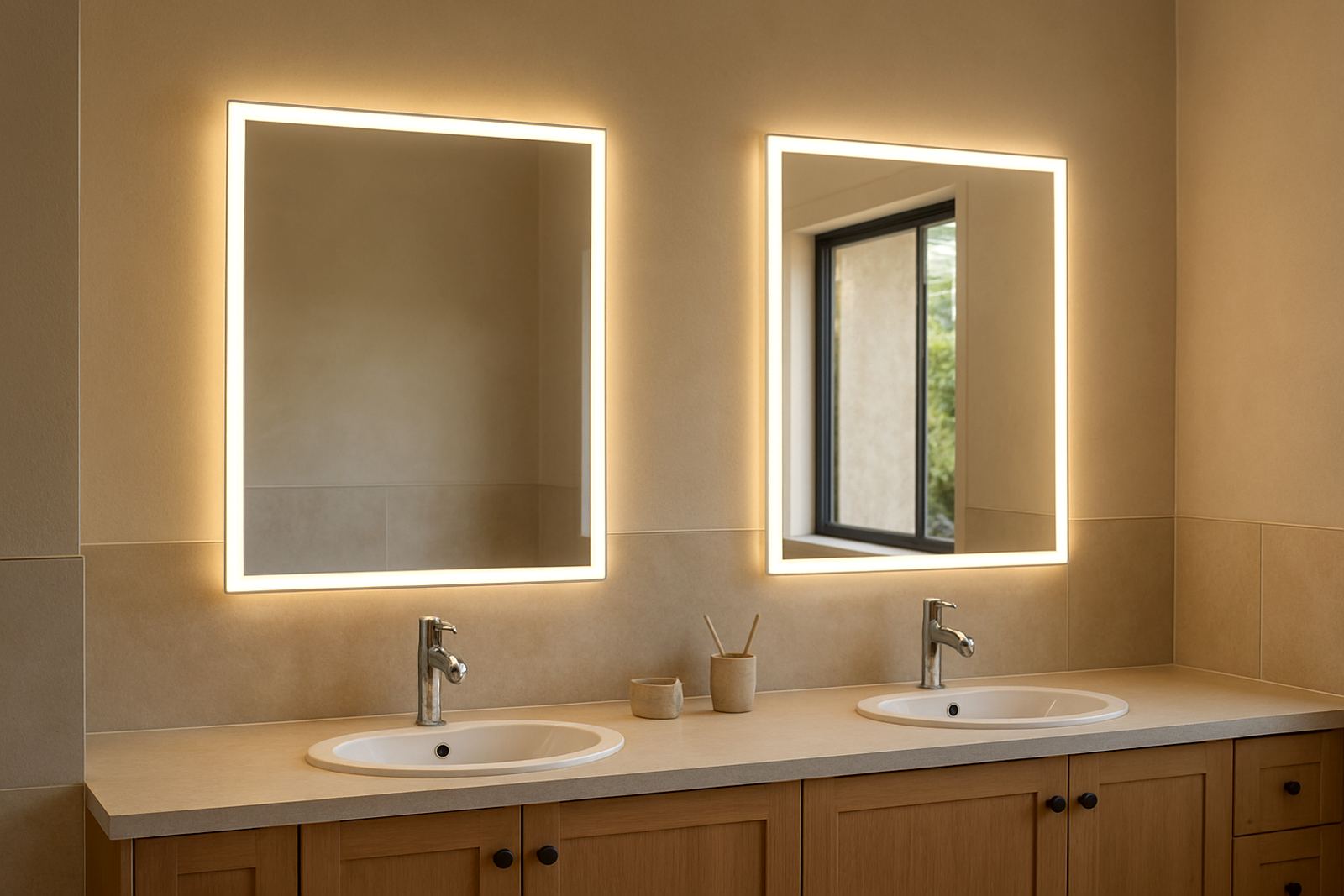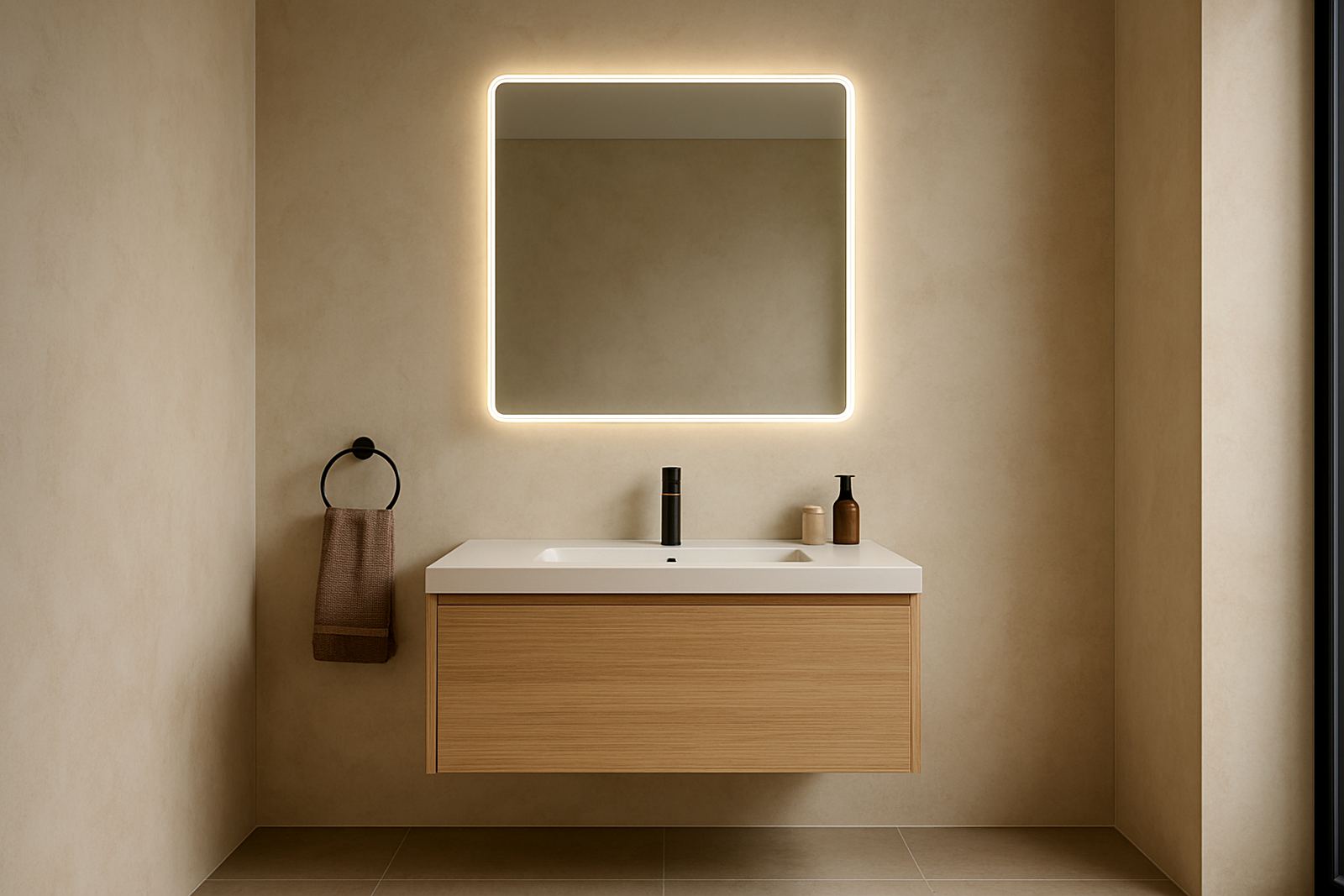
Why frameless mirrors keep their appeal
Frameless mirrors have stayed popular for one simple reason, they do not fight with the rest of the room. In a bathroom where the tiles, taps, vanity and lighting already have plenty going on, a clean edge mirror lets those details speak for themselves. That is why they are still a favourite in contemporary homes from Pinetown to Umhlanga and in apartment upgrades where space is tight.
They also suit South African homes because they are practical. A mirror without a heavy border is easier to wipe down, looks lighter on a wall and can be sized to suit the vanity rather than forcing the vanity to suit the mirror. For homeowners who want a neat finish without a lot of fuss, that matters.
There is also a visual trick at play. Frameless mirrors help bathrooms feel wider and brighter, especially when the room has one window or limited natural light. In smaller guest bathrooms or en suites, that extra sense of space can make a real difference.
Where frameless mirrors work best in Durban homes
In Durban and the coastal suburbs, bathrooms deal with moisture, warm air and regular cleaning. Frameless mirrors fit well in these spaces because there are fewer edges collecting grime. For homes near the coast, especially in Durban North, Umhlanga and Ballito, the goal is usually a mirror that looks refined and holds up to everyday use.
They are a strong choice for:
- master en suites with floating vanities
- family bathrooms that need quick cleaning
- powder rooms where the mirror should look calm and uncluttered
- new builds and renovations with straight lines and light colours
- hospitality or rental properties where a modern finish helps the room feel newer
A frameless style also pairs neatly with LED lighting. When the light source is built around the mirror or placed above it, the reflection stays clear and the overall look remains clean. This works well for make-up, shaving and general grooming without crowding the wall.
The practical side: size, placement and light
Good mirror choice is not only about style. It starts with measurements. A mirror that is too narrow for the vanity can make the room feel unbalanced, while one that is too large can overwhelm the basin area. As a rule, the mirror should relate to the vanity width and the wall space around it, leaving enough room for downlights, switches and any wall cabinets.
When frameless mirrors are fitted above a vanity, the bottom edge needs to sit at a sensible height so water splashes do not become a constant problem. In many homes, a higher mount is better for family use, but the exact position depends on the basin height, tap type and who will use the room most.
- Check the vanity width before choosing the mirror size
- Allow for light fittings and towel rails nearby
- Use correct backing or mounting support on plasterboard or tiled walls
- Consider anti-fog or demister options for busy bathrooms
- Plan power points early if LED lighting or electrical features are included
We often find that a quick site measure avoids costly changes later. On renovation jobs in Westville or Hillcrest, one small adjustment at measuring stage can save a lot of time once the tiler and electrician are already on site.
Why finish quality matters more than decoration
With frameless mirrors, the finish has nowhere to hide. A clean edge, correct polish and precise sizing are what make the mirror look sharp. If the cut is uneven or the fit is sloppy, the whole room shows it immediately. That is why careful handling and installation matter just as much as the style itself.
In bathroom fit-outs, the mirror should feel like it belongs to the room rather than being added at the end as an afterthought. This is especially true in homes where the vanity has been upgraded and the mirror still needs to match the new layout. A plain mirror can actually look more expensive than a decorative one when it is properly made and fitted.
For clients who want something a little more useful, frameless does not mean plain. LED lighting, demister pads and custom sizing can be included without adding visual clutter. The result is a mirror that keeps its quiet look while doing the everyday work of a busy bathroom.
A local example from a Durban bathroom fit-out
In one Pinetown renovation, a family replaced a bulky old mirror with a frameless LED model above a wider vanity. The bathroom had limited daylight and the walls were already finished in a soft neutral tile, so the old frame made the space feel smaller than it was. Once the new mirror went in, the room looked brighter straight away and the vanity area felt properly finished.
The job also needed practical planning. Power had to be positioned neatly, the mirror size had to suit the basin centres, and the wall surface needed proper support before mounting. Because the home had a busy morning routine, the family asked for a demister option as well. That kept the mirror usable after showers, which is the kind of detail people appreciate every day.
That is usually the point with frameless mirrors. They are not chosen because they shout for attention. They are chosen because they make the bathroom easier to use and more pleasant to look at, which is what most homeowners actually want.
Choosing a frameless mirror for your project
If you are planning a bathroom upgrade in Durban, Pinetown, Ballito or further afield, the best place to start is with the room layout. Think about the vanity width, the style of tapware, the lighting position and whether you want a simple mirror or one with added features. For larger projects, it is worth planning the mirror at the same time as the tiles and electrical work so nothing gets in the way later.
Frameless mirrors work especially well when the aim is calm, contemporary style without extra decoration. They suit new homes, refurbishments and replacement jobs where the client wants a cleaner look with good everyday use. For interior designers too, they offer a flexible option that fits many kinds of finishes without overpowering the space.
- Best for clean, modern bathroom designs
- Works well with LED lighting and demister features
- Easy to clean and visually light on the wall
- Suitable for homes, apartments and bulk fit-outs
- Can be measured and installed to suit local site conditions
When selected and fitted well, a frameless mirror does more than reflect the room. It helps the whole bathroom feel settled, open and practical, which is why it remains a firm favourite in South African homes.
Aftercare keeps the mirror looking right
A good frameless mirror should stay neat with ordinary care, but it still helps to treat it properly. Use a soft cloth, avoid harsh scourers and keep cleaning liquids away from electrical parts if the mirror includes lighting or a demister. In coastal areas, a regular wipe-down helps reduce spotting from humidity and airborne salt.
For mirrors with LED components or heating elements, aftercare matters even more. If there is a fault, loose connection or dim area, it is better to have it checked early than wait for a bigger problem. That applies whether the mirror is in a family bathroom in Westville or part of a larger project in Umhlanga.
Frameless style may look simple, but the best results come from proper measuring, careful fitting and support after installation. That is what keeps the mirror looking crisp long after the tiles have dried and the room is in daily use.