Why the mirror becomes the finishing point
In a well planned bathroom, the mirror is not an afterthought. It sits at eye level, catches the first light in the morning and reflects the materials you have spent money on, so it must suit the room in both size and tone. A glossy porcelain tile, a marble-look vanity top and a detailed tap set can look expensive, but the whole effect can fall flat if the mirror is too small, too cool in colour or badly placed.
For homes in Durban, Pinetown and the coastal suburbs, the mirror also has to cope with humidity and day to day use. That means correct sealing, proper mounting and lighting that works after loadshedding or on a backup system. In a luxury bathroom the goal is simple: make the room feel calm, precise and easy to use.
Choosing mirror shapes that suit premium materials
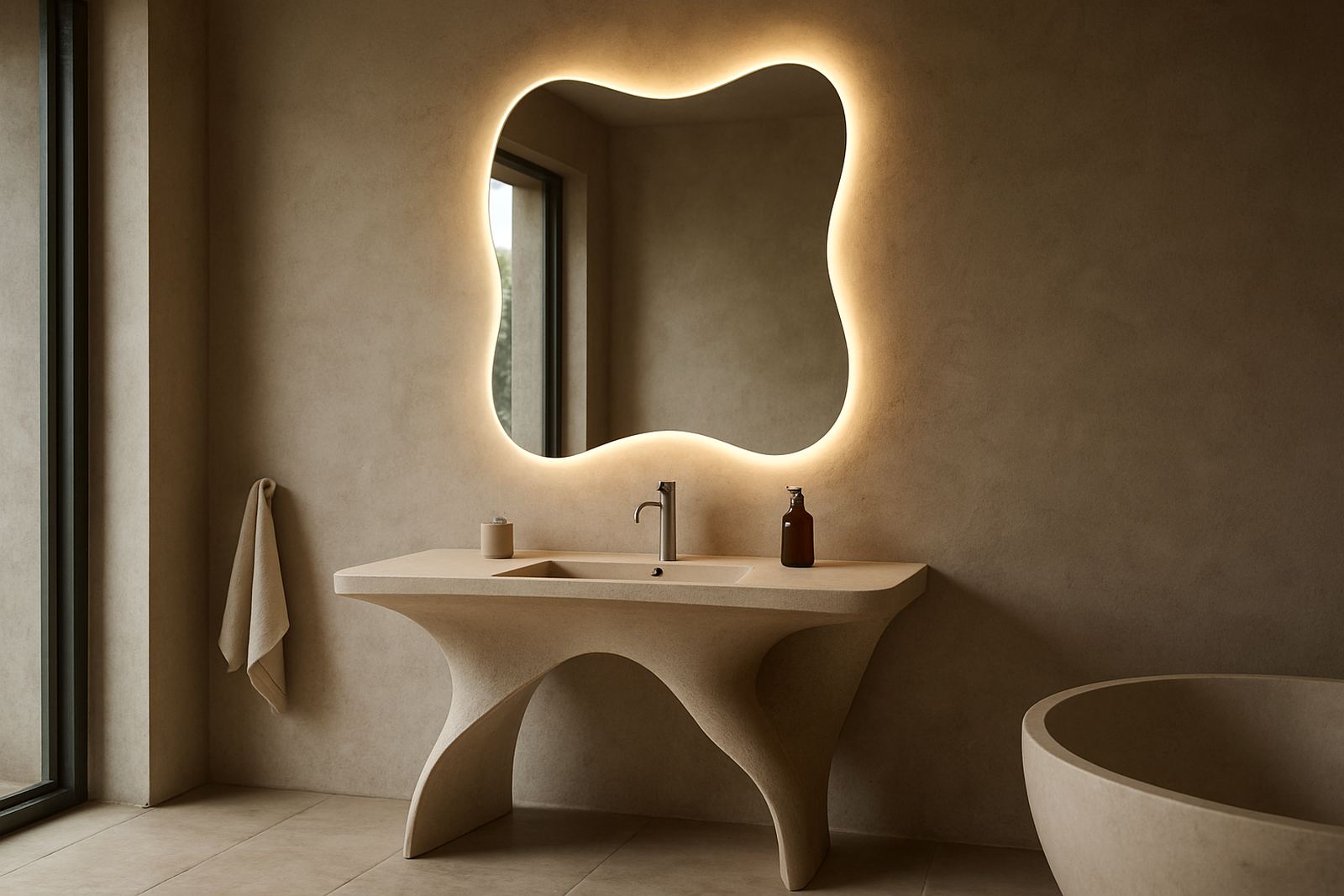
Shape plays a bigger role than many people expect. A soft arched mirror can balance sharp stone edges, while a clean rectangular mirror works well above a long double vanity. Round mirrors can soften bathrooms with heavy veining or strong tile patterns. The right choice depends on the vanity width, ceiling height and the amount of wall space around it.
When you are pairing a mirror with refined finishes, keep the proportions honest. A mirror that is too narrow will make a beautiful vanity look squeezed. A mirror that is too tall can crowd wall lights, shaving shelves and feature tiles. We often advise clients to measure the basin centres, tap positions and tile lines before finalising the design.
- Round mirrors suit softer layouts and smaller powder rooms.
- Rectangular mirrors work well over double basins and long vanities.
- Arched mirrors bring a gentle look to spaces with strong stone patterns.
- Oversized mirrors can open up compact bathrooms, if the wall height allows it.
Light colour and brightness should match the room
Luxury does not mean bright white light everywhere. It means the light is correct for the task and comfortable in the space. For vanity use, many homeowners prefer balanced LED lighting that helps with shaving, makeup and grooming without making the room feel harsh. In coastal homes, where daylight can shift quickly, the mirror lighting must stay consistent from morning to evening.
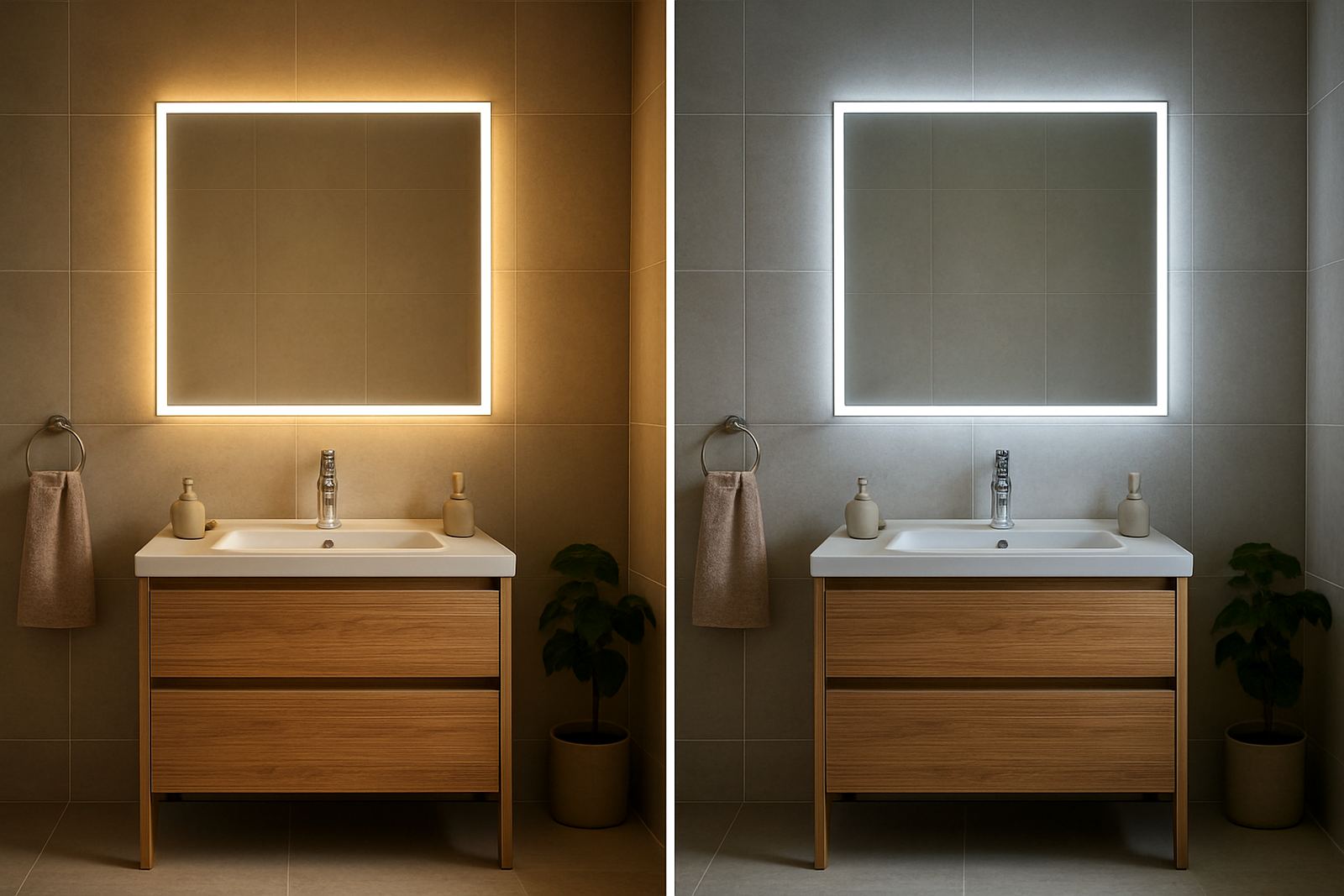
The colour temperature matters. A very cool light can make skin look pale and can clash with warm timber or brass. A warmer tone can feel softer but may not show detail clearly enough. The best result is usually a neutral tone that keeps the room looking refined. Dimmer control is useful too, especially in a master ensuite where the light should feel different at 5 am and at 8 pm.
- Use neutral LED light for most premium vanity spaces.
- Choose dimming if the room is used at different times of day.
- Match light levels to the wall colour, tile sheen and basin size.
- Make sure the mirror lighting does not create shadows on the face.
Premium materials need proper fixing and protection
Refined bathroom detailing is not only about what people see. It is also about what stays hidden behind the mirror. Stone cladding, porcelain slabs and feature tiles often need careful drilling and correct spacing so the wall finish does not crack or chip. A luxury mirror should be installed with the right anchors, backing and spacing for the wall type, whether it is masonry, plasterboard or tiled over gypsum board.
In humid bathrooms, poor edge protection can lead to staining or corrosion. This is where installation quality becomes part of the finish. If the mirror includes lighting or a demister function, the electrical connection should be handled neatly and safely, with access for future servicing. Good work is the kind you do not notice after the job is complete, except that everything just sits right.
- Check wall type before drilling into finished surfaces.
- Use proper sealing on mirror edges in high moisture areas.
- Keep cable runs hidden and serviceable.
- Allow enough clearance for taps, splash zones and feature ledges.
Local example from a coastal family home
In a recent Pinetown project for a family home near the coast, the bathroom had a pale stone vanity, brushed metal fittings and a tiled feature wall. The owners wanted something elegant but practical for early mornings and evening routines. We measured the wall after the tile work was complete, then recommended a mirror that matched the vanity width and kept clear of the wall sconces.
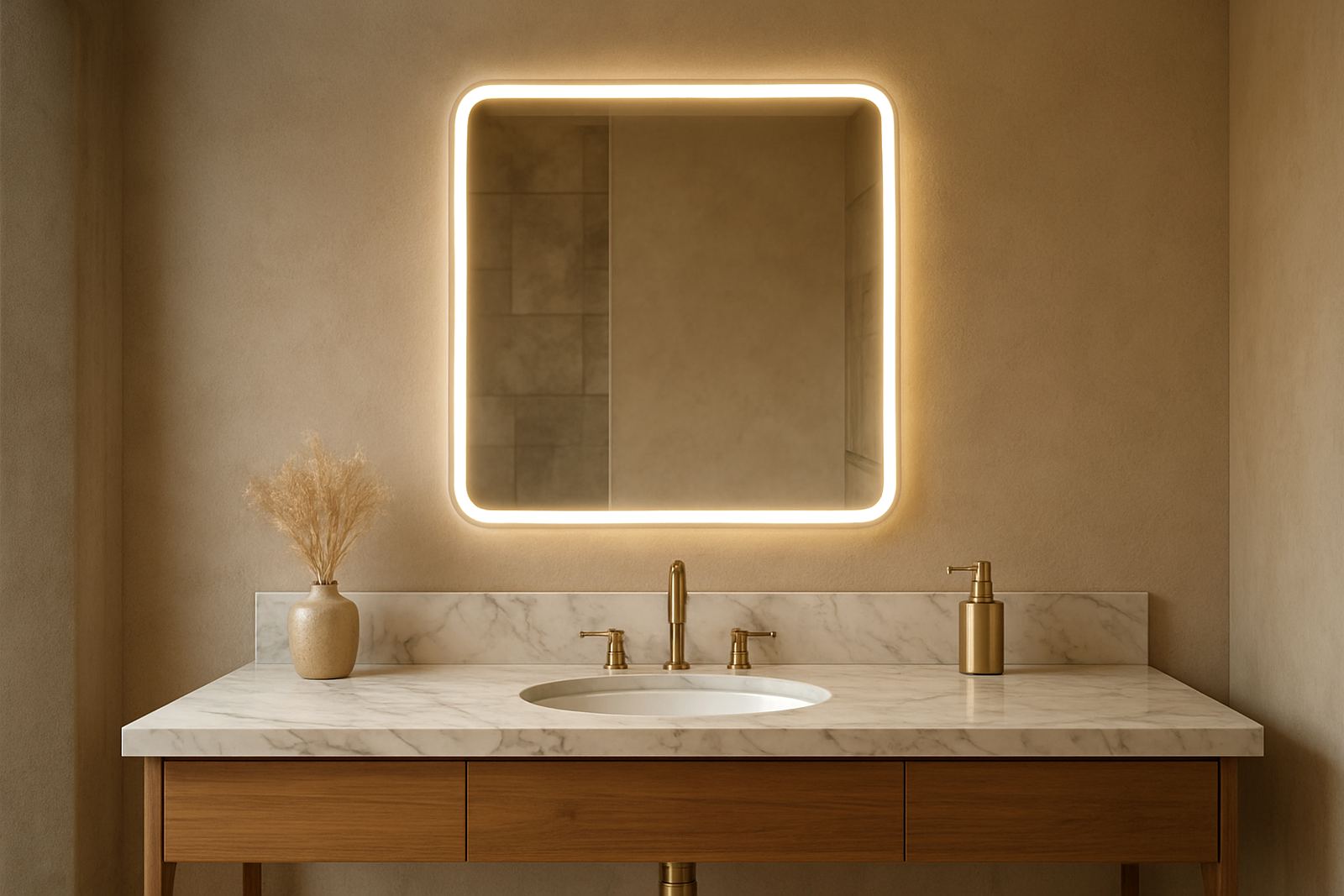
The result was a clean framed look with integrated lighting that gave the room a softer finish than a separate globe fitting would have done. Because the home was exposed to humidity, the client also wanted a demister function for everyday use. The room now feels brighter, tidier and easier to live with, and it suits the rest of the house without shouting for attention. The important thing was getting the proportions right the first time, not trying to fix it later.
What to specify before you place an order
For interior designers, contractors and homeowners planning a high-end bathroom, the specification should be pinned down before the vanity is finalised. That avoids delays and awkward changes once tiles and plumbing are in place. It also helps with provincial projects where one home may be in Umhlanga and another in Hillcrest, yet the finish standard must stay consistent.
Useful details to confirm include mirror size, lighting style, electrical point position, wall finish, and whether the project needs one unit or several for a bulk supply order. If the bathroom is part of a bigger renovation, think about how the mirror works with cabinetry, shaving cabinets, towel rails and splashback heights. Small decisions at this stage save a lot of time later.
- Measure the vanity width and basin centres accurately.
- Confirm where the electrical point will sit before tiling.
- Check if the room needs a demister for everyday comfort.
- Allow for replacement access if the mirror will be serviced later.
Aftercare that keeps the finish looking right
A luxury bathroom should still look good after daily use, not only on installation day. That means using the right cleaning method and arranging support when a component needs attention. LED components, switching, demisters and electrical connections can all be checked, repaired or replaced if they are installed properly from the start. For homeowners in Durban North, Westville, Ballito and beyond, that kind of aftercare matters because bathrooms work hard in humid conditions.
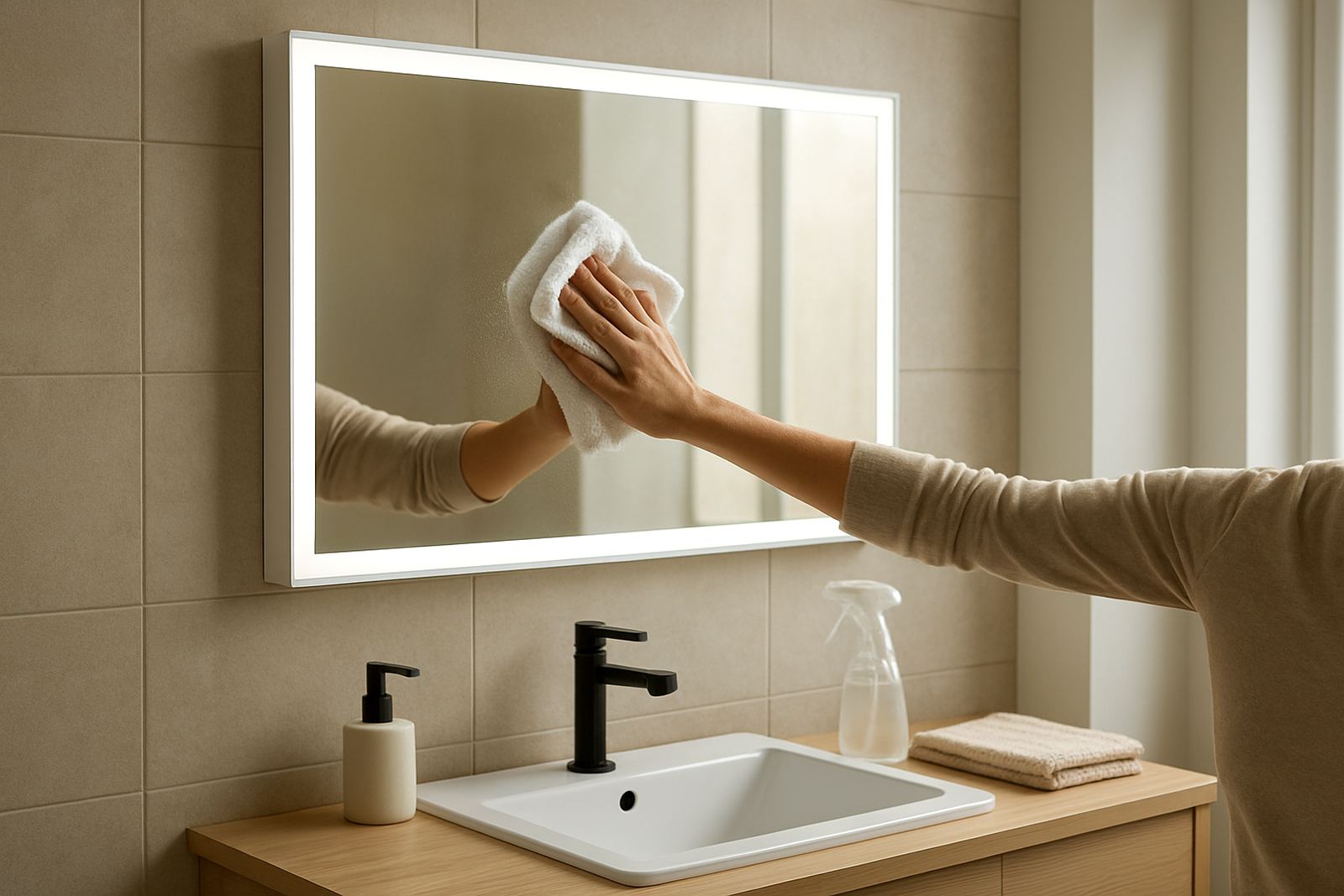
Wipe the glass with a soft cloth and avoid harsh chemicals that can mark seals or fittings. If a mirror starts to mist unevenly or the light output changes, get it checked rather than waiting for a bigger fault. Good bathroom detailing is about keeping the whole room in shape, not just the bits people notice at first glance.