Start With the Right Cleaning Routine
Most mirror damage comes from over-cleaning or using the wrong product. A light routine done often is better than a heavy scrub once a month. In South African bathrooms, where humidity builds up quickly after showers, mirrors usually need a simple wipe-down every few days, and a deeper clean once a week.
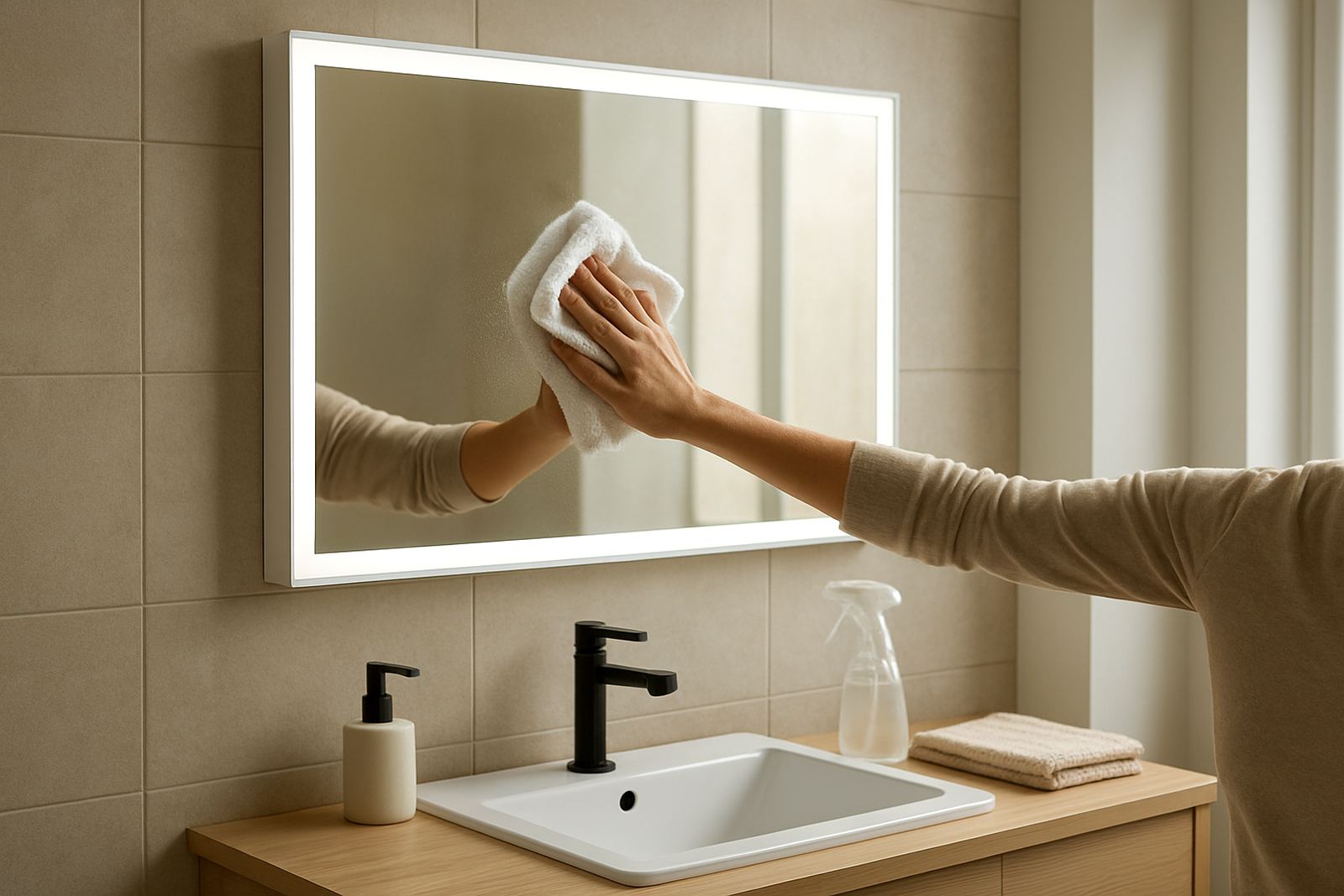
Use a soft microfibre cloth, clean lukewarm water and a small amount of mild dish soap if needed. Spray the cloth, not the mirror, so liquid does not run into edges, backing or any LED fitting. If the mirror sits above a vanity, wipe the basin first so toothpaste spots and soap splashes do not land on the glass again after cleaning.
- Dust the frame and corners before touching the glass.
- Wipe in one direction to reduce streaks.
- Dry immediately with a second clean cloth.
Avoid Cleaners That Can Damage Frames and Backing
A shiny mirror can hide a lot, but harsh cleaners can shorten its life. Ammonia-heavy glass sprays, scouring pads, abrasive powders and strong solvents can damage finishes around the edge, especially on framed units or mirrors fitted close to electrical parts. This is important in coastal areas like Durban and Ballito where salt in the air already puts extra pressure on fittings.
If your mirror includes LED strips, touch controls or a demister, keep liquid well away from the seams. Spray onto a cloth first and work carefully around switches and sealed joints. Never soak the edges, because moisture can creep behind the backing and cause black spots or failure over time. That kind of damage is usually expensive to fix.
- Do not use steel wool or rough kitchen sponges.
- Keep bleach away from mirror edges and painted surrounds.
- Avoid over-wetting timber, laminate and plaster finishes nearby.
Handle Coastal Humidity and Daily Condensation
Homes in Durban, Westville and Umhlanga often deal with damp air that fogs mirrors after a shower. The issue is not just the mist, it is the repeated wetting and drying that can weaken edge seals and leave marks on nearby tiles or cabinetry. If the bathroom has limited ventilation, open a window or run an extractor fan during and after use.
For regular fogging, a demister function helps, but it still needs light care. Wipe condensation off with a dry cloth rather than letting it sit. Where possible, keep the room aired out for at least 10 to 15 minutes after bathing. In some coastal homes, a quick dry-down after every shower makes a real difference to how long the mirror stays clear and presentable.
- Ventilate the room after every shower.
- Wipe water droplets from the lower edge where they collect.
- Check that towel rails and soap dishes are not splashing the mirror daily.
Protect the Finish Around the Mirror
Cleaning the glass is only half the job. The surrounding vanity top, wall tiles, grout, paint and silicone joints also need care, because splashes and cleaning residue can stain them. When you clean too aggressively, you may remove sealant or leave cloudy patches on polished stone and melamine, which is a pain to sort out later.
Be gentle near the bottom edge where the mirror meets the counter. If the mirror is mounted above a basin, check that taps do not spray directly onto the glass. Small mineral spots from hard water can build up fast in areas like Pinetown and Hillcrest, so drying after use is often better than constant chemical cleaning. A little care now saves touch-up work later, and that is worth it.
- Use a separate cloth for the vanity surface and the mirror.
- Wipe away toothpaste and soap before they harden.
- Check silicone lines for lifting or gaps.
Know When Streaks Mean a Bigger Problem
Sometimes what looks like dirt is actually a sign of a deeper issue. If the glass stays cloudy after cleaning, the problem could be mineral build-up, damaged silver backing, or moisture getting behind the mirror. Blackened edges, peeling spots and recurring mist between layers should not be ignored. These signs often show up first in bathrooms with poor airflow or fittings close to steam.
If your mirror has integrated lighting and the glass is discoloured around the edge, stop using wet cleaners until it has been checked. A dry wipe is fine but repeated scrubbing can make matters worse. In homes with frequent load-shedding, power changes can also expose weak connections around fitted units, so if the mirror flickers after cleaning, there may be an electrical issue as well.
- Clouding that returns after every clean usually needs inspection.
- Brown or black edges can signal backing damage.
- Flickering lights after a wash should be checked by a qualified installer.
A Simple Care Plan for Busy Homes and Projects
For homeowners, a practical plan is usually best. Give the mirror a light wipe twice a week, do a fuller clean on weekends, and inspect the edges monthly. For guest bathrooms or rental units, it helps to set a routine before handover so the mirror looks sharp for inspections and open-home viewing. That is especially useful in Durban North and Ballito where finishes are expected to stay neat in humid conditions.
For designers and fit-out teams, care should be built into the handover notes. Tell clients what cloth to use, how often to clean, and which products to avoid. If the bathroom has a custom mirror, LED feature or demister, include a quick maintenance note with the final sign-off. Clear instructions reduce call-backs and help the installation last longer.
- Keep one soft cloth just for mirrors.
- Store cleaning spray away from children and away from the mirror area.
- Record any faults early so small issues do not become replacement jobs.
When to Ask for Professional Help
Some mirror problems are not cleaning issues at all. If there is moisture behind the glass, damaged LED components, loose mounting, or repeated electrical faults, cleaning will not solve it. In those cases the safest step is to have the unit checked properly, especially where power connections are built into the bathroom fit-out.
For homeowners in Pinetown, Westville, Umhlanga, Hillcrest and nearby areas, and for projects across South Africa, a clean mirror is only part of the picture. Good aftercare starts with knowing what can be wiped safely and what should be inspected. If a mirror keeps fogging in the wrong places or the finish is lifting, it is better to deal with it early than wait for a full replacement. Small fix, less fuss.
- Call for help if the backing is lifting.
- Do not keep cleaning around exposed electrical parts.
- Arrange checks quickly when condensation appears inside the mirror.