Start With the Room, Not the Mirror
Before choosing a shape, look at the room as a whole. A mirror should suit the vanity width, ceiling height, basin position, and the amount of wall space around it. In a small bathroom, the wrong shape can make the wall feel cramped. In a larger family bathroom, the right mirror can bring the room together and make fittings feel more considered.
In Durban homes, humidity and salt air also matter. A mirror that sits well above a vanity and leaves enough clearance from splash zones will stay looking better for longer. If there is a lot of natural light, shape becomes even more important because it affects how that light is reflected back into the room.
- Measure the wall space above the basin first
- Check the ceiling height and tile lines
- Allow room for lighting, taps and accessories
- Think about daily use, not only appearance
Round Mirrors Soften Hard Bathroom Lines
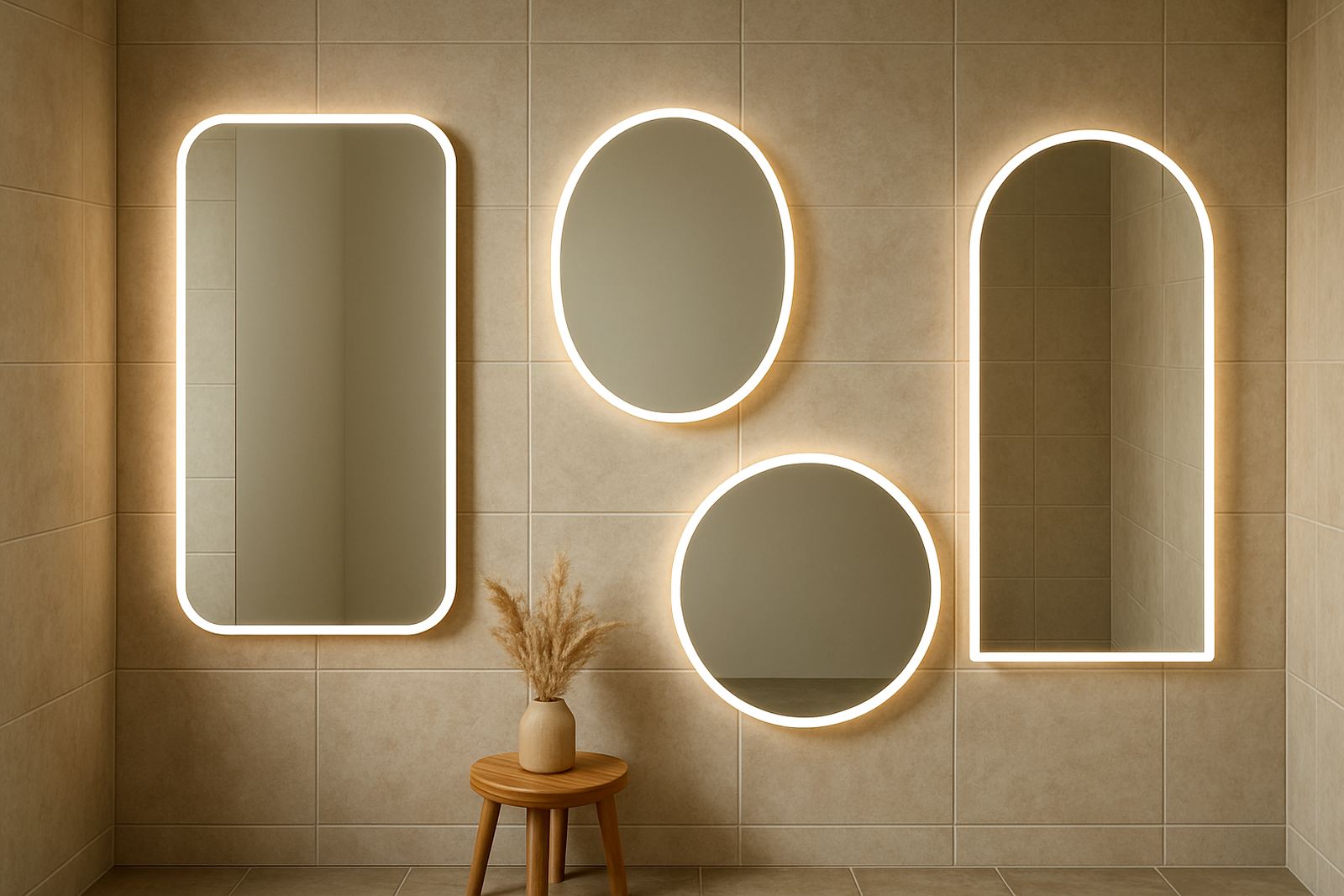
Round mirrors are a good choice when a bathroom has many straight lines. They soften the look of square tiles, angular vanities, and sharp-edged basins. This shape works well in modern homes where the aim is a cleaner, calmer feel. It also helps break up a narrow wall and can make the room feel less rigid.
Round mirrors suit single vanities and compact guest bathrooms especially well. They are often used when the owner wants the room to feel lighter and less formal. If the vanity is very wide, one round mirror may look too small, so sizing needs care. A common mistake is choosing a mirror that is pretty but undersized for the wall.
- Best for smaller vanities and guest bathrooms
- Good for softening tiled or angular spaces
- Works well above floating basins
- Needs enough width so it does not look lost on the wall
Oval Mirrors Add Height Without Feeling Heavy
Oval mirrors are useful when you want a softer finish but need a bit more vertical presence than a round mirror gives. They draw the eye up and down, which can help in bathrooms with average or lower ceilings. In homes where the vanity is neat and narrow, an oval shape can look elegant without taking over the wall.
This shape also works well where there are twin basins or long feature walls, because the curve keeps the room from feeling too boxy. In practical terms, oval mirrors can be easier to live with in family bathrooms since they give a generous viewing area while still keeping a gentle profile. For some interiors, they are the right middle ground between formal and relaxed.
When selecting an oval mirror, make sure the top and bottom margins are planned properly. If it sits too high, it can lose its effect. If it sits too low, it can clash with taps or a splashback ledge.
Rectangular Mirrors Keep the Bathroom Clear and Practical
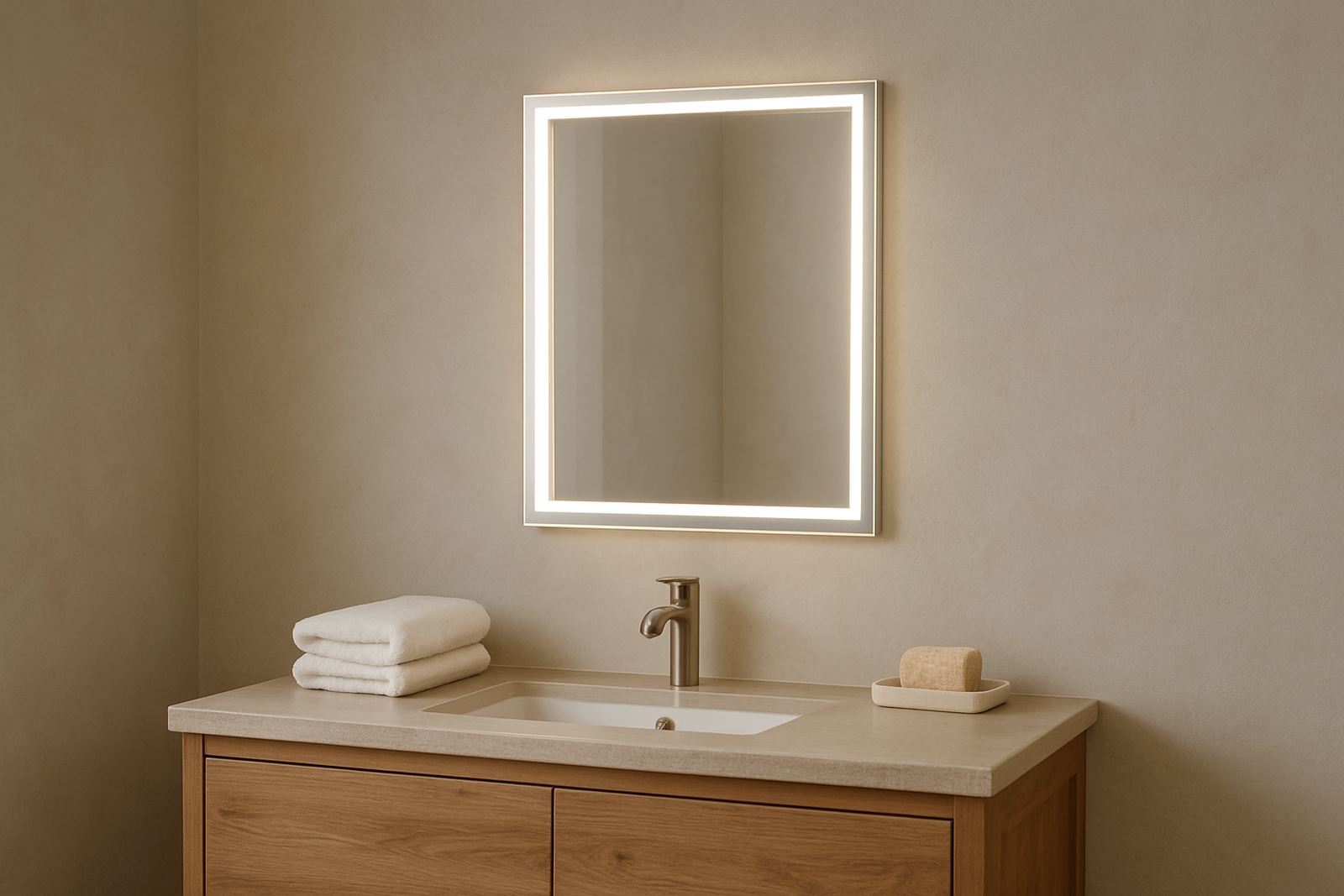
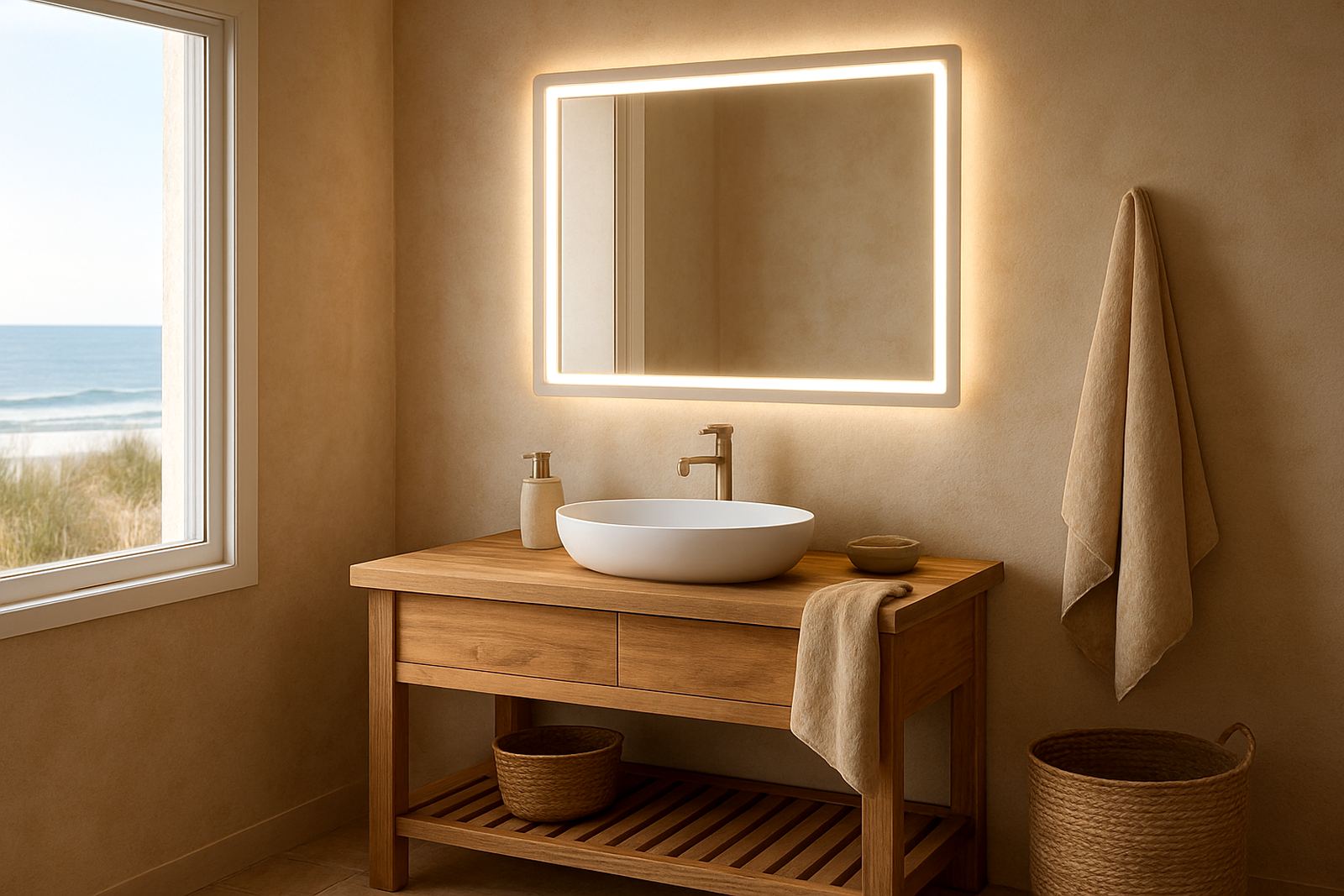
Rectangular mirrors are still the most practical choice for many bathrooms. They give a strong horizontal line above the vanity and work especially well where storage is important. If the room has a wide basin or double vanity, a rectangle gives good coverage and makes daily tasks easier. It also works well with straight tile layouts, which is why it remains a firm favourite in many South African homes.
For family bathrooms, this shape often offers the best mix of function and value. It gives more usable reflection space and can be fitted to suit the exact width of the vanity. In some rooms, a simple rectangle is the best answer because it keeps the design calm and avoids fuss. That said, the details matter. The mirror should not be so wide that it runs into side walls, and it should not sit so high that the top edge feels cut off.
- Ideal for double vanities and longer basins
- Useful where storage and everyday use matter most
- Matches straight tile lines and modern fittings
- Easy to size for custom bathroom fit outs
Arched Mirrors Bring Character to Plain Bathrooms
Arched mirrors add interest without needing extra decoration. They can make a bathroom feel more refined and are especially effective in spaces that need one focal point. The curved top softens a room that may otherwise feel too square or plain. This shape is often chosen by interior designers when they want to lift a simple vanity area with something that looks thoughtful but not overdone.
In Durban and the coastal towns around it, arched mirrors can work well in bathrooms with good natural light because the shape catches brightness nicely. They are also helpful in homes where the vanity wall is plain and needs a visual anchor. In a Hillcrest family bathroom we recently discussed, for example, an arched mirror above a timber vanity helped balance a tiled wall that felt too flat. The room was not large, but the shape gave it more presence without crowding the basin.
Arched mirrors need careful proportion. If the arch is too high it can dominate. If it is too shallow, the effect can be lost. This is why site measurements matter before any order is placed.
How Shape Affects Light, Space and Daily Use
Mirror shape is not only about style. It changes how light moves through the bathroom and how comfortable the room feels when you are standing at the vanity. A round or oval mirror can soften bright tiles and hard corners. A rectangle can make a wall feel neat and organised. An arch can create a sense of height and interest. The best choice depends on whether the room needs softness, structure, or a stronger feature.
For homes dealing with load-shedding, mirror shape also links to lighting placement. If battery-backed or hardwired LED lighting is used, the shape must allow the light to spread evenly around the face. Poorly sized mirrors can leave shadows at the cheeks or below the chin. In wet areas, correct positioning matters too because steam from showers and humidity can affect visibility and the lifespan of fittings if the installation is poorly planned.
- Use soft shapes to reduce the look of hard tile lines
- Use straight shapes when the room needs order and clarity
- Keep lighting and mirror size working together
- Check steam, splash zones and wall clearance before finalising the shape
A Practical Way to Choose for Your Home
If you are choosing a mirror for a home in Pinetown, Durban North, Umhlanga, Ballito, Hillcrest or Westville, start with the vanity width and the style of the room. Then decide whether you want the mirror to disappear into the space or stand out a little more. Round and oval mirrors feel softer. Rectangular mirrors feel more structured. Arched mirrors bring a touch of character.
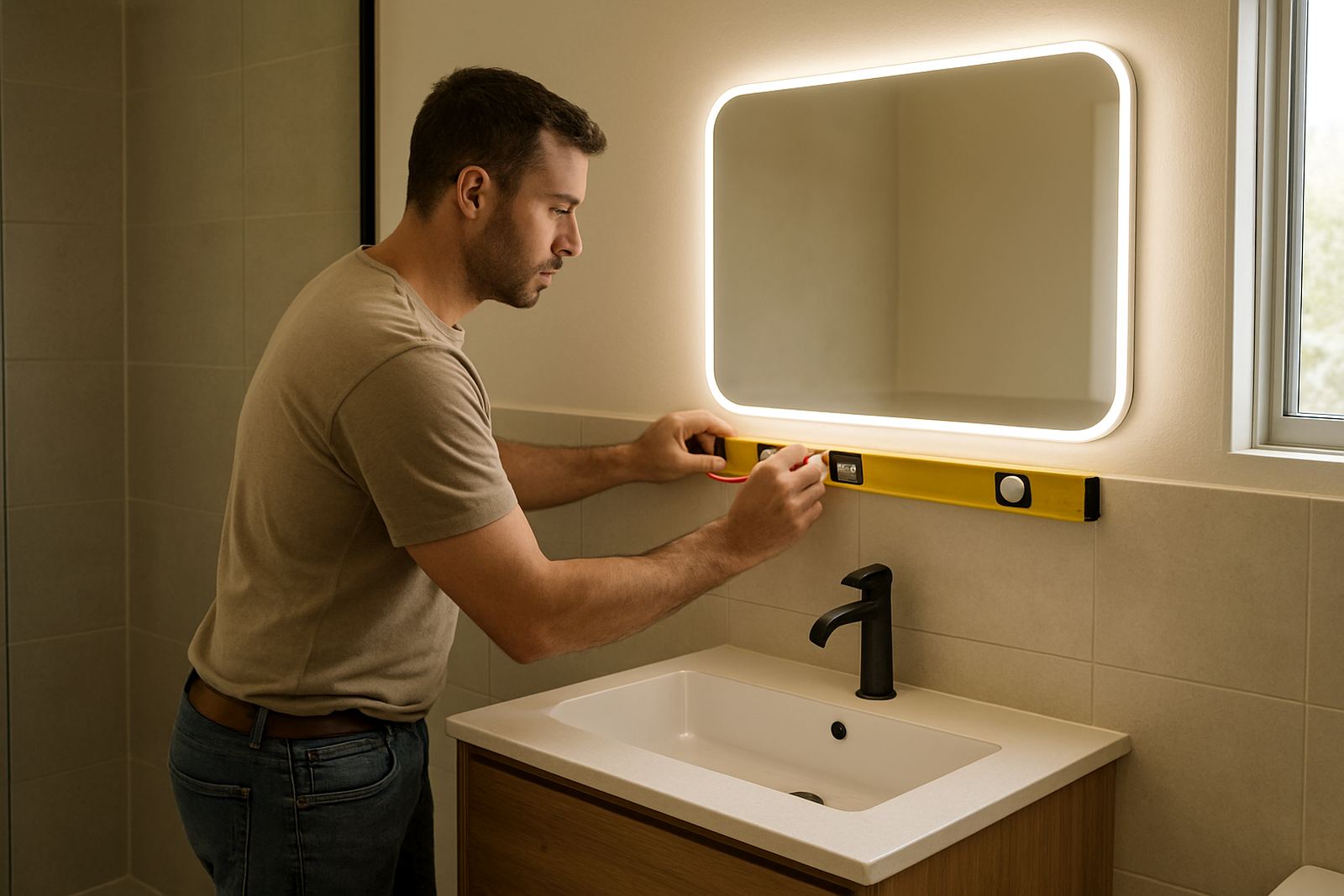
The best results come from proper measurements and a clear plan for installation, electrical connection and aftercare. A good mirror should suit the room now and still make sense after the bathroom is used every day. That is especially true in family homes where cleaning, steam, and regular use can expose poor design choices quickly. If the shape is right from the start, the whole bathroom feels better balanced.
When in doubt, choose the shape that supports the room you already have, not the one that fights it. That small decision can change the way the whole bathroom reads.