

Home / Notes / Mirror Size Basics

Notes

Mirror Size Basics

Getting the mirror size right makes a vanity feel calm, balanced and easy to use. A good size also helps with light, wall space and the practical realities of South African bathrooms.

Mirror Size Basics

Start With the Vanity, Not the Mirror

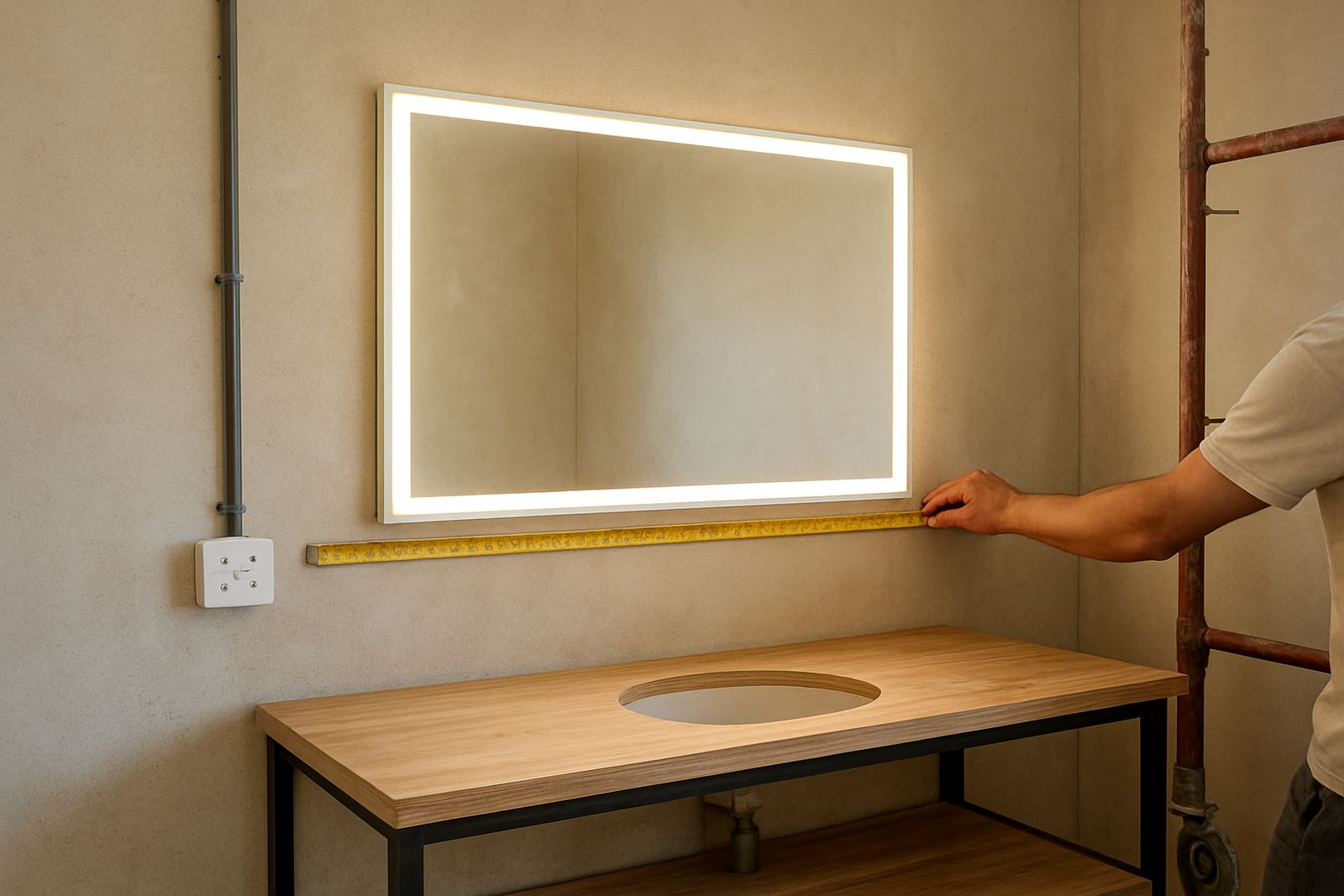
The easiest sizing rule is to begin with the vanity width. A mirror should usually sit comfortably within the space above the basin or basins, rather than pushing right to the edges of the wall. As a simple guide, many bathrooms work well when the mirror is about 70% to 90% of the vanity width, depending on the style of the room and the amount of wall space around it.

If you have a compact guest bathroom, a mirror that is too wide can make the wall feel crowded. In a larger family bathroom, a mirror that is too small can look lost and leave the vanity feeling unfinished. The aim is balance, not simply filling the wall. In Pinetown and Durban homes, where bathroom sizes vary a lot from older houses to newer townhouse units, this first measurement saves plenty of hassle later.

  • Measure the vanity width from outer edge to outer edge.
  • Check how much wall is available above and beside the basin.
  • Allow space for taps, light fittings and wall tiles.

Choose a Height That Feels Natural to Use

Height matters just as much as width. A mirror should sit at a level where most people can use it without lifting or lowering their heads awkwardly. For family bathrooms, it is often better to place the mirror a little higher than you think, especially if adults and children share the space. In ensuite bathrooms, you may want the mirror centred for the main users rather than set purely by the middle of the wall.

Try to keep the bottom of the mirror clear of splash zones around the basin. This helps with cleaning and also reduces marks from toothpaste and water spray. In humid coastal homes around Durban North, Umhlanga and Ballito, it is wise to leave enough room so moisture does not sit against the frame or the wall finish all the time. A small bit of extra planning here can help the mirror stay neat for longer.

  • Centre the mirror to the vanity or to the main user group.
  • Keep a practical gap above the basin for cleaning.
  • Do not let the mirror sit so low that it clashes with taps or mixers.

Match the Mirror Shape to the Room Layout

The shape of the mirror changes how the room feels. A rectangular mirror often gives a clear, tidy look and works well above double basins or longer vanities. A round or softly shaped mirror can take away some of the hard lines in a bathroom with lots of tiles and straight edges. If the room is narrow, a vertical mirror can help draw the eye upward and make the wall feel taller.

For a wide vanity in a renovated Hillcrest home, two separate mirrors can sometimes work better than one long one. In a smaller Westville bathroom, one centred mirror may give a neater result and leave more wall space for side lighting. The main point is to let the mirror suit the room instead of forcing the room to suit the mirror. That is where the best visual balance usually comes from.

  • Rectangular mirrors suit longer vanities and double basins.
  • Round mirrors soften boxy bathrooms and tiled walls.
  • Vertical mirrors help in smaller rooms with lower ceilings.

Plan Around Lighting Before You Decide the Size

Mirror size and lighting work together. If the mirror is too large for the available light positions, it can cover up fittings or create shadowed edges. If it is too small, the lights may sit awkwardly far away and the vanity area can feel patchy. For daily shaving, makeup or grooming, the mirror should reflect enough light evenly across the face.

LED-lit mirrors are popular because they bring the light closer to the user, which is useful in bathrooms that do not get much natural light. They also help during load-shedding when the rest of the house goes dark and you still need a clear view for a quick morning routine. In areas where voltage dips and power cuts are common, it is worth thinking about how the mirror lighting will be used, cleaned and serviced over time.

  • Leave room for side lights or overhead lights if they are part of the plan.
  • Check that the mirror will not block switches or power points.
  • Think about how much light the room gets in the morning and evening.

Think About Splash, Steam and Coastal Conditions

Bathrooms are tough environments. Steam, water splashes and coastal humidity all affect how a mirror sits in the room. A mirror that is correctly sized is easier to maintain because it avoids awkward edges where moisture gathers and grime builds up. If the mirror is too big for the wall, it can sit close to corners or fittings where cleaning becomes a pain.

In Durban and the surrounding coastal belt, salt air can be part of everyday life, especially if a bathroom has windows open for ventilation. That means the back of the mirror, the fixings and any electrical components need proper attention. Good sizing supports proper installation because it leaves enough access for fitting, sealing and later maintenance. A little extra space can make the difference between a neat installation and constant touch-ups, ja.

  • Allow easy access for cleaning behind and around the mirror.
  • Do not crowd the mirror against wet areas or window frames.
  • Make sure any electrical or heated features can be serviced properly.

A Simple Durban Example That Gets the Balance Right

Say you have a 1.2 metre vanity in a Pinetown bathroom. A mirror around 900 mm wide may give a good visual balance, leaving a comfortable margin on each side. If the bathroom is narrow, that same size can still feel generous without overwhelming the wall. If it is a family bathroom with twin basins, you may instead choose two smaller mirrors or one wider mirror, depending on the light points and wall layout.

Now imagine the same vanity in a rented flat where the wall tiles stop short of the ceiling and the room has a small extraction fan. A mirror that is too tall may interfere with the fan line or nearby wall details. In that case, a slightly shorter mirror with a clean frame can look smarter and be easier to live with. The right answer is often the one that suits the room you actually have, not the idea of what a bathroom should look like.

If you are fitting out multiple bathrooms for a home in Umhlanga, or replacing mirrors in a Westville townhouse development, the same principle applies across the project. Consistent sizing makes the finishes look planned, while allowing small adjustments for each room keeps the installation practical. That is especially useful when site conditions vary from one unit to the next.

Measure Twice Before You Order

Before you place an order, check the wall width, basin position, light point locations and the height of nearby cupboards or tiles. A tape measure is useful, but so is standing back and looking at the wall from the doorway. That wider view helps you judge whether the mirror should act as a feature or stay visually quiet.

For custom bathrooms, site measurements are worth it. They reduce mistakes, save time during installation and make it easier to plan for electrical connection, replacement work or vanity upgrades. In the end, mirror size is not only about numbers. It is about how the room feels when you walk in, wash your hands and get ready each day. Get that balance right and the whole bathroom settles into place.

Questions we get asked

What is the best mirror size for a bathroom vanity?

A common guideline is a mirror that measures about 70% to 90% of the vanity width, but the final choice depends on wall space, lighting and the room layout.

Should a mirror be the same width as the vanity?

It can be, but it is not always necessary. Leaving a little wall visible on each side often gives a cleaner look and helps the bathroom feel less crowded.

Do LED mirrors need extra space around them?

Yes. Leave enough room for fitting, wiring and future servicing, especially in humid bathrooms and in homes where load-shedding makes lighting choice more important.

Planning something? Send the team a message.

Contact form