What LED component repairs cover
Our LED component repair service focuses on the parts that keep a mirror lit, dimmable and usable day to day. We work on bathroom and vanity mirrors in homes, guest houses, salons and renovation projects across Pinetown, Durban North, Umhlanga, Ballito, Hillcrest and Westville, with support nationwide for fit-outs and replacement work.
Repairs are suitable where the mirror glass, frame and mounting are still sound, but the lighting has started to fail. In many cases the fix is simpler than replacing the whole unit, especially if the issue is a dead LED section, flicker from a failing driver, loose wiring, water ingress at the back, or a faulty sensor control. We also look at demisters where the heater circuit and lighting are built together, because a small fault can affect daily use a lot. The aim is to get the unit working safely again, with the light output and colour still suitable for the room.
Common faults we diagnose
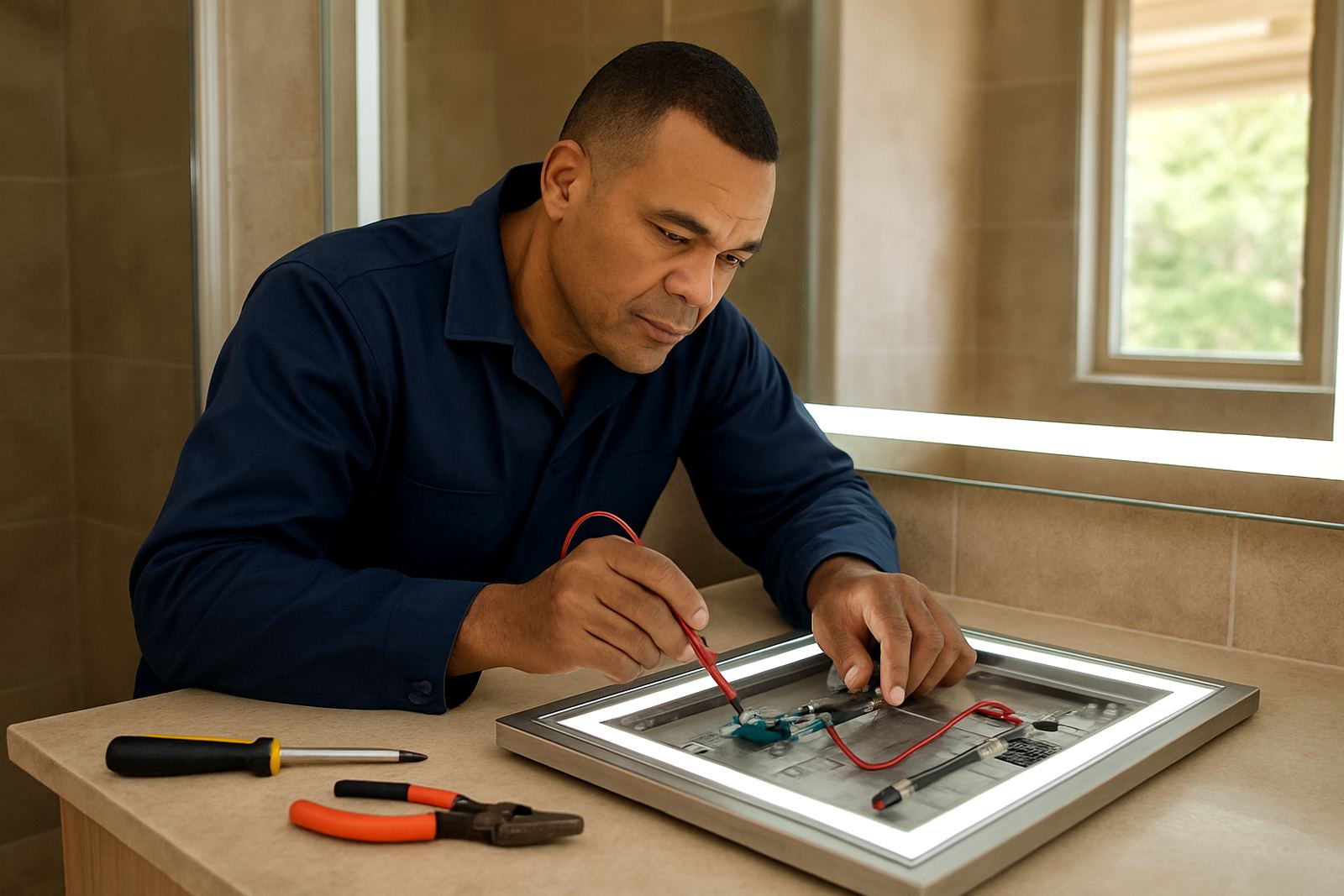
Before any repair starts, we test the component that is causing trouble and check for the cause, not just the symptom. That saves time and helps avoid repeat call-outs. Many mirror problems in coastal homes around Durban come from humidity, steam and bathroom spray, so we also check seals and cable entries for early wear. A light that works on and off may only need a connection tightened, but if a driver is weak or a strip has burnt out, the part should be replaced.
- Flickering or dim LED strips
- Dead sections on the mirror lighting
- Faulty dimmer switches or touch controls
- Driver failure after power dips or load-shedding events
- Loose wiring, poor joins or water ingress
- Demister circuits affecting the lighting assembly
We also inspect for signs of heat damage, because poor ventilation behind the mirror can shorten component life. If the back panel or fixing method is putting pressure on the wiring, we will point it out before the repair is signed off.
Repair process from inspection to refit
Our process is straightforward and keeps disruption low. For local clients in the Durban area, we can often arrange a site visit for assessment and removal if needed. For larger projects, such as guest houses or multi-unit renovations, we work from the site schedule so the rooms can be completed in the right order.
- Initial fault report by phone or message
- On-site assessment or workshop inspection
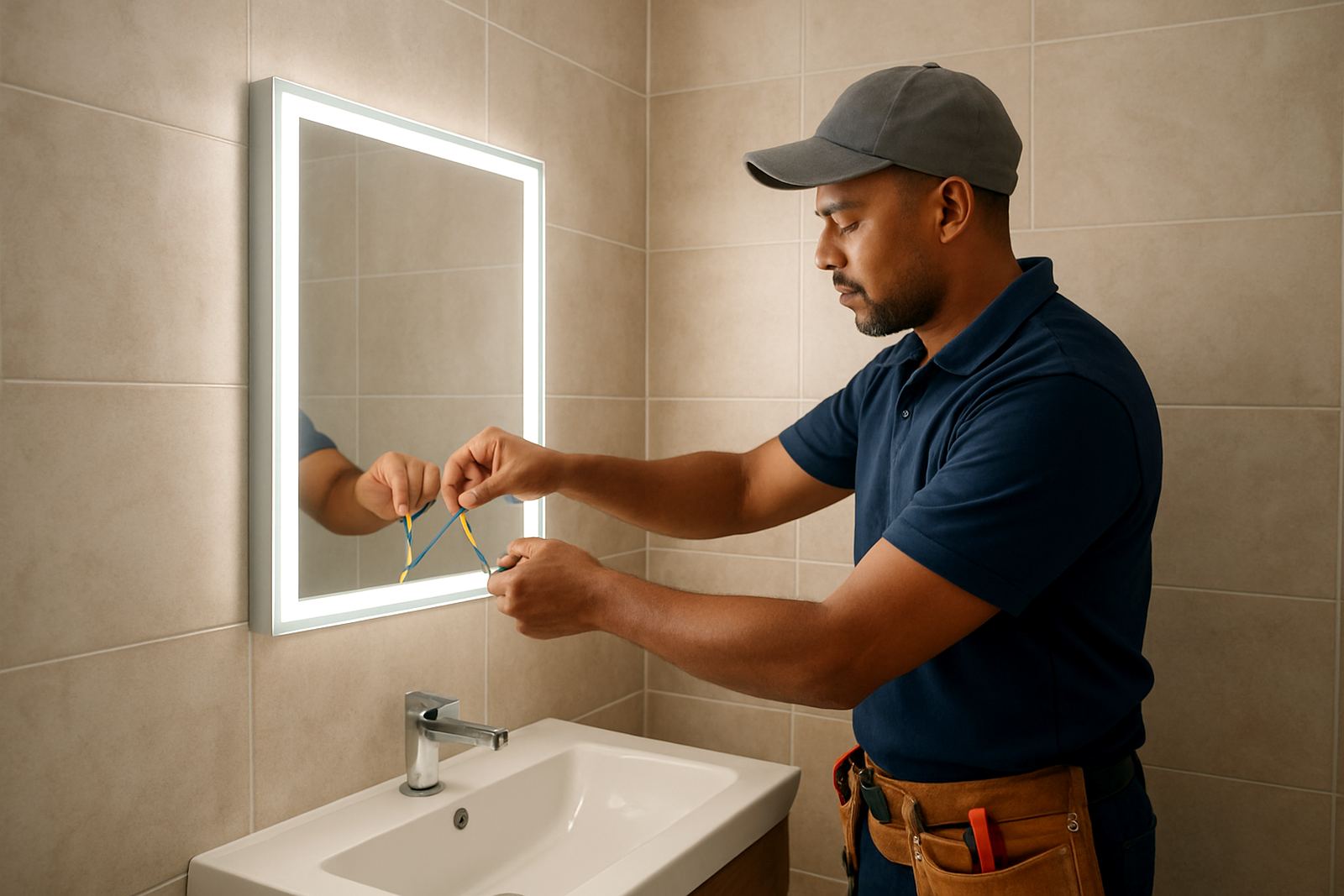
- Testing of LED strip, driver, sensor and wiring
- Quotation with repair options and part availability
- Component replacement or circuit repair
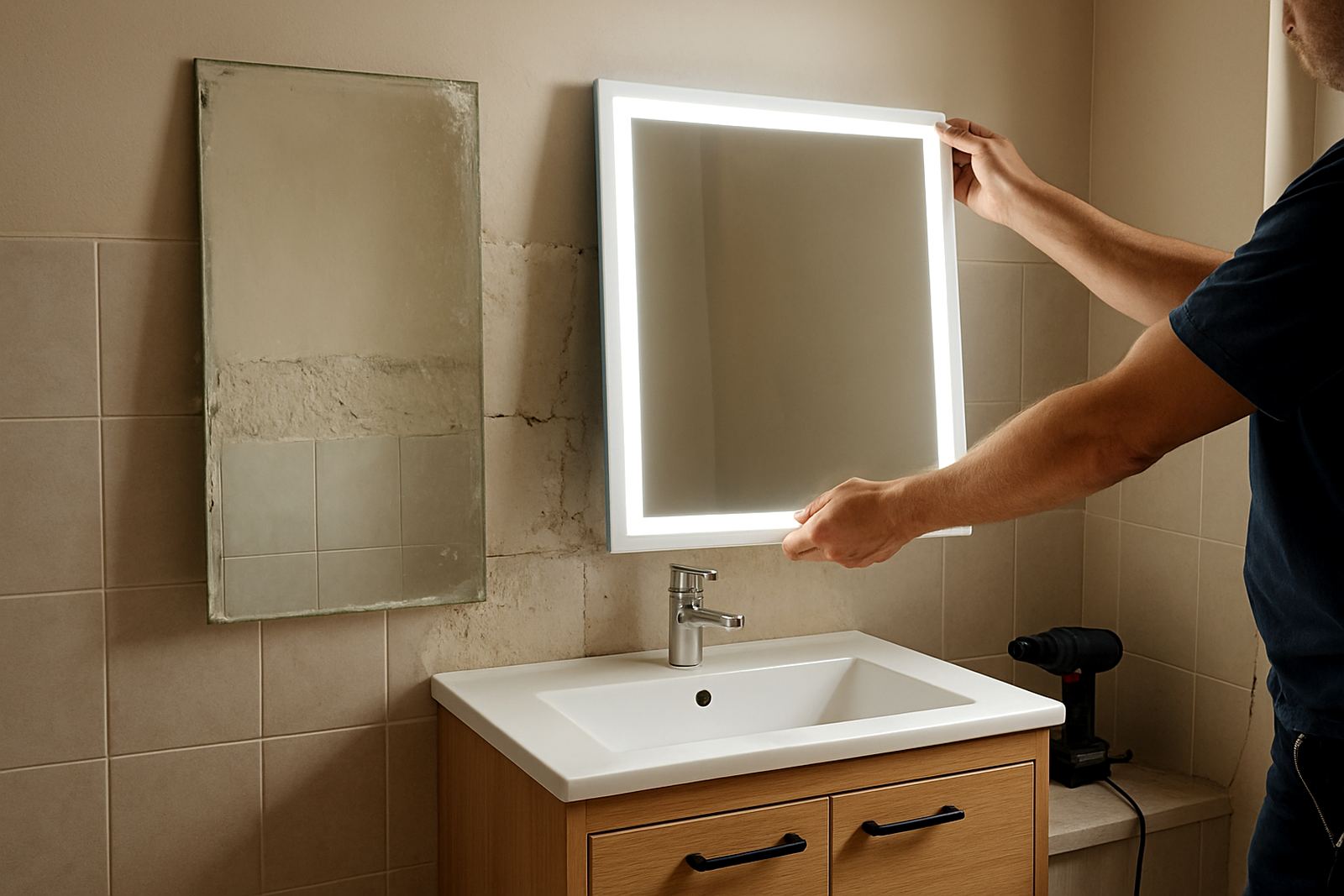
- Re-test, refit and final safety check
Where possible, we repair the existing mirror rather than replace it. If the glass is damaged, the frame is warped, or the unit is unsafe, we will say so clearly and explain the better option. The work is done with practical attention to waterproofing, fixings and access for future maintenance, which matters in bathrooms and damp rooms. We keep the finish neat, not just the light output.
Turnaround times and what affects them
Simple repairs can often be turned around in a few working days once the fault is confirmed and the part is available. More involved jobs, such as custom-sized mirrors, concealed drivers or combined demister faults, may take longer. If the repair requires a special component or extra bench testing, we will tell you up front so you can plan around it.
Turnaround depends on three main things: the nature of the fault, whether the mirror can be repaired on site or needs workshop attention, and the availability of the correct replacement part. For bathroom fit-outs in busy homes or commercial spaces, we can sometimes stage the repair so the area is not out of use for long. In Durban’s humidity, we prefer not to rush a job if a proper reseal or wiring tidy-up is needed, because a quick patch can come back as a bigger problem later.
Pricing approach that stays clear
We quote repairs after inspection, because LED faults can range from a loose connection to a full component replacement. Pricing is based on the actual fault, the access involved, the part needed, and whether the mirror has to be removed and refitted. This keeps it fair for homeowners and for designers managing multiple units on one project.
Where a mirror only needs minor electrical work, the repair cost is usually far lower than a new mirror. If there is damage from moisture, power surges or incorrect installation, we will itemise the work so you can decide what makes the most sense. We do not pad the job with unnecessary parts. If a component can be saved safely, we will say so.
- Assessment quote before repair starts
- Clear split between labour and parts
- Options for repair, replace or full unit upgrade
- Project pricing available for bulk bathroom work
Maintenance intervals for longer LED life
LED mirror components last well when they are installed correctly and checked now and then. For residential bathrooms, we suggest a simple inspection every 12 to 18 months, especially in coastal areas like Durban North, Umhlanga and Ballito where moisture and salt air can shorten electrical life. In high-use guest facilities or busy family homes, a six to 12 month interval is safer.
Basic care helps a lot: keep water from pooling on the frame, avoid harsh cleaners around switches and sensors, and report flicker early instead of waiting for complete failure. If your mirror includes a demister, check that the area around the rear cover is not trapped against a wall or cabinet. A little airflow can reduce heat build-up and extend component life. It sounds small, but it saves real money over time.
When repair makes more sense than replacement
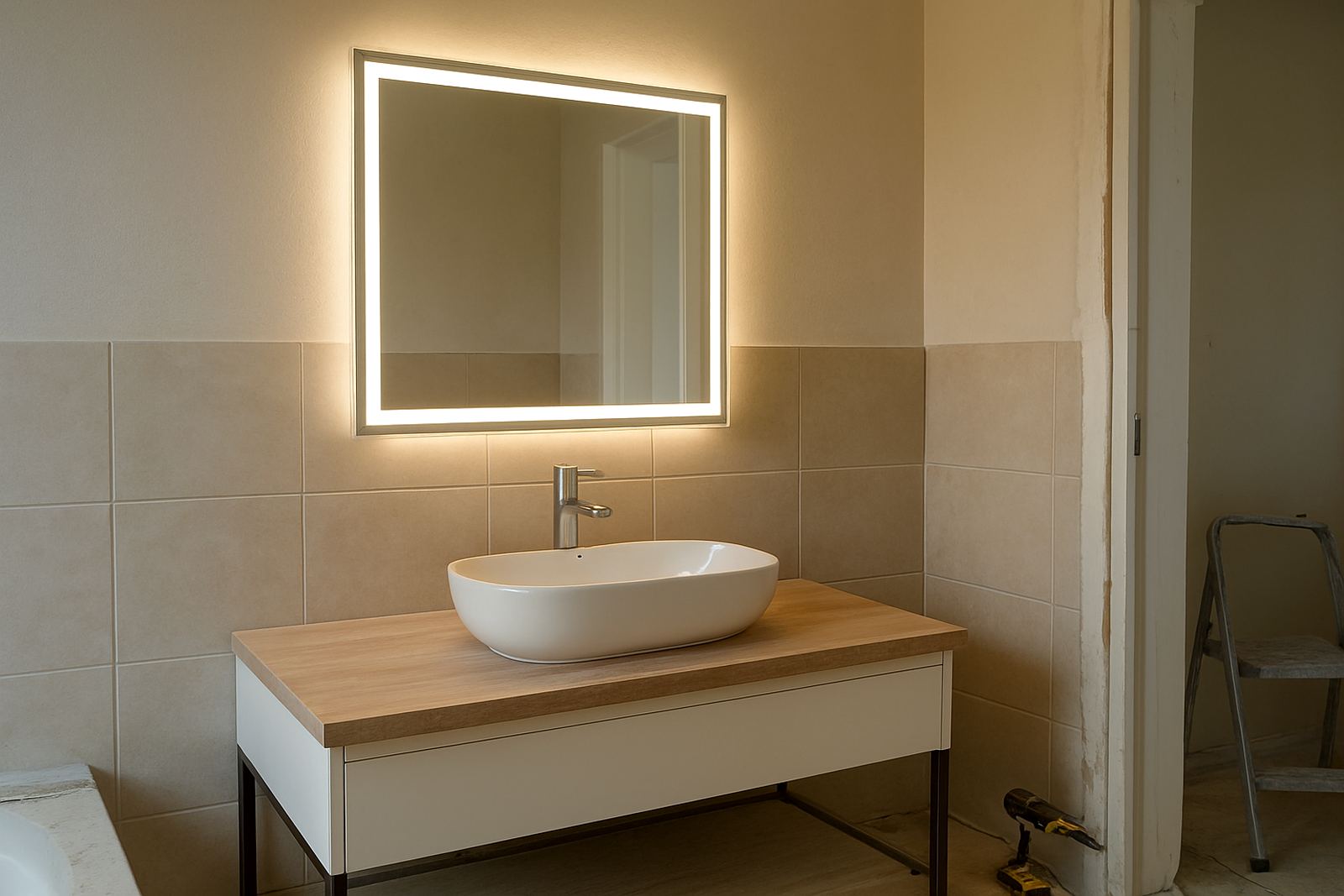
Repair is usually the better route when the mirror size and fit are still right, the glass is intact, and the fault is isolated to the lighting system. That is common in vanity areas where the mirror was chosen carefully to suit tile lines, basin placement and wall points. If the frame is sound, a repair keeps the room looking consistent and avoids extra building work.
If you are planning a bathroom update, we can also advise on whether to repair now and upgrade later, or combine the work into one visit. That approach is useful for homeowners and interior designers who need clean handovers, especially when electrical points or wall finishes are still being completed. For many clients, a well repaired mirror is the best result, and it lasts longer than expected when the fault is handled properly.
Key facts
| Fault types covered | LED strip failure, driver faults, sensor issues, wiring problems, water ingress and demister-related faults |
|---|---|
| Typical mirror sizes | Small vanity mirrors from 600 x 600 mm up to larger custom bathroom mirrors |
| Light options | Single colour white, warm white and dimmable LED systems where fitted |
| Repair method | On-site assessment where suitable, otherwise workshop repair and refit |
| Turnaround | Often a few working days after assessment, depending on parts and access |
| Service area | Pinetown, Durban North, Umhlanga, Ballito, Hillcrest, Westville and nationwide project support |