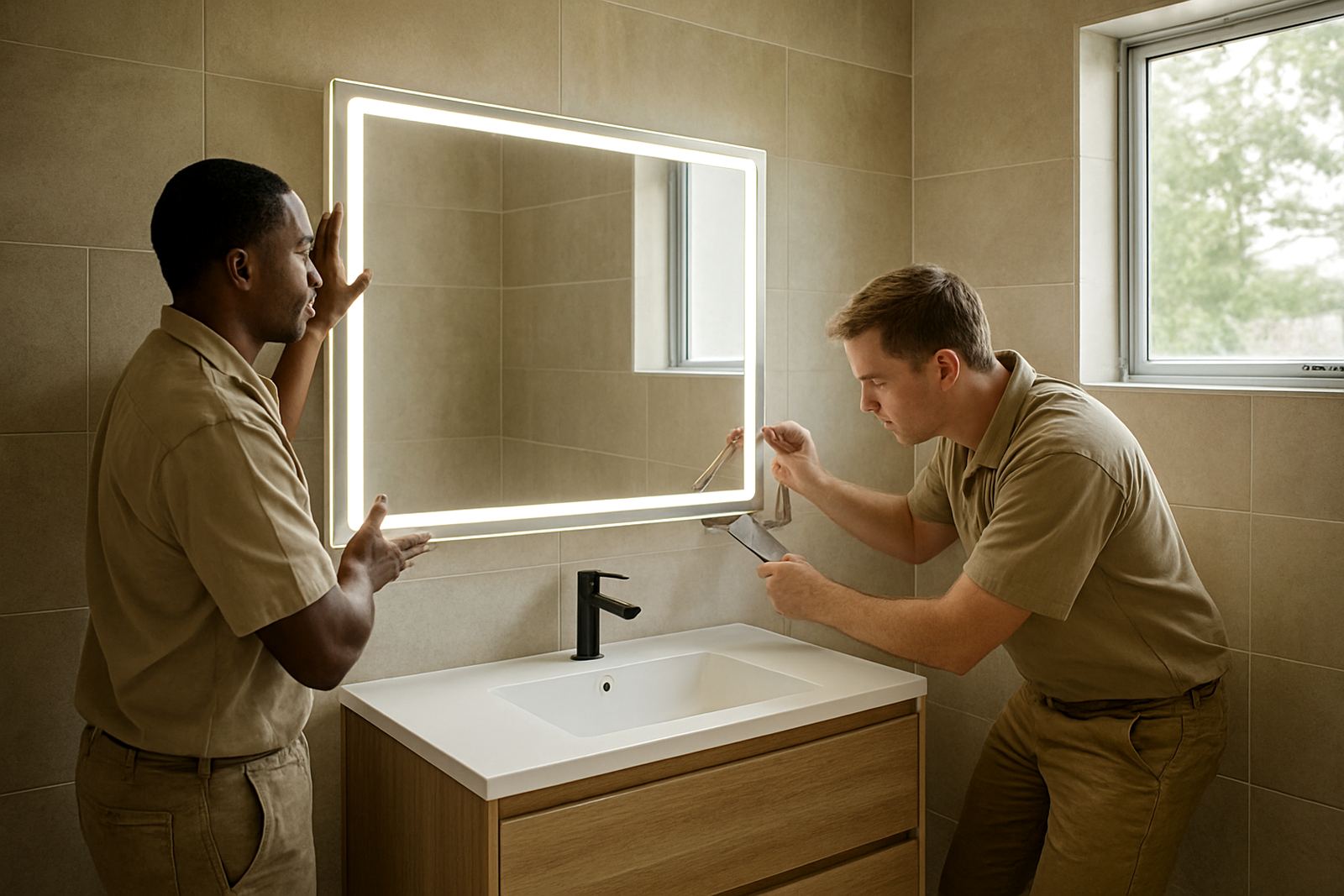
What our electrical connection service covers
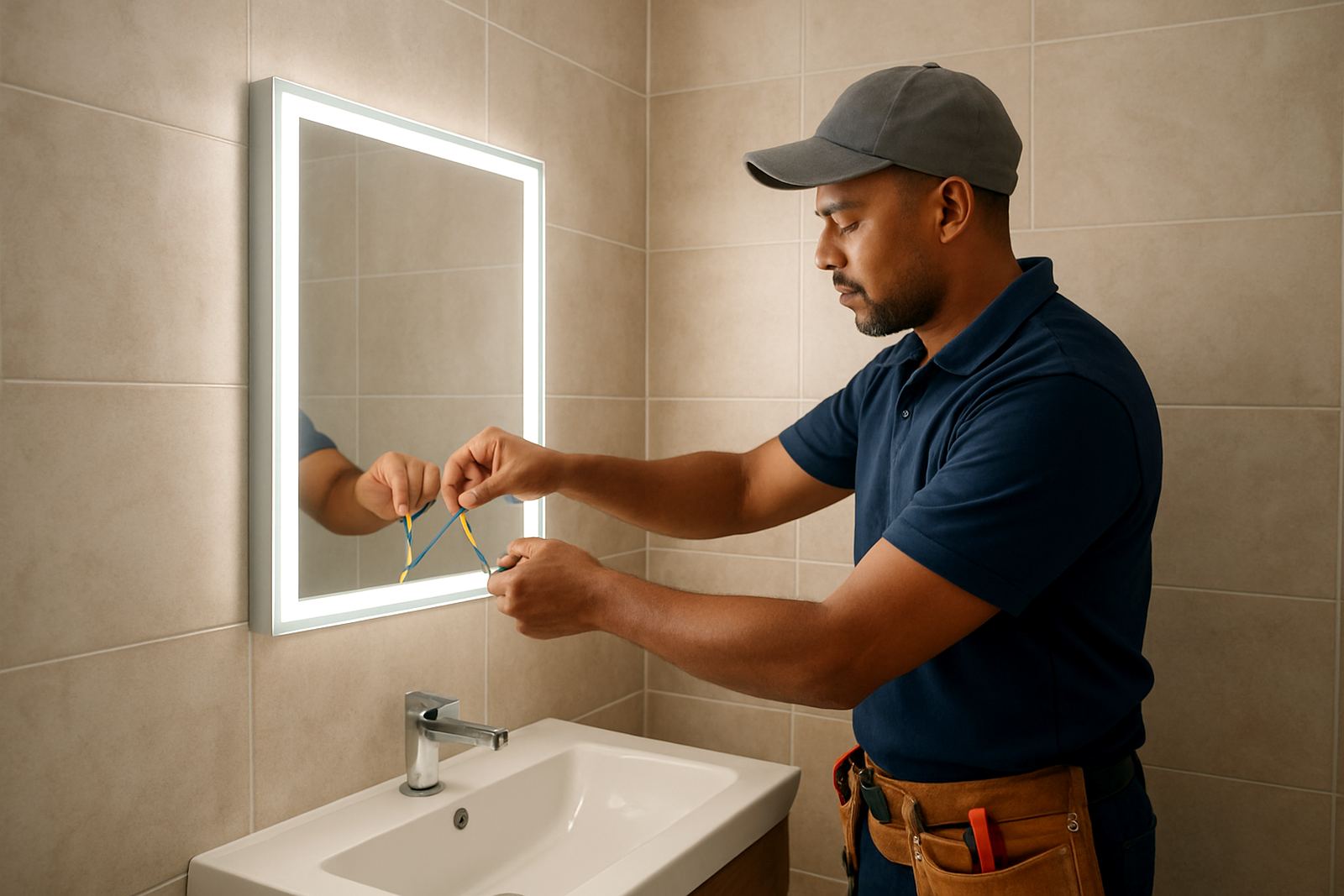
Our electrical connection service is for integrated LED bathroom and vanity mirrors that need a proper, safe power supply and tidy final terminations. We work on homes, guest suites, apartments and fit-outs across Durban, Pinetown, Umhlanga, Ballito, Hillcrest and Westville, with nationwide coordination for larger projects. If the mirror includes front light, backlight, demister, touch sensor or colour temperature control, we plan the connection so the unit works as intended and the wiring stays neat.
In most cases we coordinate with the site electrician rather than doing loose, last minute wiring on the day. That matters in bathrooms where moisture, limited wall space and tiled finishes leave little room for error. We check the supply point, switching method, mirror size, cable entry position and whether there is enough access for safe servicing later. For coastal homes in Durban North and Umhlanga, we also look at corrosion resistance around fixings and junction points.
- Connection planning for LED mirror lighting and controls
- Coordination with builders, electricians and fit-out teams
- Supply point checks, load planning and access checks
- Tidy cable routing behind the mirror or to the nearest safe point
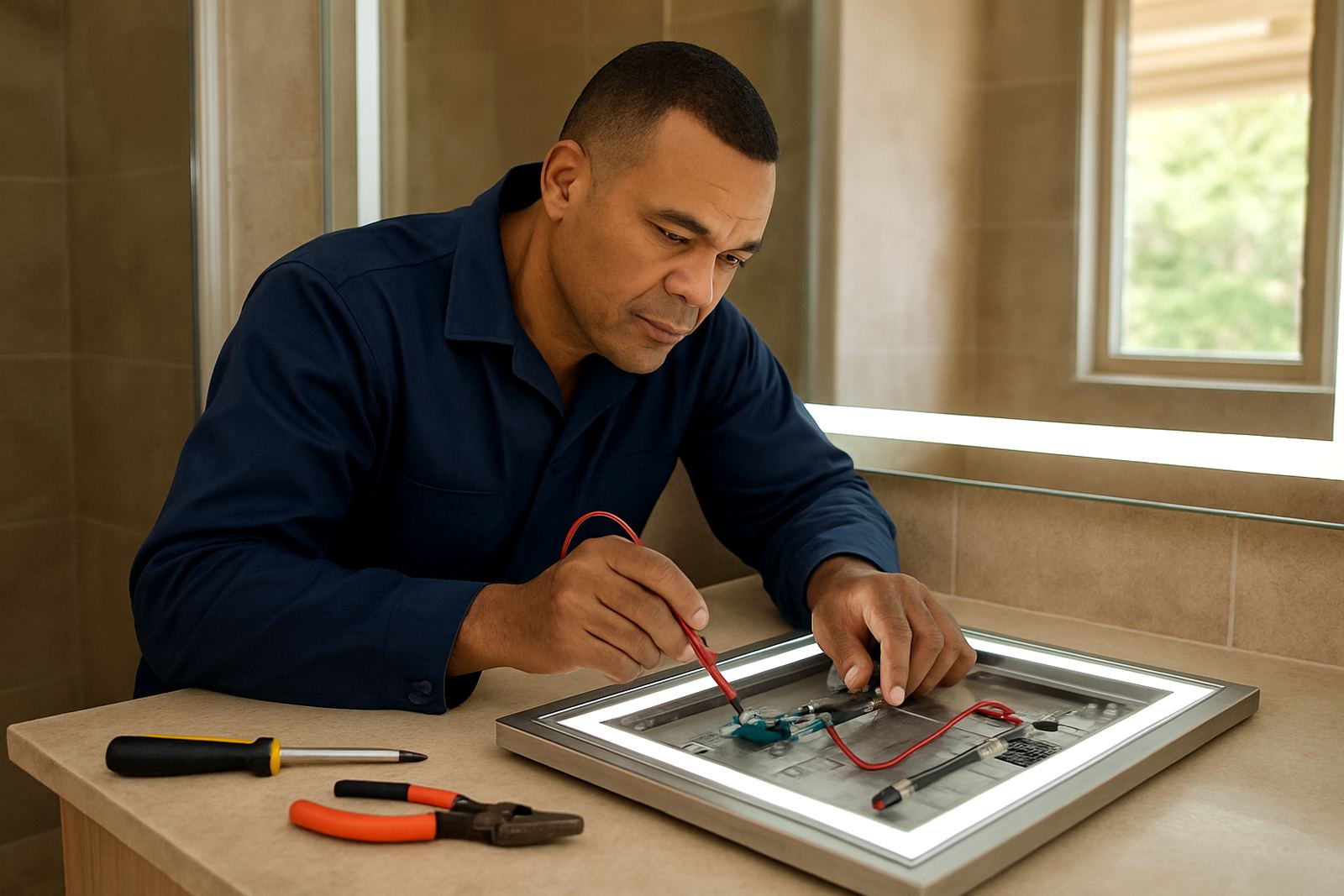
- Final testing of lighting, sensors and demister functions
How we handle the site assessment and sign-off
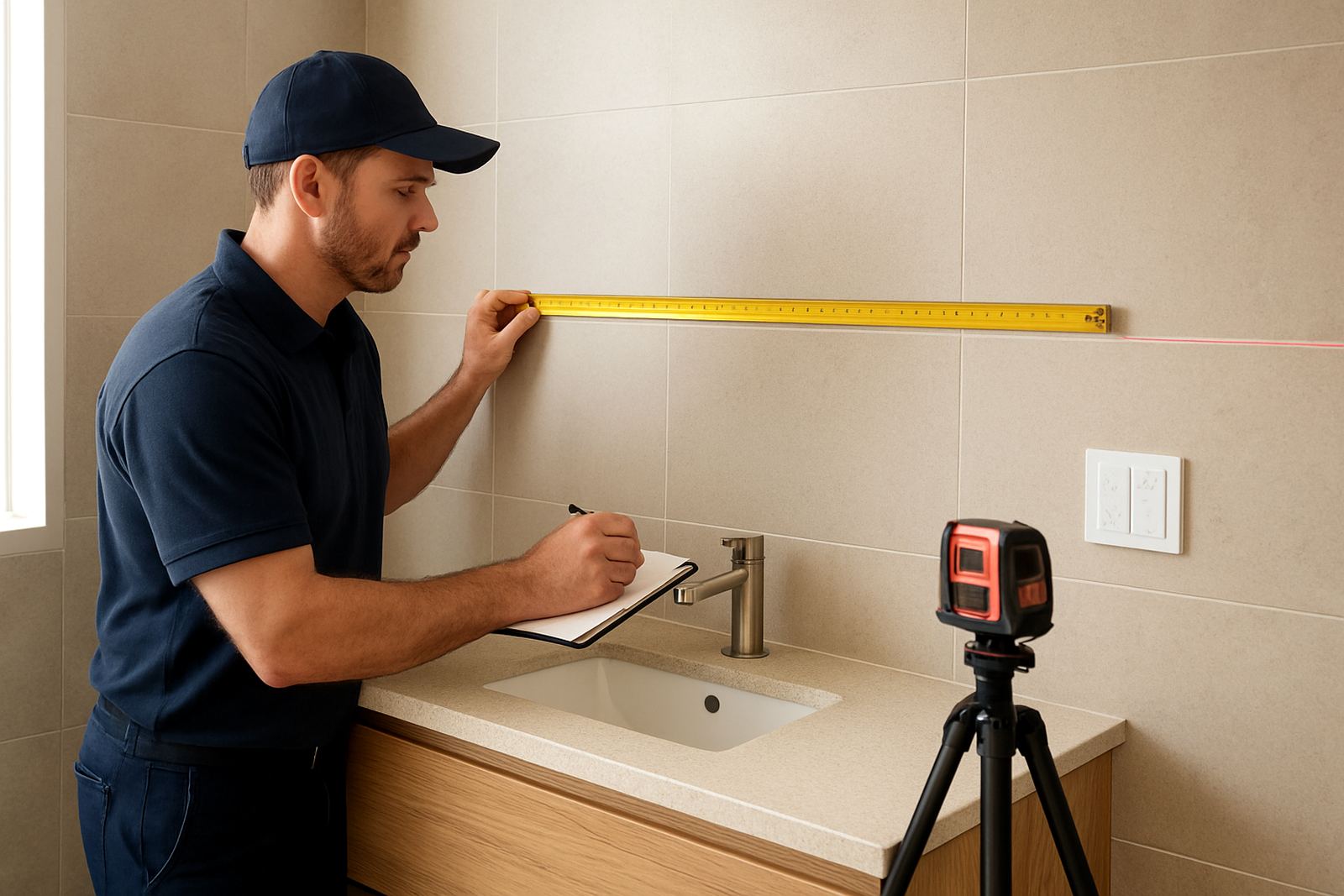
The process starts with the mirror specification and a look at the room layout. We confirm the mirror dimensions, mounting position, wall finish and where the electrical feed can safely come from. If there is an existing bathroom circuit we check whether it can take the additional load, especially where several items are running together such as extractor fans, heated towel rails and demister pads. For new builds and full bathroom refits, this step helps avoid costly rework after tiles and cabinets are already in place.
On site we measure, mark the centre line, confirm socket and switch positions and identify any restrictions from waterproofing or cabinetry. If the mirror is part of a bulk project, we can phase the work room by room so the site does not stall. Once the plan is agreed, we issue the connection approach and hand over to the relevant trades for installation and final electrical tie-in.
- Review mirror spec sheet and power requirements
- Check wall structure, tile finish and concealed service routes
- Confirm switching method and control position
- Agree who completes the final electrical tie-in
- Test and sign off once the mirror is mounted
Electrical specs we plan around
Most LED mirrors use low-wattage lighting, but the details still matter. Depending on the model, the supply may be 220 to 240V AC with an internal driver that steps the power down for the LED strip or backlight. We also check the IP rating for bathroom use, the demister draw, and whether the unit needs constant power or a switched feed. In coastal homes where humidity is higher, good sealing and correct termination are important to avoid early faults.
We can work with touch control, infrared sensor, wall switch, or a combined arrangement where the demister is on its own feed. For mirrors with adjustable colour temperature, we make sure the control method suits daily use. If the site has load-shedding backup power, we can advise on compatibility and start-up behaviour so the mirror does not create surprises when the power returns.
- Typical supply: 220 to 240V AC
- Lighting options: warm white, neutral white or adjustable colour temperature
- Controls: touch, sensor or wall switch interface
- Bathroom suitability: selected by IP rating and installation position
- Demister option: separate or shared supply depending on model
Turnaround, pricing and project coordination
Turnaround depends on whether the mirror is a single residential unit or part of a larger fit-out. For a standard home installation in Pinetown or Westville, the electrical connection can usually be planned within a short lead time once the wall is ready and the product is on site. For multi-unit apartments, guest houses and designer projects in Ballito or Umhlanga, we schedule according to the build programme and coordinate with other trades so that tiling, cabinetry and final cleaning all line up.
Pricing is based on the complexity of the connection, the mirror specification, the site access and whether additional coordination is needed for repairs or upgrades. We quote clearly before work starts. If there is an existing safe supply in place, costs stay simpler. If new cabling, additional switching or demister circuit work is required, we explain that upfront rather than after the fact. No one likes hidden extras on a bathroom job and we dont work that way.
- Simple residential connection: usually quicker and lower cost
- Complex fit-outs: priced by scope, quantity and access
- Site-specific issues such as tile cutting or rerouting are quoted separately
- Bulk projects can be phased for budget control
Aftercare and maintenance intervals
Once the mirror is connected, a little maintenance keeps it working properly. In Durban’s humid conditions we recommend a quick visual check every 6 months, especially around bathrooms with poor airflow or homes close to the coast. That check looks for moisture ingress, loose touch response, dimming changes and any signs that the demister is not heating evenly. In busy family homes, guest accommodation or rentals, a 12 month service interval works well for most units.
If the mirror is fitted in a property affected by frequent load-shedding or generator changeovers, it is worth checking connections after any electrical event that caused a trip or surge. We can assist with LED component repairs and demister servicing if something stops working. Keeping the mirror clean matters too, but use a soft cloth and avoid soaking the edges or spraying cleaner directly into control points.
- 6 monthly visual check in humid or coastal homes
- 12 monthly service interval for most residential use
- Inspect controls, lighting output and demister performance
- Check for moisture, loose fittings and cable strain
- Book support early if a trip, flicker or dead section appears
Who handles your job
Our Pinetown base supports homeowners, interior designers and fit-out teams across South Africa. Sibusiso Nxumalo oversees operations, while Johan van Rensburg leads installation coordination and Calvin Petersen handles technical support. Ayesha Naidoo manages sales queries, Lungile Mthembu coordinates production and site timing, and Nokuthula Dlamini helps with design and mirror placement decisions. That means you deal with people who understand both the bathroom finish and the electrical side of the job.
If you are replacing an older mirror, upgrading a vanity, or fitting out multiple rooms, we help keep the electrical side orderly and safe. The aim is simple: the mirror lights should switch on cleanly, the controls should make sense, and the installation should be ready for everyday use without hassle.
For connection queries or project coordination, send a message through our contact form. We work throughout Pinetown, Durban North, Umhlanga, Ballito, Hillcrest and Westville, with bathroom fit-outs nationwide.
Key facts
| Supply voltage | 220 to 240V AC |
|---|---|
| Lighting options | Warm white, neutral white, or adjustable colour temperature |
| Control types | Touch, sensor, or wall switch |
| Bathroom suitability | Specified by IP rating and installation position |
| Typical maintenance check | Every 6 to 12 months |
| Service area | Pinetown, Durban North, Umhlanga, Ballito, Hillcrest, Westville and nationwide fit-outs |