What demister servicing covers
Our demister servicing is for mirrors that fog up unevenly, take too long to clear, or only warm up when they feel like it. We inspect the heating pad or foil element, wiring joints, switches, transformers where fitted, and the way the mirror is connected into the bathroom supply. In many cases the fault is not the mirror itself but a loose connection, moisture ingress, or a failing control point.
The service is useful for bathrooms in Durban, Pinetown, Umhlanga and coastal areas where humidity sits high for much of the year. Salt air, steam from showers and poor ventilation can all shorten the life of a demister. We also check for signs of heat spots, peeling adhesive, burnt terminals and water entry at the back of the frame or backing board.
- Function test of the demister pad or heating film
- Inspection of wiring, terminals and isolation point
- Check for moisture damage, corrosion and heat damage
- Advice on whether repair, replacement or rewiring is the better option
How we service an underperforming mirror demister
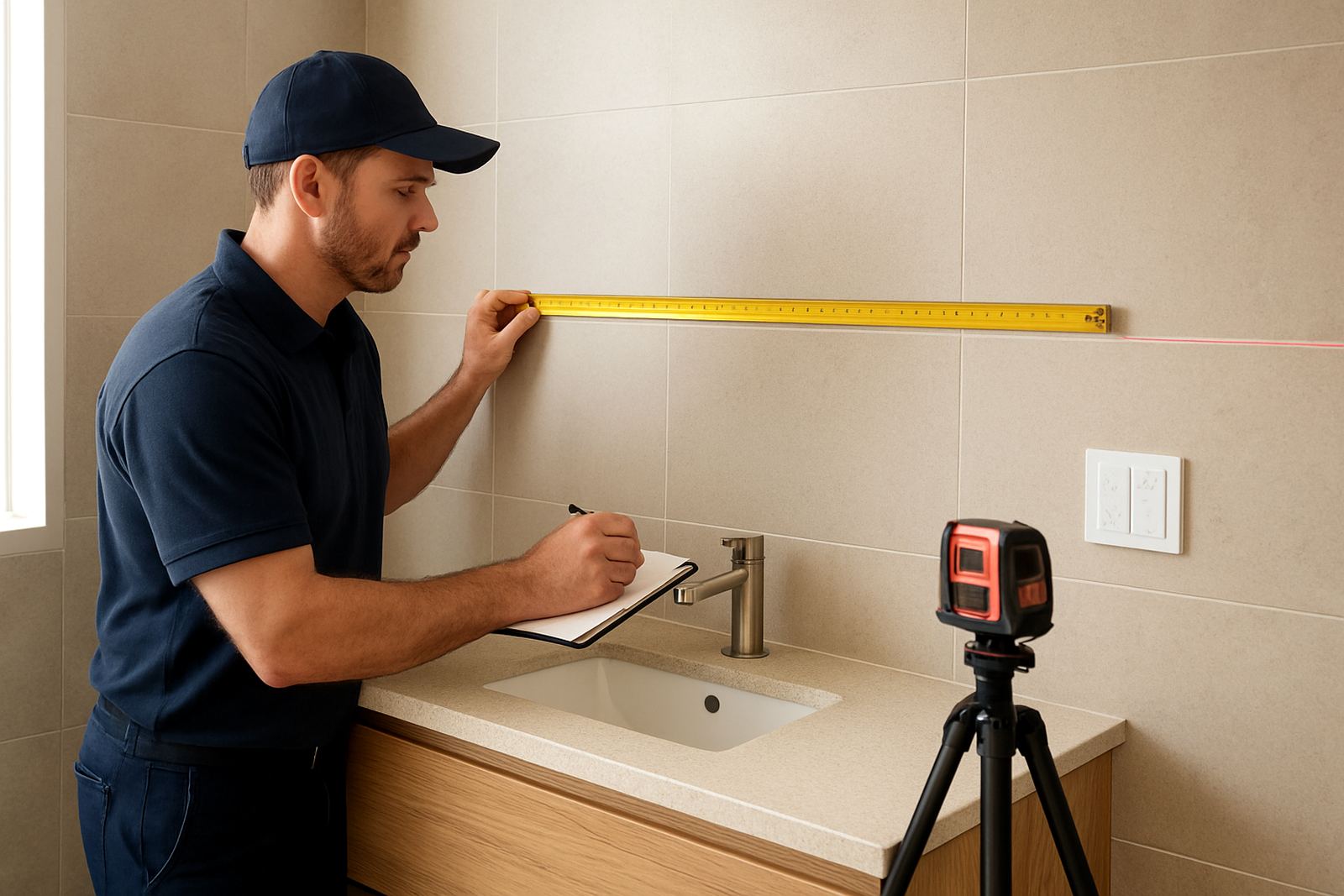
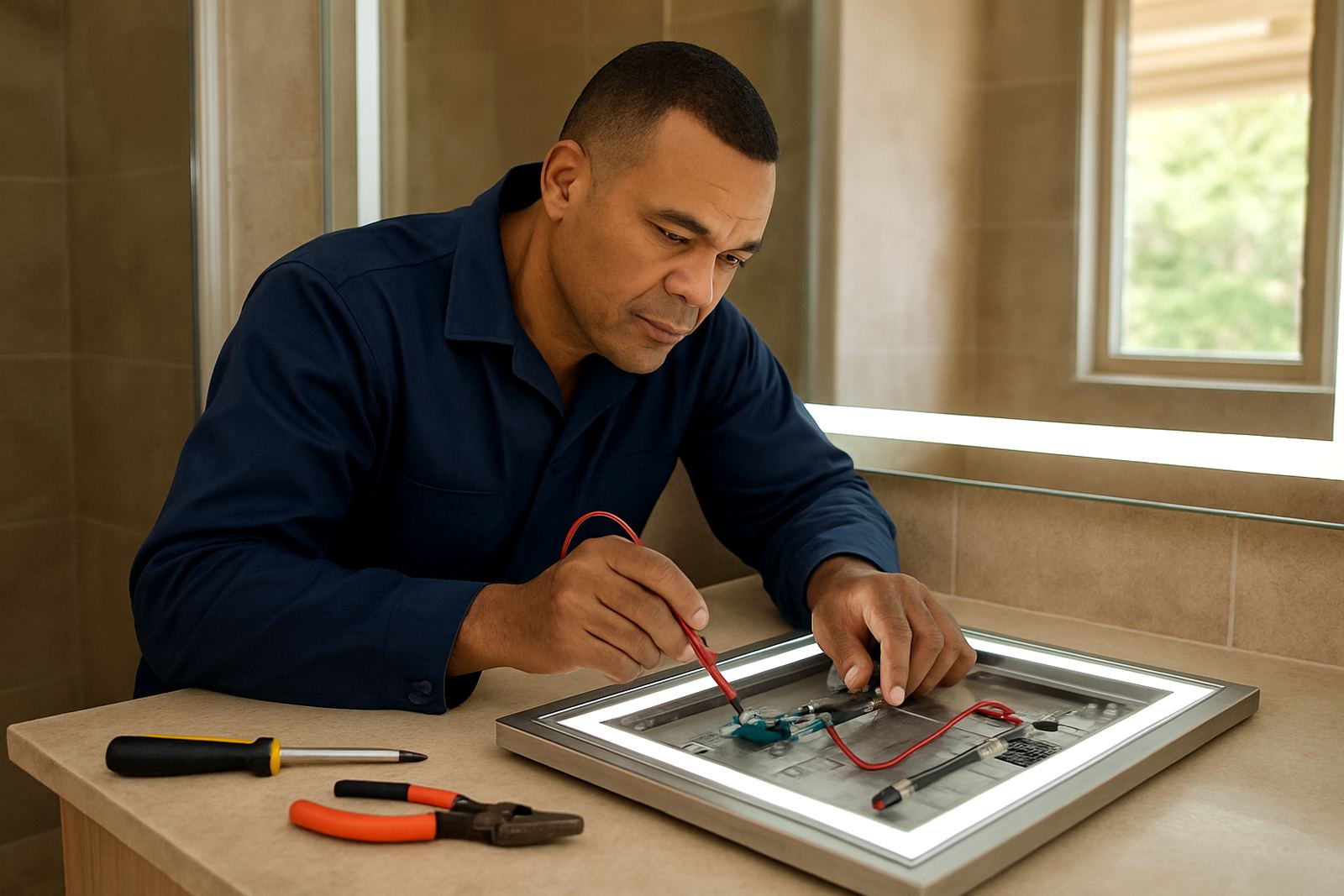
We start with a site visit or photos and a short fault description, then check the mirror size, installation type and electrical access. Most demisters are low-wattage heating elements fixed behind the mirror. Depending on the build, they may run on mains power through a switched supply or through a controller linked to lighting. We test the circuit, measure current draw if needed, and confirm whether the element is drawing the correct load.
If the issue is localised, we may be able to repair a connection or replace a control component on site. If the element has failed, the mirror may need workshop attention or replacement of the demister panel. For custom mirrors, we try to keep the original unit in service where possible, especially if the size or frame finish is special ordered. A small misfire in the switching can look like a full failure, so we test properly before recommending parts.
- Switch and power supply check
- Load test on the heating element
- Connection retightening and terminal cleaning
- Replacement advice for failed pads, controllers or isolators
Our service process from first call to handover
Once you send through the mirror dimensions, photos and the fault symptoms, we advise whether an on-site inspection or collection is best. For fit-outs in Westville, Hillcrest, Durban North and Ballito, we can often schedule the check alongside other bathroom work to save time. Our installer and technical team work together so you are not getting separate opinions from separate people.
The usual process is simple: inspect, test, repair if practical, then confirm heat-up time and proper fog clearing before signing off. We explain what failed and what to watch for afterwards. If the mirror needs a fresh demister mat or electrical rework, we quote before any replacement is ordered. We do not push unnecessary parts. If the issue is only a loose neutral or a corroded connection, we fix that and move on.
- Initial fault assessment and booking
- Inspection and electrical testing
- Service repair or replacement recommendation
- Final function check and aftercare notes
Turnaround times and what affects them
For most demister faults in Durban and surrounding areas, the turnaround is usually quick once the mirror is assessed. Simple connection repairs or switch faults can often be handled within the same visit, depending on access and the condition of the installation. If a heating element, backing section or special part must be sourced, timing depends on the mirror size and the specification needed.
We keep the lead time practical and honest. A standard service call is often arranged within a few working days, while replacement work for custom sizes may take longer. Bathroom fit-out work nationwide can also affect scheduling if a project is in progress, so we recommend sending photos early. In busy periods or after load-shedding related surges, we may see more damaged controllers and a slightly longer queue.
Where a full replacement is the safer call, we say so upfront. There is no value in nursing a failed heating element that will trip again in two weeks.
Pricing approach for demister servicing
Demister servicing is priced according to the fault, the size of the mirror, access to the wiring and whether the work is on-site or workshop based. A straightforward service and fault check is charged differently from a repair that requires component replacement or removal of the mirror. Larger mirrors, backlit units and mirrors set into tiled walls can take longer, which affects the labour cost.
We quote clearly before work starts. If we find that the issue is minor, such as a loose wire or failed switch, you only pay for the repair required. If the demister pad needs replacing, we explain the cost of parts and labour separately so you can decide. For bulk bathroom projects and developer work, we can also prepare a schedule rate. That helps keep pricing predictable across multiple units.
- Inspection and diagnosis quoted up front
- Repair costs depend on fault type and access
- Replacement parts priced separately where needed
- Bulk project pricing available for multiple mirrors
Maintenance intervals for better demister life
In a coastal city like Durban, regular checks make sense. We recommend having mirror demisters inspected every 12 to 18 months, especially in busy family bathrooms or guest bathrooms that are used often. In high-moisture spaces with poor extraction, annual checks are worth it. If the bathroom is also exposed to frequent power interruptions, a shorter interval can help catch loose terminals before they burn out.
Basic care makes a difference too. Keep steam under control with decent ventilation, avoid spraying cleaners into the back edge of the mirror, and do not let water sit on the frame or wall seal. If the mirror takes noticeably longer to clear than it used to, call early instead of waiting for a total failure. A small fault can become a bigger electrical repair if it is left under heat and moisture for too long.
We also give advice on when a demister should be paired with a replacement mirror or upgraded during a vanity change. That is often the best time to sort out wiring, switch placement and access before the tiles are sealed up.
Key facts
| Typical power draw | Depends on mirror size and heating area, usually low-wattage bathroom supply |
|---|---|
| Common fault signs | Slow clearing, patchy heat, intermittent operation, tripping, visible moisture damage |
| Service area | Pinetown, Durban North, Umhlanga, Ballito, Hillcrest, Westville and nationwide |
| Suitable mirror types | LED bathroom mirrors, vanity mirrors and custom framed mirrors with demister backing |
| Maintenance interval | Every 12 to 18 months, or annually in humid coastal bathrooms |
| Typical turnaround | Simple repairs often same visit, replacement work depends on parts and access |