Why dressing rooms need better light
A dressing room is not just a place to change clothes. It is where people check fit, pick colours, do hair and makeup, and make sure they leave the house looking right. In these spaces, harsh ceiling light can throw shadows under the eyes and along the jawline, while yellow fittings can distort fabric colour. A good LED mirror gives even light across the face and upper body, which makes daily grooming easier and far more accurate.
In Durban and the coastal suburbs, dressing rooms often deal with humidity as well, so mirror finishes and electrical parts need to be suited to that environment. For homes in Pinetown, Westville, Umhlanga, Ballito and Hillcrest, we usually look at both the room size and the lighting style already in place. If the room is small, the mirror must do more than reflect. It must carry the space visually and provide proper task light without making the area feel busy.
Typical mirror set-ups for grooming spaces
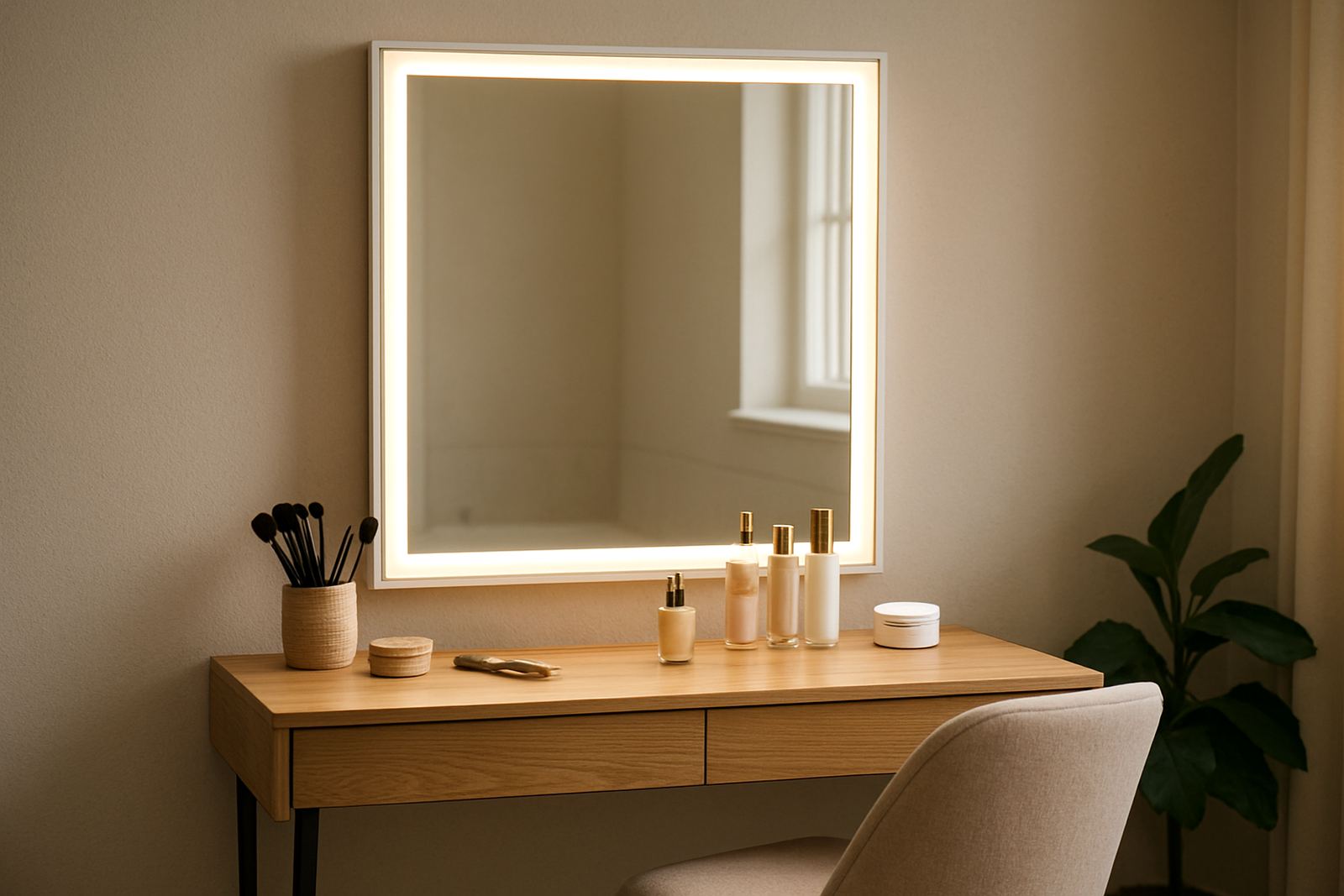
Most dressing rooms work best with one of a few common layouts. The right choice depends on wall space, the type of storage, and how many people use the room. Some clients want a single feature mirror above a vanity table. Others need a full-height mirror for outfit checks, plus a smaller illuminated mirror for close-up grooming. In larger rooms, two matching mirrors can help with shared use and morning routines.
- Wall-mounted LED vanity mirrors for makeup, shaving and skin care
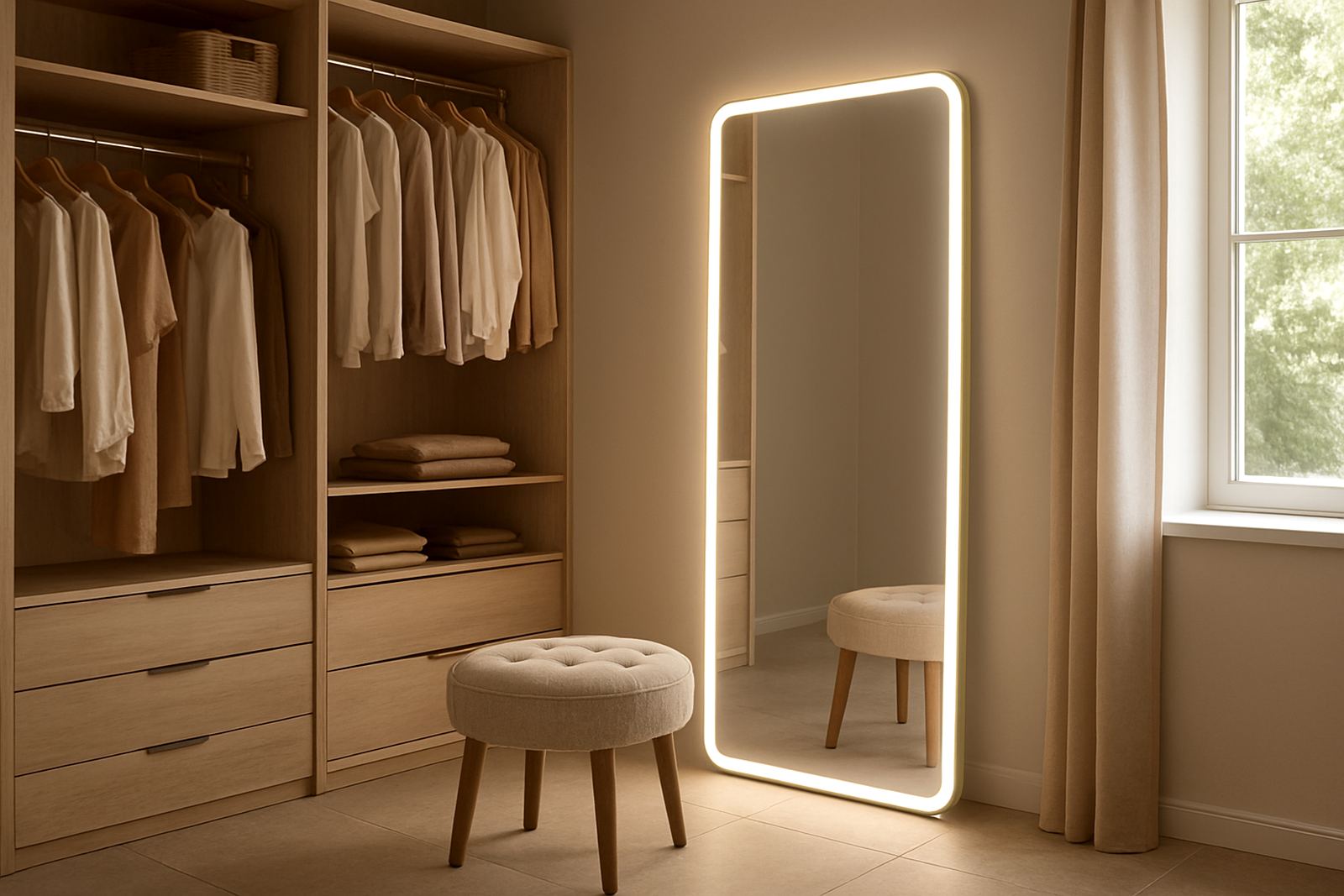
- Full-height mirrors for outfit checks and dressing from head to toe
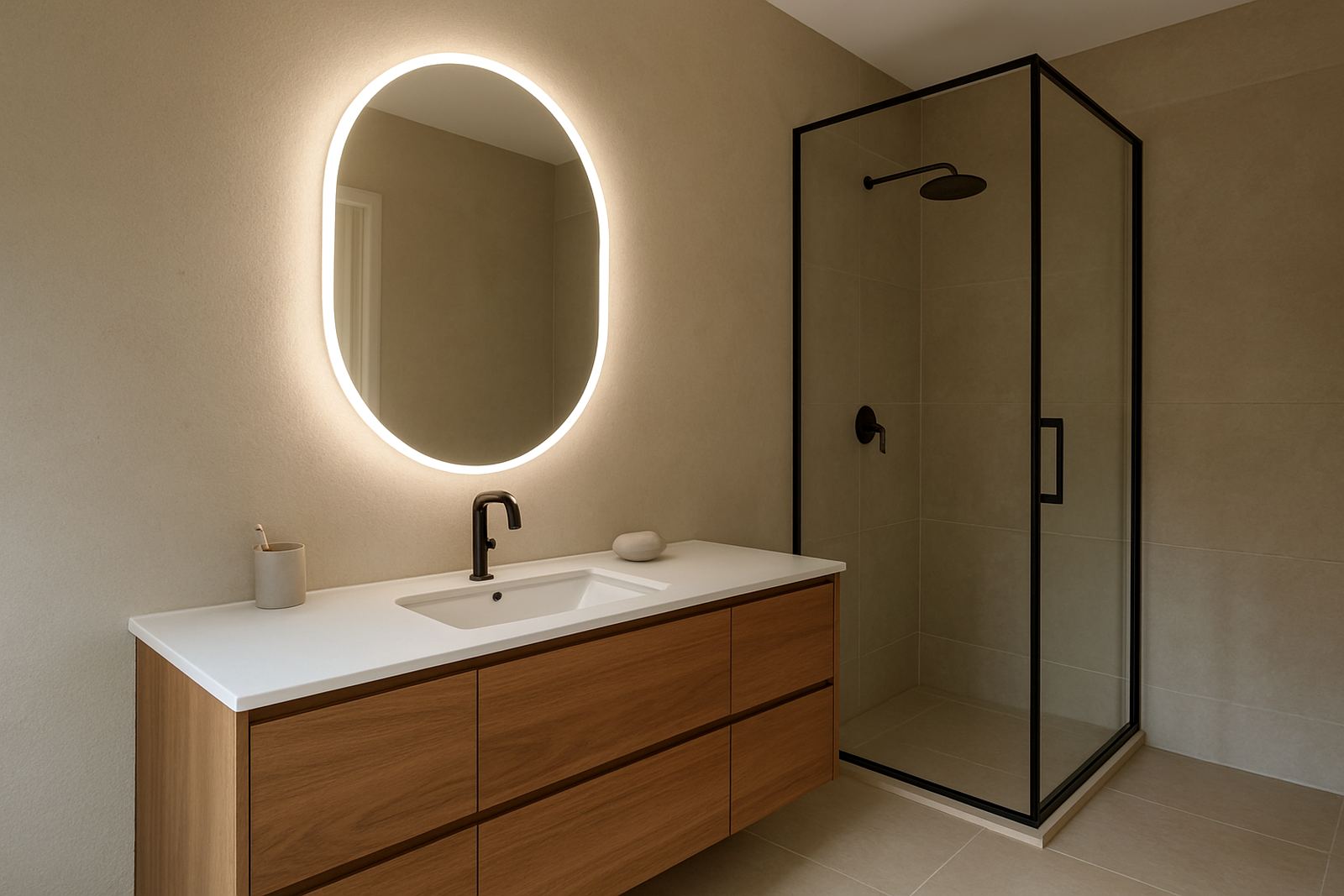
- Backlit mirrors where a softer glow is preferred
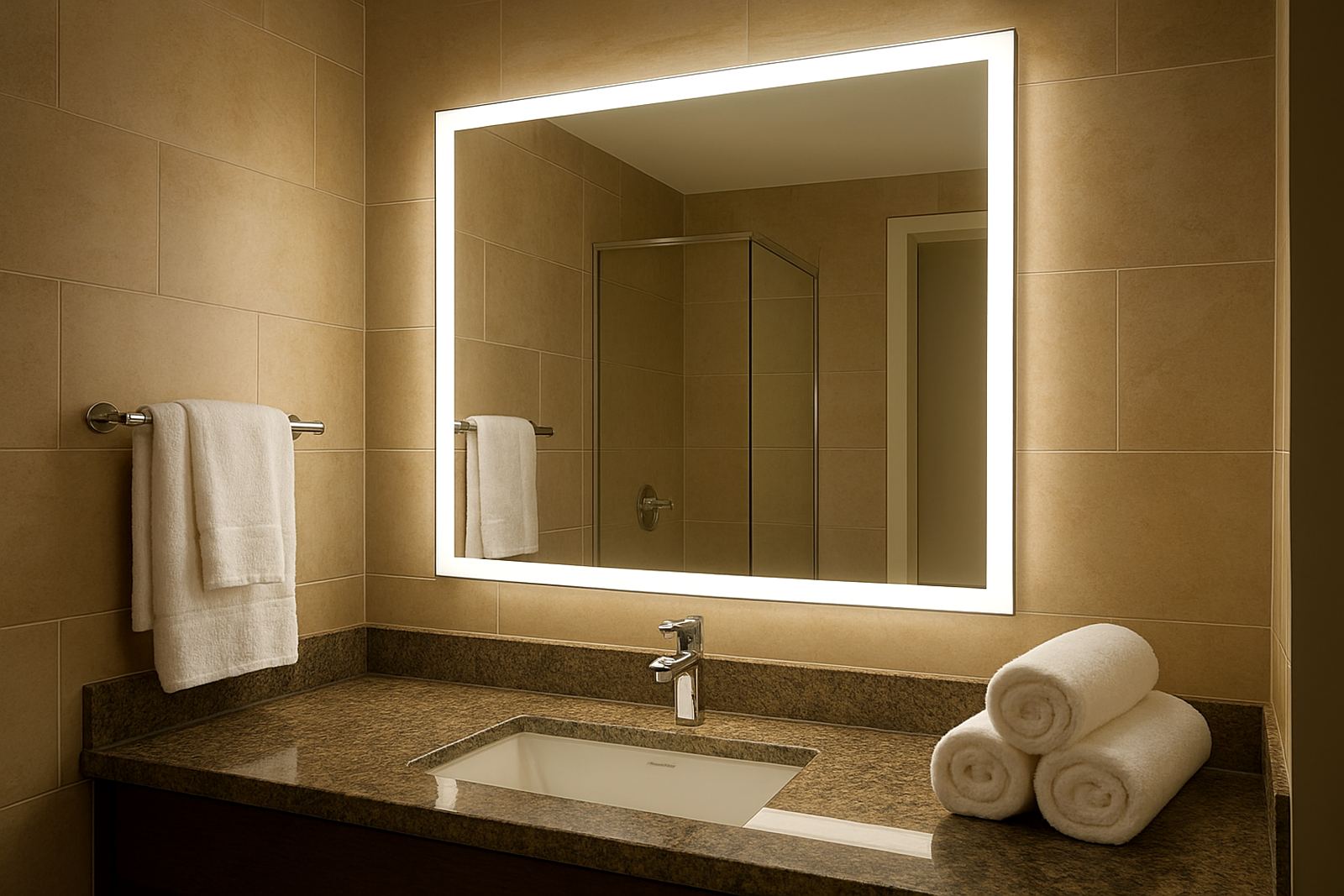
- Front-lit mirrors for sharper face detail and cleaner colour reading
- Demister options for rooms near ensuite bathrooms
- Custom sizes for alcoves, joinery runs and fitted cabinetry
For many clients, a combination works best. A full-length mirror near the wardrobe and a lit vanity mirror by the seated dressing area gives proper coverage without overloading the room.
Planning the layout before installation
Good planning avoids a lot of regrets later. We start with site measurements, then check wall structure, power points and the path for cabling. If the mirror is going onto plasterboard, the fixing method must suit the weight and the wall condition. If it is a new fit-out, it helps to plan the mirror position before cabinetry is finalised. That keeps power hidden and allows the mirror to sit at the right height for the user.
Height is one of the most common issues. A mirror that sits too high will cut off the face in use. Too low, and it becomes awkward for makeup or grooming. In shared dressing rooms, we often work with the average eye level of the main users, then make sure the lighting spread covers both standing and seated use. If the room has dark finishes or strong daylight from one side, we may suggest a wider mirror to balance the space better.
- Allow clear standing space in front of the mirror, not less than 900 mm where possible
- Keep the light source at eye level or just above for better facial visibility
- Leave enough room for opening cupboard doors and drawer fronts
- Plan for a nearby switch location that is easy to reach
- Check whether a demister is needed if the room links to a bathroom
What clients often get wrong
One common mistake is choosing a mirror mainly for looks, then discovering the light is too cool, too warm, or too dim for real daily use. Another issue is going too small. A compact mirror can work in a guest room, but dressing rooms normally benefit from a larger reflective area because the user needs to see clothing lines, hair and accessories together. It is also easy to forget about power. If the mirror is selected before the wiring route is confirmed, the final result can look untidy.
We also see problems where the mirror sits directly opposite a strong window. That may sound ideal, but glare can become a nuisance at certain times of day. Coastal homes can also have corrosion concerns near open windows or if the room gets regular damp air. A proper specification reduces maintenance later and keeps the installation looking neat. It’s worth taking a few extra minutes on the measure-up than rushing and having to alter things later.
Budget ranges for dressing room mirror projects
Budget depends on size, lighting specification, electrical work and whether the mirror is a standard item or a custom build. For a simple illuminated vanity mirror with basic installation, many South African homeowners should budget from around R3 500 to R6 500. A larger fitted mirror with upgraded finish, demister and neater cable management may fall between R6 500 and R12 000. More detailed dressing room packages, especially where there are multiple mirrors or joinery integration, can move from R12 000 to R25 000 and upwards depending on scope.
If electrical connection, wall preparation or old mirror replacement is needed, that can change the final figure. Bulk supply for developers, interior designers and contractors is usually priced differently from a one-off home job. We provide aftercare support as well, which helps if a project later needs an LED component repair, demister servicing or a replacement mirror panel.
- Entry-level vanity mirror: from R3 500
- Mid-range fitted dressing room mirror: R6 500 to R12 000
- Custom multi-mirror fit-out: R12 000 to R25 000 plus
- Additional electrical or repair work priced separately
How we handle fit-outs in Durban and nationwide
Our team works from Pinetown and supports dressing room projects in Durban North, Umhlanga, Ballito, Hillcrest and Westville, as well as fit-outs further afield nationwide. We handle site measurements, mirror installation, electrical connection, vanity upgrades, mirror replacement and custom design help. For a homeowner, that means one point of contact from first measure-up through to final fitting. For an interior designer or contractor, it means the mirror can be coordinated with the rest of the room finish without delays.
We also understand local conditions. In a coastal area, the mirror spec may need a little more care. In a home affected by load-shedding, the room lighting plan should still make sense when other fittings are off. A dressing room should be useful in the early morning, after work and before an event, not only when the rest of the house is bright. That is the difference between a decorative mirror and one that earns its place every day.
A simple spec checklist before you order
If you are planning a dressing room project, it helps to know a few key details before you enquire. A clear brief saves time and keeps pricing accurate. We can advise on the mirror type, size and fitting method once we know how the room is used and what the finish should be.
- Room measurements and wall material
- Whether the mirror is for seated grooming, full-length use or both
- Preferred light tone and brightness
- Power point location and cable route
- Need for demister or moisture resistance
- Any joinery, cabinetry or vanity upgrades already planned
With the right setup, a dressing room becomes easier to use and better to live with. It should show true colour, give even light and fit the room properly from day one.